Key takeaways
- Measure the gap, not the stool: Leave 10 to 12 inches between the seat top and the underside of the counter. A 36-inch counter wants a 24 to 26 inch stool; a 42-inch bar wants 29 to 30 inches. Anything tighter and knees hit the apron.
- Look for a cross-brace or a welded ring: Four independent legs bolted into a seat pan will loosen. A welded footrest ring or an H-stretcher triangulates the frame and takes the twist out of side-to-side movement.
- Check what the bolts thread into: Machine screws landing in steel inserts or T-nuts hold torque. Wood screws driven into softwood blocks strip on the second re-tightening, so plan to add thread-locker or upgrade the fasteners yourself.
- Match the upholstery to the room: Linen and woven fabric read warm and quiet but absorb kitchen grease. Bonded or PU leather wipes clean in one pass, which matters if kids eat breakfast at the island.
- Decide on swivel and lift honestly: A 360-degree plate is genuinely useful in tight galley layouts. Gas-lift height adjustment adds convenience but also a wear part — skip it if you want a stool that will still feel new in a decade.
What's inside
Anyone who has assembled a set of bar stools on a kitchen floor knows the moment of truth: you tighten the last bolt, sit down, and either feel a solid platform or a faint shimmy that tells you the frame geometry is wrong. That wobble almost never comes from the finish or the fabric — it comes from thin tube walls, stamped brackets, and legs that splay without a cross-brace. Retailers rarely photograph the hardware, which is exactly where the difference lives.
This guide looks at bar stools the way a builder would: joinery, load path, seat height math, and how the parts behave after two years of daily use. Below are the sets worth your time in 2026, plus the checks I run before I commit to a set for a kitchen island or a basement bar build.
As an Amazon Associate we earn from qualifying purchases.




How to Choose a Bar Stool (2026)
- Measure the gap, not the stool: Leave 10 to 12 inches between the seat top and the underside of the counter. A 36-inch counter wants a 24 to 26 inch stool; a 42-inch bar wants 29 to 30 inches. Anything tighter and knees hit the apron.
- Look for a cross-brace or a welded ring: Four independent legs bolted into a seat pan will loosen. A welded footrest ring or an H-stretcher triangulates the frame and takes the twist out of side-to-side movement.
- Check what the bolts thread into: Machine screws landing in steel inserts or T-nuts hold torque. Wood screws driven into softwood blocks strip on the second re-tightening, so plan to add thread-locker or upgrade the fasteners yourself.
- Match the upholstery to the room: Linen and woven fabric read warm and quiet but absorb kitchen grease. Bonded or PU leather wipes clean in one pass, which matters if kids eat breakfast at the island.
- Decide on swivel and lift honestly: A 360-degree plate is genuinely useful in tight galley layouts. Gas-lift height adjustment adds convenience but also a wear part — skip it if you want a stool that will still feel new in a decade.
The Best Bar Stools (2026) Reviewed
26″ Modern Barrel Counter Stools with Arms (Set of 2)
The barrel silhouette wraps the sitter, and the enclosed back panel doubles as structure, which is why the 450-pound rating is believable rather than optimistic. Beige linen with arms makes these the most living-room-adjacent option here, best suited to islands that face an open dining space.
Sand-Colored Linen Swivel Counter Stools, 27″
Solid wood legs and a contoured back give you real lumbar contact instead of a flat slab, and the swivel plate is mounted under a full seat frame rather than a thin disc. At 27 inches these sit slightly tall, so verify your counter is a true 36 inches before ordering.
LUE BONA 26″ Swivel Bar Stools (Set of 3)
A three-stool set at counter height is unusually practical for a standard 8-foot island, and the black metal frames read cleanly against light linen. The included lumbar pillow is a genuine comfort upgrade for long sitting, and the welded footrest keeps the frame from racking.
Raynesys 24″ Bonded Leather Counter Stools (Set of 2)
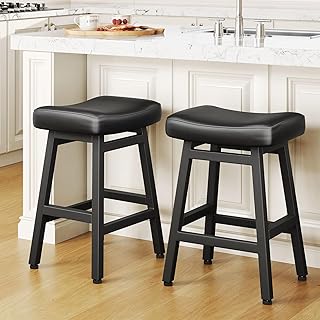
Heavy-duty metal legs and a curved bonded leather seat make this the low-maintenance pick — wipe it down and move on. At 24 inches it is the right call for counters closer to 34 or 35 inches, and assembly is genuinely quick, roughly four bolts per stool.
Nalupatio Adjustable Faux Leather Swivel Stools (Set of 2)
Height adjustment plus swivel makes these the most adaptable set here, handy if you rent or expect a counter change down the road. The faux leather is easy to maintain; just keep the gas cylinder clean and avoid dropping into the seat, which is what kills lift mechanisms.
Frequently Asked Questions
What is the difference between counter height and bar height?
Counter-height stools measure 24 to 27 inches at the seat and pair with 36-inch counters. Bar-height stools run 29 to 32 inches for 42-inch bar tops. Most kitchen islands are counter height.
How do I stop my bar stools from wobbling?
Re-tighten every bolt in a cross pattern after the first week of use, then add a drop of removable thread-locker. If it still moves, check that all four floor glides are seated and level; a single missing pad is often the whole problem.
Will linen upholstery hold up in a kitchen?
It can, with a fabric protector spray applied before first use and prompt blotting of spills. If your island sees heavy cooking or young kids, bonded leather or PU is the lower-stress choice.
Do I need a swivel stool?
Swivels help when clearance behind the stool is under three feet, since you rotate out instead of sliding back. In open floor plans, fixed stools are quieter and have fewer parts to fail.
Final Thoughts
For most kitchens, the LUE BONA set of three delivers the best value per seat with a frame that stays tight, while the 26-inch barrel stools with arms are the pick if comfort and a furniture-grade look matter more than easy cleanup. If your island is a spill zone, go with the Raynesys bonded leather set and spend your energy on the cooking instead of the upholstery.