
Key takeaways
- Target Use Body Part: Ankle, Wrist
- Target Audience: men, teenager, women
- Specific Uses For Product: Physical Therapy, Strength Training
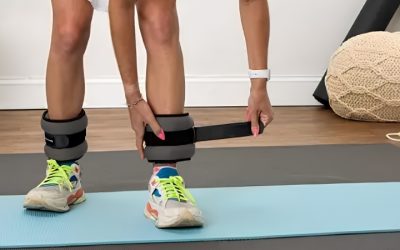
Ankle weights fail in predictable places. The hook-and-loop closure loses grip after a few hundred cycles and stops holding under load. The stitching where the strap meets the body pulls loose because that seam carries the entire weight every time you lift your leg. And on sand-filled cuffs, a pinhole in the inner liner turns into a slow leak that coats your floor in grit. None of that shows up in a product photo, which is why two cuffs with identical weight ratings can have a two-year difference in service life.
If you are the kind of buyer who would rather pay once, the useful comparison is construction, not features. Removable metal bars mean no fill to leak. Bar-tacked stress points mean the strap seam survives. A wide closure with a genuine metal D-ring means the load path does not depend entirely on the hook-and-loop face. This guide reads each option through that lens and calls out the specific failure each design is most likely to hit first.
Our top picks
 Sportneer Adjustable Ankle Weights
- Target Use Body Part: Ankle, Wrist
- Target Audience: men, teenager, women
- Specific Uses For Product: Physical Therapy, Strength Training
 BAGAIL Ankle Wrist Weights for Women &
- Target Use Body Part: Ankle, Arm, Legs, Wrist
- Product Style: 2 Lb Pair (1 Lb Each)
- Material: Lycra-SBR Fabric, iron sand


 Ankle Weights for Women
- Target Use Body Part: Ankle
- Recommended Uses For Product: Gym, Gymnas, Strength Training
- Product Style: 4Lbs Pair (2lb x 2) - Blue
As an Amazon Associate we earn from qualifying purchases at no extra cost to you.
Quick Comparison
| Product | Best For | Standout Feature | Watch Out For |
|---|---|---|---|
| Sportneer Adjustable Ankle Weights (2–10 lb Pair) | Avoiding leak risk entirely | Solid metal bars instead of loose fill | Channel stitching is the wear point to inspect |
| BAGAIL Ankle & Wrist Weights, Set of 2 | Simple sealed construction | Fewer seams because there are no pockets | Sealed fill cannot be repaired if it splits |
| Amazon Basics Adjustable Ankle Weights | Low-stakes replacement pairs | Uncomplicated build, easy to judge | Closure face is the first thing to soften |
| Sportneer Removable-Weight Cuff | Repairable long-term ownership | Bars can move to a new shell if fabric wears | Bar edges abrade the channel lining over time |
| Sportneer Neoprene Adjustable Pair | Resisting sweat damage | Neoprene face shrugs off moisture better than mesh | Trapped damp accelerates odour and adhesive failure |
| Adjustable Ankle Weights, 1–20 lb Pair | Heavy loading over years | Rated to 20 lb per pair, so seams are built for it | Heavier settings stress the closure hardest |
How to Choose
- Fill type: Metal bars cannot leak. Sand and iron shot can, and once a liner splits the cuff is finished — there is no practical repair.
- Seam reinforcement: Look for a dense bar-tack or box stitch where the strap joins the body. A single straight run of thread at that junction is the classic early failure.
- Closure hardware: A metal D-ring that lets the strap double back takes tension off the hook-and-loop face and roughly doubles how long that face stays useful.
- Hook-and-loop surface area: More overlap means more redundancy as the face degrades. A cuff that only just closes on you today will slip in six months.
- Shell fabric weight: Denser oxford or neoprene resists abrasion from shoe heels and floor contact better than thin brushed fabric, which pills and then thins.
Top Picks Reviewed
Most Durable Construction: Sportneer Adjustable Ankle Weights
The bar-and-channel layout removes the single worst failure mode in this category. There is nothing granular inside to escape, so the cuff cannot slowly empty itself into your carpet, and if a channel does wear open you lose one pocket rather than the whole cuff. Running from about 2 lb to 10 lb per pair, it also spends most of its life well under its rated load.
Its own weak point is the channel lining. Metal bars work against the fabric every rep, and after heavy use you may see shine or thinning inside the pockets. Rotating which channels you load spreads that wear instead of concentrating it in two spots.
Simplest Build: BAGAIL Ankle and Wrist Weights
Fewer parts means fewer things to break. With no pockets, flaps or removable components, the only real stress points are the closure and the perimeter seam, both of which are easy to inspect in ten seconds before a session.
The tradeoff is that a sealed cuff is a single-piece item. If the fill does breach, there is no salvage — you replace it. Buying in the lower weights reduces the seam stress that causes that outcome in the first place.
Best Value Replacement: Amazon Basics Adjustable Ankle Weights
Sensible construction at a price that makes replacement painless rather than annoying. For a household where cuffs get used hard, left in a gym bag, and occasionally stepped on, treating them as a consumable is a legitimate strategy.
The closure face will be the first thing to go soft, typically showing up as the strap creeping open during floor work. Keeping lint and hair off the hook side extends that considerably; a stiff brush every few weeks makes a visible difference.
Best Under Heavy Load: Adjustable Ankle Weights, 1–20 lb Pair
Cuffs rated to 20 lb per pair have to be built with proportionally stronger seams and closures, which means that at typical training loads of 5 to 10 lb they operate with a wide safety margin. For anyone loading heavy for jogging drills or gymnastics conditioning, that margin is the durability story.
Push it to the top of the ladder and the closure becomes the limiting component. Heavy settings put constant peel force on the hook-and-loop, so check the strap overlap monthly and stop using a cuff that has begun to creep mid-set.
Frequently Asked Questions
What usually breaks first on ankle weights?
The hook-and-loop closure, by a wide margin. It fills with lint and fibre, loses shear strength, and starts peeling under load long before the fabric or stitching gives up.
Can I wash them?
Wipe them by hand. Machine washing beats the closure, floods sealed fill, and can distort neoprene. Remove any bars first, use mild soap and a damp cloth, and dry fully before storing.
Is a leaking sand cuff worth repairing?
Rarely. You would need to reach the inner liner without destroying the outer shell, and the patched section becomes the new weak spot. Removable-bar designs sidestep the question completely.
How do I stop the strap slipping as the cuff ages?
Clean the hook side, thread the strap through the D-ring so the load pulls in shear rather than peel, and close it toward the outside of the leg where it is less likely to be brushed open by the other ankle.
Final Thoughts
If longevity is the deciding factor, favour removable-bar construction over sealed fill, a D-ring over a bare hook-and-loop face, and generous strap overlap over a snug fit. The Sportneer cuffs and the wider 1–20 lb ladder both fit that profile; the sealed BAGAIL and Amazon Basics options are perfectly serviceable if you accept that they are eventually consumable. Either way, spend ten seconds checking the closure before each session — that is the part that quietly decides how long the pair lasts.
Write Your Review
No reviews yet. Be the first to share your experience!