Key takeaways
- Working PSI, not max PSI: Marketing loves the 150 PSI headline number, but flow collapses near the ceiling. You want a unit that still moves real air at 80 to 100 PSI, which is where RV tires actually live. Treat max PSI as a margin, not a target.
- Duty cycle: This is the make-or-break spec. A 100% duty cycle unit runs continuously; a 50% unit works ten minutes and rests ten. Six tires at 80 PSI is a long session, so a restrictive duty cycle turns a fifteen-minute chore into an hour of standing around.
- Power source and cabling: Cigarette lighter plugs cap out around 15 amps, nowhere near enough for a heavy dual-cylinder pump. Direct-to-battery alligator clamps are the standard for serious units, and you want lead length that reaches all six wheel positions without moving the rig.
- Hose length and chuck design: Measure from your battery to your rear-most valve stem, then add slack. Dually inner valve stems need a swivel or bent-brass chuck to reach through the wheel opening at all, which is a detail catalogs rarely mention.
- Build and thermal management: Metal cylinder heads and cast housings shed heat far better than plastic shells. Look for thermal overload protection too, since it is the difference between a shutdown and a dead motor on your first hot afternoon.
Anyone who has knelt on hot asphalt at a rest stop, chuck in hand, watching a gauge crawl from 62 to 65 PSI knows the problem: most tire inflators are built for sedans. RV tires are a different animal entirely. A Class C motorhome running LT235/85R16s wants 75 to 80 PSI cold, and dually rear positions on a bigger rig can call for 110 or more. Feed that job to a compressor rated for 35 PSI passenger tires and you get a motor that overheats, a duty cycle that quits at eight minutes, and four tires still low.
This guide is written from the perspective of someone who actually keeps a compressor in the pass-through bay and uses it. I have looked at what separates a unit that tops off six tires in one sitting from one that needs a twenty-minute cooldown between each. Below you will find the models worth your storage space, plus the specs that genuinely matter when you are airing up before a travel day.
Our top picks




As an Amazon Associate we earn from qualifying purchases at no extra cost to you. Ratings are shown as listed on Amazon.
🛒 Best Price Today on Amazon
Prime members get fast, free shipping on everything above, plus member-only deals. New members get a 30-day free trial — cancel anytime.
How to Choose a/an Air Compressor For Rv Tires (2026)
- Working PSI, not max PSI: Marketing loves the 150 PSI headline number, but flow collapses near the ceiling. You want a unit that still moves real air at 80 to 100 PSI, which is where RV tires actually live. Treat max PSI as a margin, not a target.
- Duty cycle: This is the make-or-break spec. A 100% duty cycle unit runs continuously; a 50% unit works ten minutes and rests ten. Six tires at 80 PSI is a long session, so a restrictive duty cycle turns a fifteen-minute chore into an hour of standing around.
- Power source and cabling: Cigarette lighter plugs cap out around 15 amps, nowhere near enough for a heavy dual-cylinder pump. Direct-to-battery alligator clamps are the standard for serious units, and you want lead length that reaches all six wheel positions without moving the rig.
- Hose length and chuck design: Measure from your battery to your rear-most valve stem, then add slack. Dually inner valve stems need a swivel or bent-brass chuck to reach through the wheel opening at all, which is a detail catalogs rarely mention.
- Build and thermal management: Metal cylinder heads and cast housings shed heat far better than plastic shells. Look for thermal overload protection too, since it is the difference between a shutdown and a dead motor on your first hot afternoon.
The Best Air Compressor For Rv Tires (2026)s Reviewed
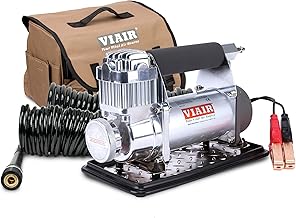
VIAIR 400P RV Portable Compressor Kit
Purpose-built for Class C motorhomes, this is the one I would hand to someone who wants no ambiguity: automatic shutoff at a preset pressure, a 60-foot air hose that reaches every stem on a long chassis, and enough sustained output to run all six tires from cold. It is expensive and heavy, and it earns both.
ALL-TOP Dual Cylinder 12V Kit
At 12.35 CFM, this is the volume king in the group, which matters if you also air down and back up for boondocking or tow a trailer with its own set of tires. The offroad heritage means it is overbuilt for RV duty in the best way, though the case takes up real bay space.
ETENWOLF VORTEX S6 Cordless Inflator
The 19200mAh pack and true 100% duty cycle make this the only cordless unit here I would trust on RV pressures, and skipping the battery-clamp ritual is a genuine convenience at a fuel stop. Plan on recharging it between travel days rather than treating it as a full-rig top-off tool.
VIAIR 88P Portable Compressor Kit
The 88P is the sensible pick for smaller Class B vans and travel trailers up to 33-inch tires, with the same alligator-clamp connection and VIAIR reliability at a fraction of the 400P’s cost. Its shorter duty cycle means patience on a six-tire rig.
GSPSCN 12V Heavy Duty Metal Inflator
All-metal construction and dual cylinders deliver a lot of capability for the money, and it handles truck-camper and van pressures without complaint. The build inspires more confidence than the price suggests, making it my go-to budget recommendation.
Frequently Asked Questions
Can I run an RV compressor off the cigarette lighter?
Not for the heavy-duty units. Anything drawing over 15 amps needs direct battery clamps or a hardwired circuit. The UUP and smaller inflators may offer plug options, but you will get better performance and safer draw from the battery terminals.
How long does it take to inflate six RV tires?
With a high-CFM unit like the ALL-TOP or 400P, expect two to four minutes per tire from 10 PSI down, so roughly twenty minutes total including hookup. Lower-flow units can easily triple that once cooldown periods are factored in.
Should I check pressure hot or cold?
Always cold, meaning the rig has sat at least three hours or driven under a mile. Hot tires read 5 to 10 PSI higher, and bleeding air to hit a cold spec while hot leaves you dangerously underinflated.
Do I need a separate gauge?
Yes. Built-in gauges on portable compressors are convenient but rarely accurate within 2 PSI. A quality dial or digital gauge rated to at least 120 PSI is cheap insurance for expensive tires.
Final Thoughts
If your rig is a Class C or larger, the VIAIR 400P RV is the straightforward answer and its long hose alone justifies the premium. The ALL-TOP kit is the better value for anyone who wants maximum airflow and does not mind a bulkier case, while the GSPSCN delivers surprising durability for van and truck-camper owners working with a tighter budget.