Key takeaways
- Wait until the ash is completely cold. Many manufacturers recommend waiting at least 24 hours after the last fire; longer is sensible after a large or slow-burning fire.
- Never vacuum glowing embers, warm charcoal, damp ash, or ash containing partially burned wood.
- Use the supplied metal hose and nozzle when provided. Do not substitute a household vacuum hose unless the manufacturer permits it.
- Inspect the ash before vacuuming with a metal poker or shovel. A hidden ember can remain hot beneath a surface layer.
- Empty the canister outdoors into a metal container with a tight-fitting lid, away from decks, buildings, mulch, and dry leaves.
- Clean filters outdoors and wear eye protection and a suitable dust mask. Fine ash can irritate the lungs even when it looks harmless.
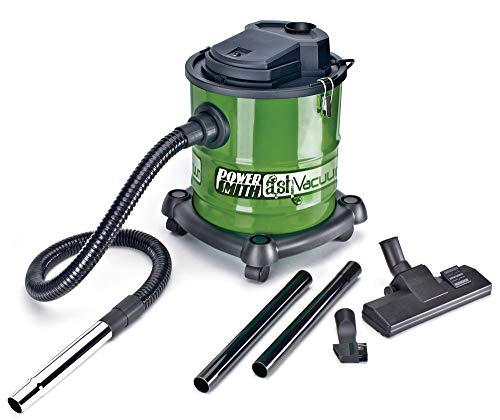
The best ash vacuums for most homeowners are the PowerSmith PAVC101 for strong all-around fireplace and wood-stove cleaning, the Snow Joe ASHJ201 for a compact low-cost option, and the Dustless Technologies Ash Vacuum for heavier-duty use where filtration and durability matter more than price.
An ash vacuum is not simply a shop vacuum with a metal container. Fine ash can pass through ordinary filters, clog motors, or become a serious fire hazard if embers are still hot. The right model combines a metal tank, a heat-resistant hose or intake system, a fine-particle filter, and enough capacity that you are not emptying it halfway through cleaning.
Our top picks


As an Amazon Associate we earn from qualifying purchases at no extra cost to you. Ratings are shown as listed on Amazon.
Best ash vacuums by situation
| Situation | Best fit | Why | Important limitation |
|---|---|---|---|
| Frequent fireplace or wood-stove cleaning | PowerSmith PAVC101 | Metal construction, fine-dust filtration, and a dedicated ash-vac design | Its compact tank still needs frequent emptying with heavy ash loads |
| Small fireplace, pellet stove, or occasional cleanup | Snow Joe ASHJ201 | Compact footprint and approximately 4.8-gallon capacity | Less suitable for large quantities of dense ash or long cleaning sessions |
| Heavy-duty use and maximum filtration emphasis | Dustless Technologies Ash Vacuum | Purpose-built metal ash collection and multi-stage filtration | Usually costs more and is bulkier to store |
| Occasional grill ash removal | Small metal ash vacuum | Easy to carry and less likely to be overpowered for a small grill | Do not use until all coals and ash are completely cold |
| Cleaning several appliances in one session | Ash vacuum with a 4–5 gallon tank | Reduces interruptions for emptying | Full tanks become awkward to carry, especially up stairs |
Head-to-head: the leading choices
PowerSmith PAVC101: best overall for fireplaces and wood stoves
The PowerSmith PAVC101 is the most balanced choice when you need one machine for routine fireplace, wood-stove, pellet-stove, and grill ash cleanup. It uses a metal canister and a fine-dust filtration system intended for ash rather than general household debris. Its roughly 3-gallon capacity is sufficient for most residential cleanouts, while the compact body is easier to store beside a stove or in a utility closet.
Its main advantage is control over fine ash. A fireplace may look empty while still holding several cups of powder in the corners, under the grate, and behind the firebrick. A dedicated ash vacuum is less likely than a standard vacuum to discharge that dust back into the room. The trade-off is capacity: if you clean a large masonry fireplace after several fires, you may need to empty the tank before finishing.
Choose it when filtration and everyday convenience matter more than maximum volume. Keep the hose close to the appliance while working; its hose reach is adequate for a hearth but may require moving the vacuum around a wide fireplace.
Snow Joe ASHJ201: best compact and budget-friendly option
The Snow Joe ASHJ201 is a practical choice for smaller fireplaces, pellet stoves, patio fire pits, and occasional grill cleanup. Its approximately 4.8-gallon canister gives it useful capacity for its size, and its metal collection container is more appropriate for ash than a plastic household vacuum.
The larger tank does not automatically mean stronger cleaning. Ash vacuums are generally designed for light, dry powder rather than large chunks, wet ash, leaves, or general workshop debris. The Snow Joe is most useful when the ash is already cool, dry, and loose. Its compact design also makes it attractive for apartment storage or a narrow utility cupboard.
It is a good match for a pellet stove because pellet ash is extremely fine and accumulates in small chambers that are difficult to brush clean. Clean or replace the filter as directed, since a loaded filter can reduce suction quickly.
Dustless Technologies Ash Vacuum: best for demanding cleanup
Dustless Technologies makes purpose-built ash-cleaning equipment with a strong emphasis on containing fine dust. Its Ash Vacuum is a better fit for people who clean a large stove or fireplace frequently, manage several heating appliances, or want a sturdier machine for repeated seasonal use.
The benefit is not just suction. The collection path, metal components, and filtration stages are designed around the behavior of ash: it is light, abrasive, and capable of passing through gaps that ordinary debris cannot. The disadvantages are higher purchase cost, a larger storage footprint, and greater carrying weight once the canister is full.
For most single-fireplace homes, it may be more machine than necessary. For a large hearth or regular winter heating, its additional filtration and construction can justify the expense.
What to compare before buying
| Feature | Useful target | Why it matters |
|---|---|---|
| Tank capacity | 3 gallons for light use; 4–5 gallons for frequent cleaning | A larger tank means fewer interruptions, but more carrying weight |
| Filtration | Replaceable fine-dust or HEPA-style filter, preferably with a pre-filter | Reduces ash escaping through the exhaust |
| Container material | Metal canister | Provides better heat resistance than a typical household plastic vacuum |
| Hose length | About 4–6 feet for a hearth; longer for deep fireboxes | Short hoses force you to move the vacuum; long hoses can be harder to store |
| Nozzle design | Narrow metal or heat-resistant crevice nozzle | Reaches corners, grate openings, and pellet-stove channels |
| Storage size | Measure the shelf or cupboard first; allow at least 2 inches around the body | Filters and lids need access for cleaning and replacement |
Fine fireplace ash versus pellet-stove ash
Wood ash is often heavier and more granular, so it may be collected relatively easily after the fire has cooled. Pellet-stove ash is usually finer and can behave almost like flour. It settles in burn pots, heat exchangers, exhaust passages, and narrow ledges. For pellet appliances, prioritize sealed connections, a good pre-filter, and readily available replacement filters over a small difference in motor power.
Do not judge filtration by suction alone. Excessive suction can disturb ash and create a cloud when the nozzle enters the firebox. A steady, controllable airflow is preferable, especially around firebrick and delicate pellet-stove components.
Safety rules that matter more than brand
- Wait until the ash is completely cold. Many manufacturers recommend waiting at least 24 hours after the last fire; longer is sensible after a large or slow-burning fire.
- Never vacuum glowing embers, warm charcoal, damp ash, or ash containing partially burned wood.
- Use the supplied metal hose and nozzle when provided. Do not substitute a household vacuum hose unless the manufacturer permits it.
- Inspect the ash before vacuuming with a metal poker or shovel. A hidden ember can remain hot beneath a surface layer.
- Empty the canister outdoors into a metal container with a tight-fitting lid, away from decks, buildings, mulch, and dry leaves.
- Clean filters outdoors and wear eye protection and a suitable dust mask. Fine ash can irritate the lungs even when it looks harmless.
Real-world capacity and handling
A nominal 4.8-gallon tank does not hold 4.8 gallons of usable ash. Filters, the internal airflow path, and safe fill limits reduce practical capacity. A single modest fireplace cleanup may produce only 1–3 gallons of loose ash, while a neglected stove can exceed that. Dense ash also makes a full canister surprisingly heavy: allow roughly 15–25 pounds for the container, filter, hose, and accumulated material, depending on the ash density.
For a hearth positioned 2 feet from the nearest clear storage area, a 4-foot hose is usually workable. If the vacuum must sit beside a chimney breast, behind a stove, or at the edge of a 10-by-12-foot living room, a 5–6-foot hose is more comfortable. Leave a clear path at least 30 inches wide around the appliance so you can pull the vacuum out without scraping furniture or blocking an exit.
How to use an ash vacuum without spreading dust
- Confirm that the fire, coals, and ash are fully cold and dry.
- Remove large chunks with a metal shovel and place them in a lidded metal container.
- Check that the filter and pre-filter are installed correctly and are not already clogged.
- Start at the edges of the firebox, using slow passes rather than stirring the ash.
- Use the narrow nozzle around grates, corners, air inlets, and pellet-stove burn pots.
- Stop before the canister reaches its maximum fill line.
- Switch off the vacuum, unplug it, and empty it outdoors.
- Inspect the filter after every substantial cleaning and replace damaged or permanently clogged filters.
Final recommendation
Choose the PowerSmith PAVC101 if you want the best balance of filtration, metal construction, capacity, and price for a typical home. Choose the Snow Joe ASHJ201 for a compact appliance and occasional cleanup, particularly in a smaller home. Choose the Dustless Technologies Ash Vacuum when you clean frequently, handle large ash loads, or place the highest priority on durable filtration. Whichever model you select, cold ash, correct filter maintenance, and outdoor emptying are more important than a small difference in advertised motor power.