Key takeaways
- Measure your gap first: Note the distance from your chair seat to the underside of the table, then subtract your child’s seated torso height. Most dining setups need 3 to 4 inches of lift; anything taller and small arms collide with the table edge.
- Foam density beats foam thickness: A 4-inch cushion that squashes to 2 inches under 30 pounds is a 2-inch cushion. Press hard with your thumb — high-resilience foam pushes back immediately rather than leaving a dent.
- Two anchor points, not one: The best designs combine a non-slip underside with chair-back ties. Grip alone lets the cushion creep forward as a child wriggles; ties alone let it rock on slick wood.
- Check the seam construction: Look for welded or double-stitched edges on PU covers. Single-stitched piping is the first thing to split, and once the cover opens, moisture reaches the foam core and the seat is finished.
- Harness style should match temperament: A simple lap strap suits a settled eater; an active climber needs a 3-point harness with a shoulder component that stops standing attempts before they start.
What's inside
Anyone who has knelt on a kitchen floor with a tape measure knows the frustration: your dining chair seat sits 18 inches off the ground, your table apron sits at 28, and your two-year-old’s elbows land somewhere in between. The result is a kid who kneels, climbs, or slides sideways through dinner. Full-size high chairs solve the height problem but eat half a room and look wrong next to a walnut trestle table. A booster cushion is the low-footprint fix, but the market is flooded with foam slabs that compress to nothing by month three, or straps so vague they may as well be decorative.
I evaluated these boosters the way I’d assess any piece of shop-built furniture: how the seams are stitched, whether the base actually grips, how the straps tension under load, and how the whole thing behaves after a spilled yogurt cup. Below you’ll find the shortlist, a buying checklist built around real chair geometry, and honest notes on where each pick earns its keep and where it falls short.
As an Amazon Associate we earn from qualifying purchases.



🛒 Best Price Today on Amazon
Prime members get fast, free shipping on everything above, plus member-only deals. New members get a 30-day free trial — cancel anytime.
How to Choose a Booster Seats For Dining Table (2026)
- Measure your gap first: Note the distance from your chair seat to the underside of the table, then subtract your child’s seated torso height. Most dining setups need 3 to 4 inches of lift; anything taller and small arms collide with the table edge.
- Foam density beats foam thickness: A 4-inch cushion that squashes to 2 inches under 30 pounds is a 2-inch cushion. Press hard with your thumb — high-resilience foam pushes back immediately rather than leaving a dent.
- Two anchor points, not one: The best designs combine a non-slip underside with chair-back ties. Grip alone lets the cushion creep forward as a child wriggles; ties alone let it rock on slick wood.
- Check the seam construction: Look for welded or double-stitched edges on PU covers. Single-stitched piping is the first thing to split, and once the cover opens, moisture reaches the foam core and the seat is finished.
- Harness style should match temperament: A simple lap strap suits a settled eater; an active climber needs a 3-point harness with a shoulder component that stops standing attempts before they start.
The Best Booster Seats For Dining Table (2026)s Reviewed
Upseat Boost Ergonomic Toddler Booster
Developed alongside physical therapists, this one earns its premium through geometry rather than padding — the contoured base tips the pelvis slightly forward, which naturally stacks the spine instead of letting a toddler slump into a C-curve. The adjustable height gives it a longer service life than fixed cushions, and the molded shell wipes clean in seconds with no seams to trap crumbs.
PU Washable Booster with Double Safe Straps
A straightforward, well-executed cushion: two independent strap systems anchor it to the chair back and around the child, and the textured non-slip underside holds firm on both upholstered and finished wood seats. The PU surface is the standout feature here — a damp cloth handles everything, and there’s no fabric to launder and re-fit.
Non-Slip Booster with Backrest and 3-Point Harness
The backrest makes this the right call for younger toddlers who still need lateral support, and the 3-point harness genuinely restrains rather than just suggesting a boundary. It’s bulkier than a flat cushion, so measure your chair depth before committing, but for a child transitioning straight out of a high chair it’s the most secure option in this group.
3.8″ Booster Seat with Side Pockets
That 3.8-inch lift lands in the sweet spot for standard 29-inch dining tables, and the tie-down system pulls tight enough to eliminate any sliding. The side pockets sound gimmicky until you realize they’re where the spoon lives instead of the floor, and the removable cover means you can strip and wash without replacing the whole unit.
Eiury Portable Booster with Safety Buckles
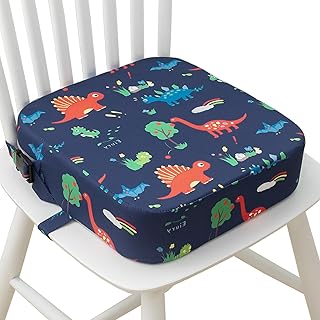
Built for movement — it folds flat enough for a diaper bag and the safety buckles engage quickly one-handed, which matters when you’re wrangling a toddler in a restaurant booth. The dinosaur print does real work in getting a reluctant kid to sit voluntarily, though the lighter foam means it’s better as a travel seat than a daily driver.
Frequently Asked Questions
At what age can a toddler use a dining table booster seat?
Most children are ready between 18 months and two years, once they can sit upright unassisted and hold their trunk steady without propping. Age matters less than core stability — if your child still lists to one side when seated on the floor, stay with a high chair a while longer.
Will a booster damage my dining chairs?
Rubberized and silicone-dot bases are safe on most finishes, but they can trap grit against a lacquered seat and leave fine scratches. Lift the cushion weekly, wipe the chair, and check that any tie-down straps aren’t abrading the chair-back edge.
How do I clean foam that’s absorbed a spill?
Press the moisture out with a dry towel rather than wringing the foam, then air-dry it fully away from direct heat, which breaks down cell structure. This is the strongest argument for a sealed PU cover — the foam never gets wet in the first place.
Do I need a harness, or will the chair back suffice?
A harness is worth having through roughly age three, particularly if your child stands up mid-meal. Once they reliably stay seated, a plain cushion with a good non-slip base is usually enough and considerably easier to get in and out of.
Final Thoughts
For everyday family dinners, the Upseat Boost is the pick I’d spend my own money on — the posture-focused shell addresses a problem the other seats don’t even attempt, and the adjustable height means it grows with your child. If you want solid function at a lower cost, the PU Washable Booster with Double Safe Straps delivers the two things that actually matter, secure anchoring and a wipeable surface, while the Eiury Portable Booster is the one to keep in the car for restaurants and grandparents’ houses.