Key takeaways
- Match output to actual demand, not peak fantasy: A 420 lb/24H machine sounds great until you realize a busy home bar burns through maybe 40 pounds on a heavy weekend. Oversizing means the compressor short-cycles, and you pay for capacity that sits idle. Count your realistic worst-case day and add 25 percent.
- Confirm drain type before you buy anything modular: Gravity drains need a floor drain or a pump, and both the ice bin and the ice maker head typically drain separately. Retrofitting a condensate pump into a finished basement is a weekend project on its own, so measure the run and the fall while you’re still shopping.
- Read the air-cooled clearance spec literally: Air-cooled compressors dump heat out the back or side and need real breathing room, usually 6 inches minimum. Box one into a tight cabinet and production drops while the unit runs hot, which shortens compressor life considerably.
- Check whether the bin is included: Modular heads and storage bins are sold separately in the commercial world. A listing showing a 22-inch head with a 350 lb bin is a package; a bare Prodigy head is not. Verify the bin footprint matches the head width or you’ll need an adapter top.
- Weigh self-cleaning against a real cleaning schedule: Automatic cleaning cycles help, but nugget machines still need a nickel-safe descaler run every three to six months depending on your water hardness. Factor in a scale filter if you’re on well water or hard municipal supply.
What's inside
Nugget ice has a cult following for good reason: it chews like popcorn, chills a drink in seconds, and soaks up whatever it’s swimming in. The problem is that most people shopping for a commercial machine end up staring at spec sheets written for restaurant supply buyers. Production ratings assume 70°F air and 50°F water. Bin capacities get quoted separately from the head unit. Half the listings don’t mention that a modular unit needs a floor drain and a dedicated water line before it makes a single pellet. If you’re putting one in a home bar, a basement wet bar, or a converted butler’s pantry, that gap between commercial documentation and residential reality is where budgets go sideways.
This guide sorts the field by what actually installs where. I’ve broken down the high-output modular rigs that belong in a garage or utility room with proper plumbing, the self-contained dispensers that work as a drop-in fixture, and the compact undercounter units that give you real nugget ice without cutting into a joist. You’ll also find the install details worth checking before you click buy, including drain requirements, clearance, and how ambient temperature quietly eats into rated output.
As an Amazon Associate we earn from qualifying purchases.


🛒 Best Price Today on Amazon
Prime members get fast, free shipping on everything above, plus member-only deals. New members get a 30-day free trial — cancel anytime.
How to Choose a Commercial Nugget Ice Maker (2026)
- Match output to actual demand, not peak fantasy: A 420 lb/24H machine sounds great until you realize a busy home bar burns through maybe 40 pounds on a heavy weekend. Oversizing means the compressor short-cycles, and you pay for capacity that sits idle. Count your realistic worst-case day and add 25 percent.
- Confirm drain type before you buy anything modular: Gravity drains need a floor drain or a pump, and both the ice bin and the ice maker head typically drain separately. Retrofitting a condensate pump into a finished basement is a weekend project on its own, so measure the run and the fall while you’re still shopping.
- Read the air-cooled clearance spec literally: Air-cooled compressors dump heat out the back or side and need real breathing room, usually 6 inches minimum. Box one into a tight cabinet and production drops while the unit runs hot, which shortens compressor life considerably.
- Check whether the bin is included: Modular heads and storage bins are sold separately in the commercial world. A listing showing a 22-inch head with a 350 lb bin is a package; a bare Prodigy head is not. Verify the bin footprint matches the head width or you’ll need an adapter top.
- Weigh self-cleaning against a real cleaning schedule: Automatic cleaning cycles help, but nugget machines still need a nickel-safe descaler run every three to six months depending on your water hardness. Factor in a scale filter if you’re on well water or hard municipal supply.
The Best Commercial Nugget Ice Maker (2026)s Reviewed
22″ Nugget Ice Maker, 420 lb/24H with 350 lb Bin
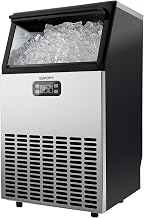
This is the volume play, pairing a 22-inch air-cooled head with a genuinely large storage bin, which makes it a sensible fit for an outdoor kitchen, a shop, or a serious entertaining setup. Budget for a dedicated water line and a drain solution, because at this scale you’re installing a piece of equipment rather than plugging in an appliance.
Scotsman HID312A-1 Nugget Ice and Water Dispenser
The dispenser format is the smart choice when you want ice available without lifting a bin lid, and the 260 lb daily rating handles a heavy household or small office easily. Scotsman’s nugget mechanism is the benchmark here, and the sealed dispense path keeps the ice cleaner than an open bin ever will.
Scotsman Modular Nugget Ice Maker
A straightforward modular head for anyone building around an existing or planned bin, which is exactly how commercial kitchens spec these. Confirm the bin width and top profile before ordering, since a mismatch means shimming or an adapter.
Scotsman N0622A-1 Prodigy Plus
The Prodigy Plus line earns its reputation on serviceability, with diagnostic indicators and a stainless cabinet that survives real use. It’s a 115V head unit, so a standard circuit works, but again, this is a head only and needs a bin underneath.
Compact 70 lb/24H Undercounter Nugget Maker with 12 lb Bin
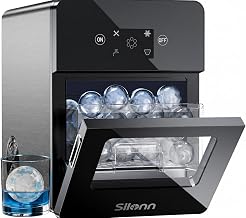
For most home installs this is the honest sweet spot: 70 pounds a day covers a full house of guests, and the undercounter footprint slides into a 15-inch bay. Self-cleaning helps, though you’ll still want a periodic descale run.
Frequently Asked Questions
Do I need a plumbing line, or will a reservoir work?
The compact undercounter units in this roundup generally accept either a water line or a fill reservoir. Anything in the 200 lb+ commercial class requires a permanent supply line and a drain, with no reservoir option.
Why is my machine making less ice than advertised?
Rated output assumes 70°F ambient air and 50°F incoming water. A hot garage in August or warm supply water can cut production by 20 to 30 percent, which is normal rather than a fault.
Can I install a modular unit myself?
The mechanical side is manageable for a confident DIYer: set the bin, seat the head, connect a quarter-inch supply with a shutoff, and route the drain with proper fall. Check local code on whether an indirect drain and air gap are required.
How often does nugget ice need cleaning?
Plan on a descale and sanitize every three to six months, more often on hard water. Nugget machines use an auger and evaporator that scale up faster than cube machines, and neglected scale is the leading cause of output loss.
Final Thoughts
If you have the plumbing and the space, the Scotsman HID312A-1 dispenser is the most complete solution here, delivering serious output in a package that doesn’t demand a bin purchase or a bin lid. Builders working around existing equipment should look at the Scotsman N0622A-1 Prodigy Plus for its serviceability, while anyone fitting nugget ice into a finished kitchen will get the best value from the compact 70 lb/24H undercounter unit.