Key takeaways
- Measure the gap, not the counter: Aim for 9 to 12 inches between seat top and countertop underside. A 36-inch counter wants a 24 to 26-inch seat; jump to 27 inches only if your counter runs taller or you prefer a perched posture.
- Check the leg geometry: Splayed legs eat floor space and catch toes. Straight or gently tapered legs tuck cleanly under an overhang, which matters in a galley kitchen where walking clearance is already tight.
- Look at how the frame joins: Welded metal frames arrive rigid and stay that way. Bolted frames are fine if the hardware is substantial, but budget five minutes per stool to snug everything down after a week of use once the joints settle.
- Match upholstery to your household: Faux leather and PU wipe clean in one pass, ideal near a stovetop. Linen and woven fabric feel better against bare legs but need a fabric guard spray if kids or pasta sauce are involved.
- Verify the weight rating honestly: Ratings between 300 and 500 pounds reflect frame gauge and cross-bracing, not just marketing. Higher numbers usually mean thicker tubing, which translates to less flex and fewer squeaks over years of daily use.
What's inside
Counter height stools look simple until you actually shop for them. You measure your overhang, order a set that seems right, and then discover the seat sits two inches too high, the footrest bangs your cabinet doors, or the “assembly” involves a hex key the size of a toothpick and four bolt holes that never quite line up. I’ve built enough flat-pack furniture to know the difference between a stool that arrives square and one that needs shimming before it stops rocking on a tile floor.
This guide sorts through the counter stools worth your Saturday afternoon. I’m looking at seat height against standard 36-inch counters, the quality of the hardware in the box, whether the frame is welded or bolted, and how the upholstery holds up to real kitchen traffic. Below you’ll find picks for swivel seats, four-packs for big families, and heavy-capacity frames that don’t creak when someone leans back.
As an Amazon Associate we earn from qualifying purchases.


🛒 Best Price Today on Amazon
Prime members get fast, free shipping on everything above, plus member-only deals. New members get a 30-day free trial — cancel anytime.
How to Choose a/an Counter Height Stools (2026)
- Measure the gap, not the counter: Aim for 9 to 12 inches between seat top and countertop underside. A 36-inch counter wants a 24 to 26-inch seat; jump to 27 inches only if your counter runs taller or you prefer a perched posture.
- Check the leg geometry: Splayed legs eat floor space and catch toes. Straight or gently tapered legs tuck cleanly under an overhang, which matters in a galley kitchen where walking clearance is already tight.
- Look at how the frame joins: Welded metal frames arrive rigid and stay that way. Bolted frames are fine if the hardware is substantial, but budget five minutes per stool to snug everything down after a week of use once the joints settle.
- Match upholstery to your household: Faux leather and PU wipe clean in one pass, ideal near a stovetop. Linen and woven fabric feel better against bare legs but need a fabric guard spray if kids or pasta sauce are involved.
- Verify the weight rating honestly: Ratings between 300 and 500 pounds reflect frame gauge and cross-bracing, not just marketing. Higher numbers usually mean thicker tubing, which translates to less flex and fewer squeaks over years of daily use.
The Best Counter Height Stools (2026)s Reviewed
Raynesys 24″ Bonded Leather Counter Stools (Set of 2)
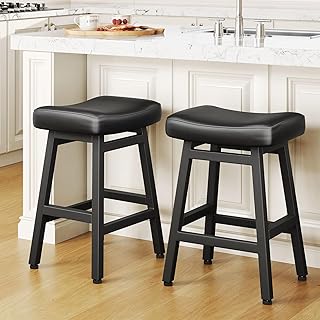
The curved seat pan on these does real work, cradling you slightly instead of letting you slide forward, and the heavy metal legs bolt together in under ten minutes per stool with hardware that actually fits the pre-drilled holes. All-black bonded leather is the pragmatic choice for a busy kitchen since scuffs disappear rather than announce themselves.
26″ Modern Barrel Counter Stools with Arms (Set of 2)
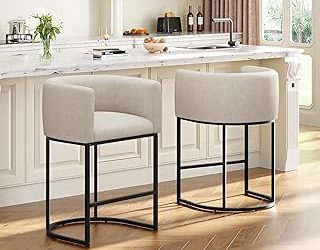
These lean furniture rather than utility, with a wraparound barrel back and arms that make lingering over coffee genuinely comfortable. The 450-pound rating and linen upholstery are a solid pairing, though I’d hit the fabric with a protectant spray before the first meal.
TAVR 24″ Faux Leather Counter Stools (Set of 2)
A 500-pound capacity on an armless stool means seriously overbuilt tubing, and it shows in how planted these feel when you shift your weight. The low padded backrest gives support without blocking sightlines across an island, which is the right call for open-plan spaces.
FIRAVOE 26″ Upholstered Counter Stools (Set of 4)
Buying four at once is the smart move for a long island, and the thickened metal legs here hold up better than the four-pack price suggests. Set aside an evening for assembly since you’re building four frames, and keep a socket wrench handy to speed up the leg bolts.
Sand-Colored Linen 27″ Swivel Counter Stools (Set of 2)
Solid wood legs paired with a 360-degree swivel is an unusual and welcome combination, giving warmth underneath and easy in-and-out on top. At 27 inches these suit taller counters or anyone who likes a higher seat, so measure carefully before committing.
Frequently Asked Questions
What seat height fits a standard kitchen counter?
Standard counters measure 36 inches, so a 24 to 26-inch seat leaves the ideal 10 to 12-inch clearance. Bar-height stools at 29 to 30 inches are for 42-inch bar tops and will feel cramped at a counter.
Are swivel stools worth the extra cost?
If your stools sit at a tight island where sliding a chair back isn’t easy, yes. The Nalupatio adjustable swivel stools solve that problem well, and adjustable height also lets you dial in the fit after installation rather than guessing.
How do I stop stools from wobbling on tile?
Tighten every bolt in a crisscross pattern rather than one leg at a time, then check the floor glides. Stick-on felt pads of varying thickness let you level a stool on uneven grout lines in about two minutes.
Do backless stools work better in small kitchens?
They tuck fully under the counter and disappear visually, which helps in tight spaces. The tradeoff is comfort over long meals, so choose backed stools if the counter doubles as your dining table.
Final Thoughts
For most kitchens, the TAVR 24-inch stools deliver the best structural value with their 500-pound frame and clean armless profile, while the Raynesys bonded leather set is the easiest weeknight assembly of the group. If you’re outfitting a long island on a budget, the FIRAVOE set of four gets you there in one order, and the barrel-back stools with arms are worth the upgrade if comfort matters more than tucking away.