Key takeaways
- Measure the usable depth, not the overall depth: Listings quote frame depth, which includes the back cushion. Subtract 6 to 9 inches for the backrest to get real sitting depth. Anything under 38 inches of usable space won’t let an average adult stretch out, so check the cushion dimensions separately when they’re listed.
- Inspect the modular connection method: Metal interlocking brackets stay tight through repeated rearranging. Plastic clips and simple hook-and-loop strips loosen after a handful of moves. If you plan to reconfigure seasonally or move apartments, hardware quality matters more than fabric.
- Prioritize removable, zippered covers: A cover you can pull off and wash turns a spill from a crisis into a Saturday chore. It also means you can replace one panel instead of the entire sofa when a cat finds a favorite corner. Confirm the covers unzip from the cushion core, not just the deck.
- Check foam density and layering: High-density base foam topped with a softer layer resists the sagging that makes cheap cloud couches feel like hammocks by month eight. Cushions you can flip and rotate extend life considerably, so avoid designs where the seating attaches permanently.
- Plan your delivery path before you buy: Modular pieces arrive in separate boxes, which is a genuine advantage over one-piece sectionals through tight stairwells. Still measure doorways, landings, and turns. Note whether legs bolt on after assembly, since that alone can save you a return.
What's inside
Deep-seat sectionals photograph beautifully and disappoint constantly. The gap comes down to construction you can’t see in a listing photo: frames stapled instead of doweled, foam that compresses into a permanent trench under the spot everyone sits, and modular clips that loosen until the whole arrangement drifts apart on the rug. If you’ve ever crawled behind a couch with a screwdriver to fix a wobble, you already know the difference between furniture built to be maintained and furniture built to be replaced.
This guide looks at deep sectionals through a builder’s lens. Seat depth measurements that actually matter, how modular hardware holds up to reconfiguration, what removable covers mean for long-term repair, and which frames give you something to work with if a leg or a bracket fails. Below are the models worth considering in 2026, along with the specs that separate a decade-long sofa from a two-year one.
As an Amazon Associate we earn from qualifying purchases.


🛒 Best Price Today on Amazon
Prime members get fast, free shipping on everything above, plus member-only deals. New members get a 30-day free trial — cancel anytime.
How to Choose a Deep Sectional Sofa (2026)
- Measure the usable depth, not the overall depth: Listings quote frame depth, which includes the back cushion. Subtract 6 to 9 inches for the backrest to get real sitting depth. Anything under 38 inches of usable space won’t let an average adult stretch out, so check the cushion dimensions separately when they’re listed.
- Inspect the modular connection method: Metal interlocking brackets stay tight through repeated rearranging. Plastic clips and simple hook-and-loop strips loosen after a handful of moves. If you plan to reconfigure seasonally or move apartments, hardware quality matters more than fabric.
- Prioritize removable, zippered covers: A cover you can pull off and wash turns a spill from a crisis into a Saturday chore. It also means you can replace one panel instead of the entire sofa when a cat finds a favorite corner. Confirm the covers unzip from the cushion core, not just the deck.
- Check foam density and layering: High-density base foam topped with a softer layer resists the sagging that makes cheap cloud couches feel like hammocks by month eight. Cushions you can flip and rotate extend life considerably, so avoid designs where the seating attaches permanently.
- Plan your delivery path before you buy: Modular pieces arrive in separate boxes, which is a genuine advantage over one-piece sectionals through tight stairwells. Still measure doorways, landings, and turns. Note whether legs bolt on after assembly, since that alone can save you a return.
The Best Deep Sectional Sofas Reviewed
120″ Modular Chenille Sectional with Ottoman
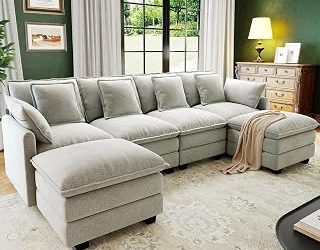
At 120 inches with an L-shaped layout, this one earns its place through genuinely wide seating and a chenille weave that hides wear better than flat-woven alternatives. The included ottoman doubles as a chaise extension, and the sleeper function makes it practical for guest-room duty in a studio or bonus room.
117″ V-Shaped 7-Seater with 2 Ottomans
The V-shaped corner configuration solves a problem square sectionals ignore: conversation angles in an open-plan room. Two movable ottomans let you build a full lounge or split the arrangement into separate seating zones, and the terracotta chenille reads warmer in person than most photos suggest.
Legend Vansen Reversible U/L-Shaped Sectional
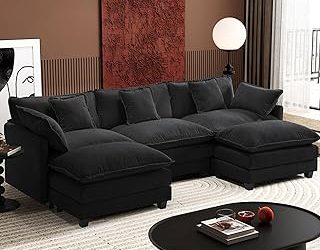
The reversible chaise is the standout feature here, letting you flip orientation without buying additional modules or drilling new mounting points. Plush polyester over a deep-seat frame holds shape well, and the dark grey is forgiving in high-traffic households.
7-Seater Chenille Corner Sectional in Camel
Seven seats plus two movable ottomans covers large families and home theater setups without resorting to a second sofa. The seven included pillows give you back support you can reposition, which matters when a deep seat leaves shorter sitters perched forward.
EASE MOOSE Blue Modular Sectional
Removable covers are the practical win on this one, making it the easiest pick on the list to maintain long-term. The wide, deep L-shape suits sprawling more than upright sitting, so pair it with a firm accent chair if your room needs both.
Frequently Asked Questions
Can I assemble a modular sectional alone?
Mostly, yes. Individual modules typically weigh 40 to 70 pounds, and most designs need only hand-tightening of legs and brackets. A second person helps for aligning connectors on larger seven-seat configurations, but no power tools are required.
Will deep seats work for shorter people?
They can, with adjustment. Stack two throw pillows behind your lower back to shorten the effective depth, or choose a model that includes several pillows so you can tune the fit per seat rather than compromising for everyone.
How do I stop modules from separating?
Check the bracket hardware every few months and re-tighten as needed. A rubber-backed rug or furniture grippers under the legs stops the outward drift that loosens connections in the first place.
Is chenille durable enough for pets?
Chenille resists visible wear well but its looped pile can snag on claws. If you have cats, prioritize removable covers so you can replace a damaged panel instead of living with it or replacing the whole sofa.
Final Thoughts
For most rooms, the 120″ chenille sectional with ottoman offers the best balance of usable depth, layout flexibility, and fabric that ages gracefully. If you’re seating a crowd, the 117″ V-shaped seven-seater handles volume without crowding the walkways, and the EASE MOOSE remains the smartest long-term choice thanks to covers you can actually remove, wash, and replace.