Key takeaways
- Footprint with chairs out: Add 22 to 24 inches per seated side to your tabletop dimensions. If that total blocks a doorway or traffic lane, you need an expandable or folding design rather than a smaller fixed table.
- Leaf mechanism quality: Butterfly and flip leaves are the most reliable for frequent use. Check whether the leaf stores inside the table (fewer lost parts) and whether the alignment pins are metal rather than molded plastic.
- Shape over size: Round tables seat more people in less square footage and eliminate corner bruises in narrow rooms. Oval extensions give you rectangular capacity without the sharp corners.
- Leg placement and material: Pedestal or splayed metal legs let chairs tuck in from any angle. Four corner legs limit where you can sit, which matters when you’re squeezing in a fourth chair.
- Hardware you can service: Look for standard bolts and threaded metal inserts instead of glued dowels or proprietary connectors. A table you can retighten in five minutes will outlast one you can’t.
What's inside
Measure your room before you shop, then measure again with chairs pulled out. That second number is the one that matters, and it’s where most small-space dining plans fall apart. A 36-inch table sounds compact until you add 24 inches of chair clearance on every side and realize you’ve just claimed the walkway to your kitchen. I’ve built and rebuilt enough breakfast nooks in tight apartments to know the fix is rarely a smaller tabletop — it’s a table that changes shape when you need it to.
This guide covers six small-space dining tables worth your money in 2026, judged the way a maker judges furniture: how the hardware feels under load, whether the leaf mechanism will still line up after two years of use, and how much of the assembly is genuinely straightforward versus fighting cam locks with a hex key. I’ve flagged which picks handle daily use for two, which expand for guests, and which ones you can fold flat and roll into a closet when floor space matters more than dinner.
As an Amazon Associate we earn from qualifying purchases.


🛒 Best Price Today on Amazon
Prime members get fast, free shipping on everything above, plus member-only deals. New members get a 30-day free trial — cancel anytime.
How to Choose a Dining Table For Small Space (2026)
- Footprint with chairs out: Add 22 to 24 inches per seated side to your tabletop dimensions. If that total blocks a doorway or traffic lane, you need an expandable or folding design rather than a smaller fixed table.
- Leaf mechanism quality: Butterfly and flip leaves are the most reliable for frequent use. Check whether the leaf stores inside the table (fewer lost parts) and whether the alignment pins are metal rather than molded plastic.
- Shape over size: Round tables seat more people in less square footage and eliminate corner bruises in narrow rooms. Oval extensions give you rectangular capacity without the sharp corners.
- Leg placement and material: Pedestal or splayed metal legs let chairs tuck in from any angle. Four corner legs limit where you can sit, which matters when you’re squeezing in a fourth chair.
- Hardware you can service: Look for standard bolts and threaded metal inserts instead of glued dowels or proprietary connectors. A table you can retighten in five minutes will outlast one you can’t.
The Best Dining Table For Small Space (2026)s Reviewed
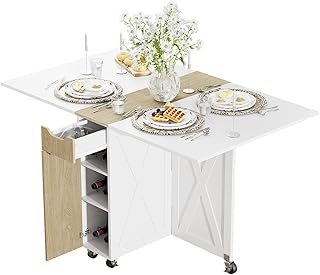
Folding Dining Table with 6 Wheels
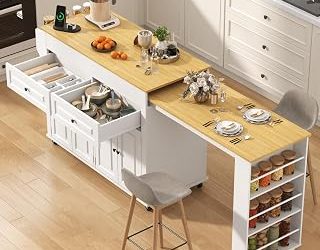
The dual drop-leaf design and locking casters make this the most genuinely flexible option here — fold both sides and it becomes a slim console you can park against a wall. It doubles convincingly as a sewing or craft table, though I’d recommend checking that all six caster locks engage before loading it up with anything heavy.
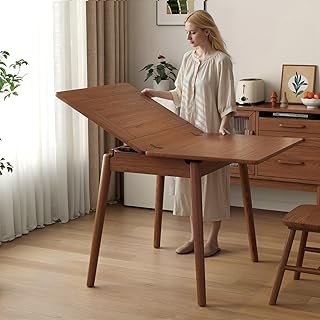
Solid Wood Expandable Dining Table, 23.6″–47.2″
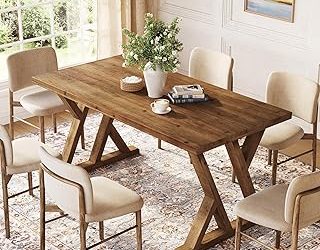
Solid wood construction at this price point is uncommon, and the walnut finish holds up better against knife nicks and spills than veneered particleboard. The 23.6-inch closed width is genuinely narrow enough for a galley kitchen, and assembly is limited to attaching legs — maybe fifteen minutes with the included wrench.
Extendable Round-to-Oval Table with Hidden Storage
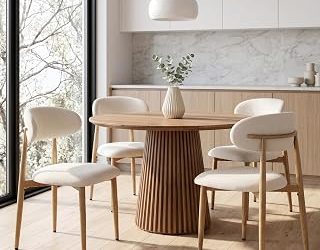
Going from a 35.4-inch round to a 47.2-inch oval covers the gap between weeknight dinners for two and hosting four to six, and the leaf tucks away in the built-in storage compartment so it never ends up behind a sofa. The oak finish and clean profile read more expensive than the price suggests.
AWQM 3-Piece Breakfast Nook Set
If you’re furnishing from scratch, a matched table-and-chairs set removes the guesswork of pairing heights, and the compact rectangular top fits against a wall without wasted overhang. The chairs are simple wood frames — comfortable enough for a meal, though you may want cushions for long dinners.
42″–58″ Extendable Round Table with Flip Leaf
The built-in flip leaf is the standout feature: no separate panel to store, and the mechanism folds up in seconds without tools. Sturdy metal legs plus the lower storage shelf make this a strong pick for apartments where the table also has to serve as landing space for keys, mail, and serving dishes.
Frequently Asked Questions
What’s the smallest table that still seats four?
A 36-inch round table seats four comfortably if the legs don’t block chair placement — a pedestal base is ideal. Below 32 inches, you’re realistically seating two adults with elbow room, or four for coffee and dessert.
Are folding tables sturdy enough for daily meals?
Good ones are. The weak points are hinge quality and leg-lock engagement, so test that the locks click firmly into place. Drop-leaf tables with wheels are more stable than they look, provided you lock the casters before eating.
Round or rectangular for a small room?
Round wins in square rooms and open-plan spaces because it improves traffic flow and seats more per square foot. Rectangular works better in narrow rooms where you can push one long side against a wall.
How much assembly should I expect?
Most small-space tables ship with the top preassembled and only require attaching legs, roughly 15 to 30 minutes. Extendable models with mechanisms usually arrive with the slides already installed — if yours doesn’t, expect closer to an hour.
Final Thoughts
For most small apartments, the Extendable Round-to-Oval Table with Hidden Storage offers the best balance of everyday compactness and hosting capacity, with the leaf stored where you’ll actually find it. If you need to reclaim floor space entirely, the Folding Dining Table with 6 Wheels is the most adaptable option here, and the Solid Wood Expandable Table in walnut is the pick for anyone who wants real wood and hardware that stays tight for years.