Key takeaways
- Assembling flat-pack shelves with a manual screwdriver turns a ten-minute job into a sore-wrist chore.
Assembling flat-pack shelves with a manual screwdriver turns a ten-minute job into a sore-wrist chore, and that is usually the moment people start shopping for a powered one. The trouble for a first-time buyer is that this category is split in two. One side is small, rechargeable, pen-style or pistol-style drivers meant for furniture, hinges and cabinet hardware. The other side is precision kits for phones and laptops. Pick the wrong side and you either strip a screw head or cannot turn a stubborn one.
This guide is for the beginner with under 100 dollars to spend who wants one tool for household assembly and light repairs. At this tier you can realistically expect low-voltage rechargeable drivers, a bit set, and some form of torque control, while heavy-duty drilling power and large batteries belong to bigger tools. Below you will find what to check on the spec sheet, then six drivers from the list reviewed from their titles alone. Where a title is cut off, confirm the missing details on the listing.
Quick Picks
Our top picks



As an Amazon Associate we earn from qualifying purchases at no extra cost to you.
| Product | Best for | Key spec from the title |
|---|---|---|
| SKIL Twist 2.0 SD5619-02 | All-round household use | 4V, pivoting head, torque setting, 28-piece bit set |
| Fanttik S2 Pro | Careful furniture assembly | 7 torque settings, 0.5 to 6 N.m, 20 magnetic bits |
| Fanttik S2 Pro Max | Tight corners | 7 torque settings, 16 bits, separate angle attachment |
| BLACK+DECKER BDCS50C | Simple, no-fuss use | 4V MAX, 180 RPM, 8 bits stored in the handle |
| ANXTECH 62-in-1 Kit | Phones, laptops and small gadgets | 3.7V, 150 RPM, 60 S2 steel bits, LED light |
| VESSEL e-ASSIST (US Model) | Fans of a quality hand-tool feel | 3 speeds with a 5-piece bit set |
How to Choose
Torque control and why a beginner needs it
A powered driver can over-tighten a screw in a blink, which strips a hole in particleboard or cracks a plastic housing. A driver with adjustable torque settings stops turning at a chosen resistance, so you can use a low setting on flat-pack furniture and a higher one on solid wood. A range such as 0.5 to 6 N.m covers delicate to firm. Drivers with a single fixed speed and no clutch are fine for occasional use but give you less protection.
Voltage, speed and what it means for the job
Most tools in this tier run at 3.7V to 4V. That is plenty for assembly and for turning screws that are already started in pre-drilled holes, but it is not meant for driving long screws into hardwood. Speed is listed in RPM; around 150 to 200 RPM is a controlled pace for screws, while faster is not automatically better for a beginner. If the work involves lots of small screws, speed matters less than a comfortable grip and good bit retention.
Bits, shank and head design
Look at the bit count only after you check the shank type. A quarter-inch hex shank accepts a wide range of standard bits, which makes it easy to replace or expand the set later. Magnetic bit holders keep screws from dropping. A pivoting head or a right-angle attachment helps reach into cabinets and behind appliances where a straight driver will not fit.
Charging, battery and storage
USB-C charging is convenient because a phone charger you already own can top it up. Built-in batteries save you a trip for replacements but eventually wear out; drivers that use standard batteries are easier to keep running. Storage matters more than you would expect: a carrying case or in-handle bit compartment is what keeps a bit set from scattering across a drawer. Budget models often cut corners on the bit steel and the quality of the chuck, so keep a few spare bits on hand.
The 6 Best Options
SKIL Twist 2.0 SD5619-02
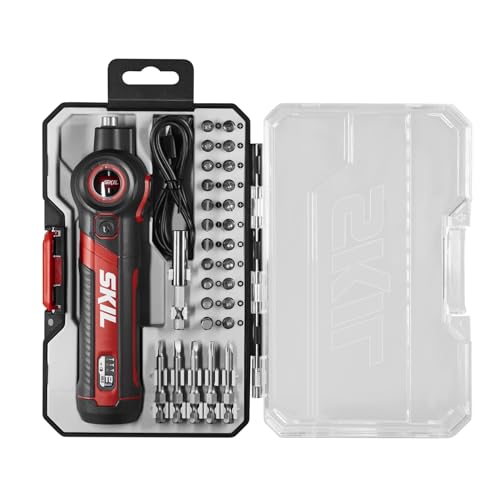
The SKIL is set up like a complete starter package. The title lists a 4V rechargeable body, a pivoting head, a torque setting, USB-C charging and a 28-piece bit set in a carrying case. The pivoting head is the standout for a beginner, since it lets you switch between an in-line grip and a pistol grip depending on how tight the space is.
- Strength: A pivoting head adapts to both open surfaces and cramped corners.
- Strength: USB-C charging and a case make it easy to live with day to day.
- Trade-off: The title mentions a torque setting, but not how many, so confirm the range on the listing.
Skip it if you want finely graded torque steps for delicate materials. A newcomer who mainly hangs shelves and swaps cabinet pulls will probably never miss them, but someone assembling thin-paneled furniture every month might.
Fanttik S2 Pro
This model targets people who would rather control the screw than guess. The title lists seven torque settings from 0.5 to 6 N.m, twenty magnetic bits, a quarter-inch hex shank and a right-angle accessory. Seven steps is the kind of range that lets a renter assemble a bookcase on a low setting and then switch up for a stiff hinge.
- Strength: Seven torque levels give real control on furniture panels.
- Strength: The standard hex shank accepts bits you may already own.
- Trade-off: The title is truncated at the angle accessory, so confirm what ships in the box.
Skip it if you want the cheapest possible driver for a one-time project. The extra torque control earns its place only if you will keep using the tool across many assembly jobs.
Fanttik S2 Pro Max
The Max version reads like the same family with a different bundle. The title lists the same seven torque settings across 0.5 to 6 N.m, sixteen magnetic bits, a quarter-inch hex shank and a separate angle adapter. With fewer bits than the S2 Pro, the draw is the separate angle piece, which suits anyone who expects to work inside cabinets or behind a toilet tank.
- Strength: A separate angle adapter reaches awkward spots.
- Strength: The same wide torque range supports fragile and firm fasteners alike.
- Trade-off: Compare the S2 Pro and S2 Pro Max listings closely; the bit count and extras differ.
Skip it if you already own a good bit set and do not need the extra attachments. Buyers who like to keep a tool bundle small may prefer the lighter package of its sibling.
BLACK+DECKER BDCS50C
This is the plain, familiar option. The title describes a 4V MAX cordless driver at 180 RPM with eight bits stored in a built-in compartment and batteries included. Nothing about it demands study, which is the point for a person who drives a few screws a month and just wants the job done.
- Strength: Bits live inside the tool, so nothing goes missing.
- Strength: Batteries are included, so it works on day one.
- Trade-off: The title does not mention adjustable torque, so over-tightening is something you manage by feel.
Skip it if you plan to assemble delicate or thin-paneled furniture often. The lack of a listed clutch makes a gentle touch on the trigger the main safeguard.
ANXTECH 62-in-1 Precision Kit
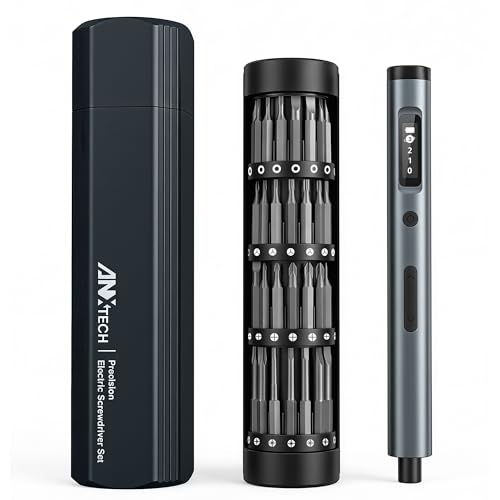
This is the odd one out, and that is useful to know. The title describes a 3.7V mini driver with sixty S2 steel bits, 150 RPM, an LED light and a one-hour runtime, aimed at phones and laptops. It is a precision tool, so it fits eyeglass screws, game controllers and small electronics better than a bookshelf.
- Strength: A very large bit set covers many small fasteners.
- Strength: The LED light helps in tight, shadowed spots.
- Trade-off: A precision driver is not built for furniture-scale screws.
Skip it if your main job is assembling furniture or hanging hardware. A larger driver with a standard hex shank is the better match for those tasks.
VESSEL e-ASSIST (US Model)
The VESSEL is for the buyer who values a hand-tool feel. The title notes three speeds and a five-piece bit set, and the e-ASSIST name points to a driver that adds a little power to a manual motion. That suits someone who likes control and does not need a large accessory library.
- Strength: Three speeds let you slow down for finishing work.
- Strength: A smaller bit set means less clutter.
- Trade-off: Only five bits are listed, so you may want to add a few sizes.
Skip it if you want a big bundle of bits and attachments included. Beginners with an empty toolbox may find they need to buy extra sizes soon after.
One more consideration for first-timers is noise and vibration. Small drivers are quiet compared with a drill, which matters in an apartment where a neighbor can hear weekend assembly. They are also light enough to use one-handed overhead, such as when mounting a curtain rod, though a long session will still tire your wrist more than the listing photos suggest.
Which One Fits Your Situation
You are building a first apartment’s worth of flat-pack furniture
The Fanttik S2 Pro is the strongest match, because its seven torque levels let you keep particleboard threads from stripping while still driving longer screws on a firmer setting.
You need to reach inside cabinets and behind fixtures
The SKIL Twist 2.0 and its pivoting head handles both straight and pistol grips, so one tool covers the odd angles.
You fix phones, remotes and small gadgets
The ANXTECH kit is built around small bits and a light, which is the right shape for electronics repair in 2026 or any year.
You want something you can hand to a family member
The BLACK+DECKER BDCS50C keeps bits in the handle and asks nothing of the user, so a roommate or relative can pick it up without a lesson.
Common Mistakes
- Using a precision driver for furniture-size screws and burning out the motor or stripping the bit.
- Leaving the torque on its highest setting for every job instead of starting low and stepping up.
- Buying on bit count while ignoring shank type, which decides whether you can buy replacements later.
- Skipping a pilot hole in hardwood and expecting a low-voltage driver to cut its own path.
- Storing the tool with a fully drained battery for months, which shortens lithium battery life.
Related guides
- Battery Powered Floodlight Camera With Local Storage
- Cordless Drill Brush Attachment For Bathroom Grout
- Rechargeable Emergency Lantern For Power Outages
Frequently Asked Questions
Can a 4V driver replace a drill?
No. It is meant for driving screws into prepared holes and assembling furniture, not for drilling. If you expect to drill, plan on a separate drill driver.
Are more torque settings really better?
For a beginner, yes, up to a point. More steps give finer control on soft materials, but the benefit is smaller if you mostly work with similar screws. Two or three well-chosen steps are fine for occasional use, and a driver with a single setting can still work if you keep a light touch on the trigger and stop as soon as the screw seats.
Do I need magnetic bits?
They are very helpful. Magnetic holders hold screws in place while you start them, which matters when you are working overhead or in a tight corner.
How should I store the bits?
Keep them in the case or in-handle compartment that came with the driver. Loose bits get lost, and mixing bit types makes it easy to use the wrong size and damage a screw head. Check that the bit fits snugly in the screw recess before you pull the trigger, and replace any bit with rounded corners.
More from Amazon
Programs that pair well with the guide above. Offers and eligibility are set by Amazon and may change.
A free business account with business pricing and bulk-buying tools for work, shop or home office.
Create a business accountFree shipping on eligible items, Prime Video and more. Eligible new members can start with a free trial.
Start a Prime free trialAudiobooks and podcasts to listen to on the go. Eligible new members can start with a free trial.
Try Audible freeAd-free music streaming. Eligible new subscribers can start with a free trial.
Try Music Unlimited freeAs an Amazon Associate we earn from qualifying purchases.