
Key takeaways
- Warranty Description: 1 year
- Tension Supported: 150LBS
- Item Dimensions D x W x H: 74.8"D x 38.5"W x 79.9"H
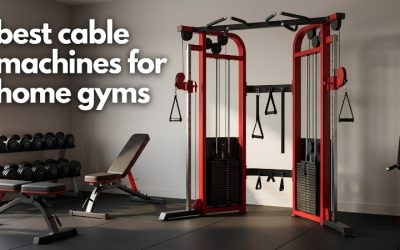
Most garage gym projects stall at the same point: you measure the wall where the machine is supposed to go, then discover the pulley tower needs another 18 inches of clearance behind it for the weight stack shroud, and the bench you already own eats the space you were saving for a walkway. A multi-station home gym is one of the few purchases where the box dimensions tell you almost nothing useful. What matters is the swept area — the floor you lose once the leg developer swings out, the arm curl pad is attached, and someone actually sits down to press.
The six machines below cover the realistic range for a converted garage, basement corner, or spare bedroom: selectorized stacks between 150 and 200 pounds, plate-free cable systems, and one bench that fills the gap for anyone who already owns dumbbells. None of them replicate a commercial gym, and pretending otherwise does you no favors. What they do well is remove the friction of driving somewhere, and let you hit rows, presses, curls, and leg extensions in a single circuit without changing plates.
Our top picks
 JELENS Home Gym
- Warranty Description: 1 year
- Tension Supported: 150LBS
- Item Dimensions D x W x H: 74.8"D x 38.5"W x 79.9"H
 Mikolo Home Gym
- Tension Supported: Weight Stack 154lbs (12 Levels)
- Item Dimensions D x W x H: 75"D x 36.3"W x 80"H
- Maximum Weight Recommendation: 300 Pounds
 SincMill Home Gym Multifunctional Full Body Workout
- Warranty Description: 10 Years
- Tension Supported: 148 pounds
- Handle Type: Pulldown, Strap
148-pound weight stack covers a full-body routine
Thick steel frame and guards built for heavy use
Backed by a 10-year warranty
69 x 40.7 x 80 inch footprint needs a dedicated space
148-pound max resistance may limit advanced lifters
| Product | Key specs | |
|---|---|---|
| JELENS Home Gym | Warranty Description: 1 year Tension Supported: 150LBS Item Dimensions D x W x H: 74.8"D x 38.5"W x 79.9"H | Check price |
| Mikolo Home Gym | Tension Supported: Weight Stack 154lbs (12 Levels) Item Dimensions D x W x H: 75"D x 36.3"W x 80"H Maximum Weight Recommendation: 300 Pounds | Check price |
| SincMill Home Gym Multifunctional Full Body Workout | Warranty Description: 10 Years Tension Supported: 148 pounds Handle Type: Pulldown, Strap | Check price |
 Marcy Multifunctional Workout Station 100lbs to 200lbs Marcy Multifunctional Workout Station 100lbs to 200lbs | This home gym system is made with heavy-duty… This gear comes with a 150-pound selectorized weight… Designed with dual action press arms, this versatile… | Check price |
 XGSW Multi-Function Home Gym Workout Station XGSW Multi-Function Home Gym Workout Station | Material: steels Tension Level: Heavy Duty (> 300 lbs) | Check price |
 YOLEO Adjustable Weight Bench for Home Gym YOLEO Adjustable Weight Bench for Home Gym | Item Dimensions D x W x H: 41"D x 12.6"W x 42.5"H Material: Alloy Steel | Check price |
 SunHome Multifunction Home Gym Equipment Workout Station SunHome Multifunction Home Gym Equipment Workout Station | Warranty Description: 2 Year Tension Supported: 138 pounds Handle Type: Fixed Handle | Check price |
 MQRW Push Up Board MQRW Push Up Board | Maximum Weight Recommendation: 600 Pounds Warranty Type: Push up board Assembly Instructions Description: No assembly required | Check price |
As an Amazon Associate we earn from qualifying purchases at no extra cost to you.
Quick Comparison
| Product | Best For | Standout Feature | Watch Out For |
|---|---|---|---|
| JELENS H11 Home Gym | Tight garage corners | 150 lb enclosed stack | Long assembly session |
| Mikolo Home Gym Station | Full-body circuits | 152 lb stack with multiple stations | Needs clearance on three sides |
| SincMill Home Gym | Simple setups | Straightforward station layout | Fewer attachment points |
| Marcy Workout Station | Progressive lifters | Stack upgradeable to 200 lb | Heaviest footprint here |
| XGSW Multi-Function Gym | Arm and leg isolation | Dedicated arm and leg trainers | Cable routing takes practice |
| YOLEO Adjustable Bench | Adding to existing gear | 827 lb rating, 98% pre-assembled | Not a standalone gym |
How to Choose
- Swept area, not box size: Add roughly 2 feet behind the stack and 3 feet in front of the seat before you decide a machine fits. Chalk the outline on the garage floor and walk it before ordering.
- Stack ceiling: A 150 lb stack is plenty for presses and curls but light for rows and pulldowns within a year of consistent training. If you already row 120 lb, look at the 200 lb configurations.
- Cable quality over station count: Marketing counts “30+ exercises,” but the cable, pulleys, and bushings decide whether the machine still runs smoothly in three years. Coated steel cable and sealed pulleys are worth more than an extra ankle strap.
- Assembly reality: Multi-station gyms routinely take four to seven hours with two people. Pre-assembled percentages on benches are meaningful; on stack machines, assume a full afternoon and a socket set.
- Floor and ceiling limits: Concrete slab handles anything here. On a wood-framed upper floor, spread the load with 3/4-inch plywood under horse stall mats, and confirm you have at least 7 feet of headroom for overhead pulldowns.
Top Picks Reviewed
Best Overall: Mikolo Home Gym Station
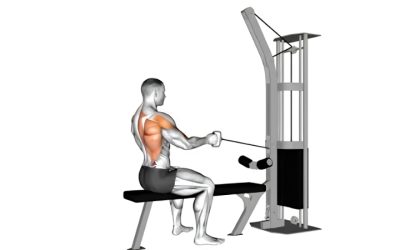
The 152 lb selectorized stack and multi-station frame make this the most complete single purchase on the list. You can run a pulldown, low row, chest press, and leg extension without leaving the seat area, which is exactly what keeps a garage session under 45 minutes on a work night.
The limitation is spatial. It wants clearance on three sides — behind for the stack housing, in front for the seat, and above for the lat bar. In a single-car garage that still holds a car, this is a genuinely tight fit rather than a mild inconvenience.
Best for Tight Spaces: JELENS H11 Home Gym
The H11 packs a 150 lb stack into a narrower frame than most competitors, and the enclosed stack shroud means you can put it near a walkway without worrying about pinch points. It suits a bedroom corner or the end wall of a garage bay.
Expect a long build. Owners consistently report a multi-hour assembly with fiddly cable threading, and the cables benefit from a re-tension check after the first month of use once everything settles.
Best for Heavy Progression: Marcy Workout Station
Marcy has been building this category for decades, and the 100 to 200 lb stack options mean you are not capped the moment your pulls get strong. The frame geometry feels planted under load, which matters more than it sounds when you are pulling hard on a seated row.
It is also the bulkiest option here and the least apologetic about it. If your training space doubles as storage or a laundry area, measure twice — this one does not tuck away.
Best for Isolation Work: XGSW Multi-Function Gym
The dedicated arm trainer and leg trainer give you preacher-style curls and leg extensions with clean angles, which many combo machines fudge. For anyone training around a shoulder or knee limitation, that control is the selling point.
The trade-off is a learning curve. Switching between the pulley system and the attachment arms takes a few sessions before it becomes automatic, and the manual is not especially clear about cable routing.
Best Simple Setup: SincMill Home Gym
SincMill keeps the station count modest and the layout obvious, which is a virtue if you are the only person who will ever use it and you already know your three or four core movements. Less to adjust means fewer excuses to skip a set.
Fewer attachment points also means less room to grow. If you like adding accessories — rope handles, ankle cuffs, tricep bars — you will run out of anchor options sooner than on the Mikolo or Marcy.
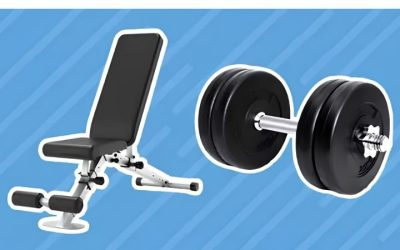
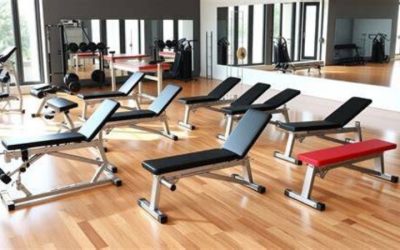
Best Add-On: YOLEO Adjustable Bench
If you already own dumbbells, this bench is the cheapest way to unlock incline presses, supported rows, and step-ups. The 827 lb ASTM-certified rating and 98% pre-assembled delivery mean you are training within 15 minutes of opening the box, and it folds flat against a wall afterward.
It is not a gym on its own. Without dumbbells or a rack, a bench is just furniture, so budget for weights in the same purchase rather than treating this as a complete solution.
Frequently Asked Questions
How much ceiling height do I need for a home gym machine?
Plan for at least 7 feet, and 7 feet 6 inches if you are over 6 feet tall. Lat pulldown bars travel upward on the return, and a low garage ceiling with exposed joists will limit your range of motion long before the machine does.
Is a 150 lb weight stack enough?
For pressing, curls, flyes, and most leg extension work, yes — for years. For seated rows and pulldowns it becomes limiting faster, because pulling muscles are typically stronger. Some machines accept add-on plates, so check that before you assume you have hit a ceiling.
Can I put one of these on a second floor?
Usually, if you spread the load and place the frame perpendicular to the joists near a bearing wall. The static weight is comparable to a large aquarium; the bigger issue is noise transfer from the stack slamming down, which rubber stack pads help considerably.
Do I still need free weights?
A cable machine handles hypertrophy work well but does not train stabilizers the way free weights do. A pair of adjustable dumbbells alongside any of these covers that gap for a modest additional outlay.
Final Thoughts
For most garage conversions, the Mikolo Home Gym Station hits the best balance of stack weight and station variety, while the JELENS H11 is the smarter pick when floor space is genuinely scarce. If you expect your pulling strength to climb, the Marcy Workout Station and its 200 lb configuration will stay useful longer — and anyone who already owns dumbbells should start with the YOLEO bench before committing to a full machine.
Write Your Review
No reviews yet. Be the first to share your experience!