
Key takeaways
- Item Dimensions D x W x H: 46"D x 16.7"W x 17.2"H
- Material: Superior Alloy Steel
A workout bench is the piece of home gym equipment people buy last, spend the least on, and complain about the most. That’s backwards. The bench is the surface you press from, row off of, and step onto — it’s the interface between your body and every heavy thing in the room. A pad that’s an inch too narrow will fight your shoulder blades on every set of bench press. A frame built from thin tubing will telegraph a wobble the moment you unrack 185 pounds, and once you feel that shimmy, you stop pressing hard. Remember that the load rating has to carry your body weight plus the bar plus the plates: a 190-pound lifter with 225 on the bar is asking the frame for well over 400 pounds before anyone has added a warm-up set.
The good news is that a flat bench is one of the few pieces of gear where the cheap option can genuinely be the right option. There are no hinges to loosen, no ladder brackets to rattle, no pop-pin to seize up. You’re buying welded steel, foam, and vinyl. Spend your money on the rack and the plates, then buy a flat bench that’s the correct height, wide enough to support your back, and stable enough that you forget it’s there. Below is what to actually look at, and a close look at the Cap Barbell Flat Weight Bench Color Series — the budget standard that shows up in more garage gyms than any specialty bench ever will.
Our top picks
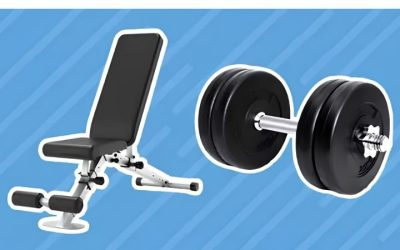
 NICEPEOPLE Adjustable Weight Bench for Home Gym
- Item Dimensions D x W x H: 46"D x 16.7"W x 17.2"H
- Material: Superior Alloy Steel
29.3-inch backrest is sized to fit most users
Folds flat in one step by pulling two pins
Non-slip leather padding resists sweat buildup
660-pound capacity is modest next to 800lb-plus rivals
Compact apartment design offers less width than standard benches
 YOLEO Adjustable Weight Bench for Home Gym
- Item Dimensions D x W x H: 41"D x 12.6"W x 42.5"H
- Material: Alloy Steel
Ships 98% pre-assembled with just two pins to insert
ASTM-certified to 827 pounds of total capacity
Folds down to 31.5 x 12.6 x 13 inches for storage
Rated max user weight of 330 pounds caps who can train
84 position options can take time to learn
 Multi-Function All in 1 Weight Bench Set
- EU Spare Part Availability Duration: 1 Years
- Item Dimensions D x W x H: 41.73"D x 34.64"W x 13.39"H
- Material: Alloy Steel
14 total backrest, seat and footrest positions
Folds into a compact shape with no reassembly
1.4-inch thick padding eases pressure on joints
EU spare parts availability covers only one year
660-pound capacity trails some rival adjustable benches
| Product | Key specs | |
|---|---|---|
| NICEPEOPLE Adjustable Weight Bench for Home Gym | Item Dimensions D x W x H: 46"D x 16.7"W x 17.2"H Material: Superior Alloy Steel | Check price |
| YOLEO Adjustable Weight Bench for Home Gym | Item Dimensions D x W x H: 41"D x 12.6"W x 42.5"H Material: Alloy Steel | Check price |
| Multi-Function All in 1 Weight Bench Set | EU Spare Part Availability Duration: 1 Years Item Dimensions D x W x H: 41.73"D x 34.64"W x 13.39"H Material: Alloy Steel | Check price |
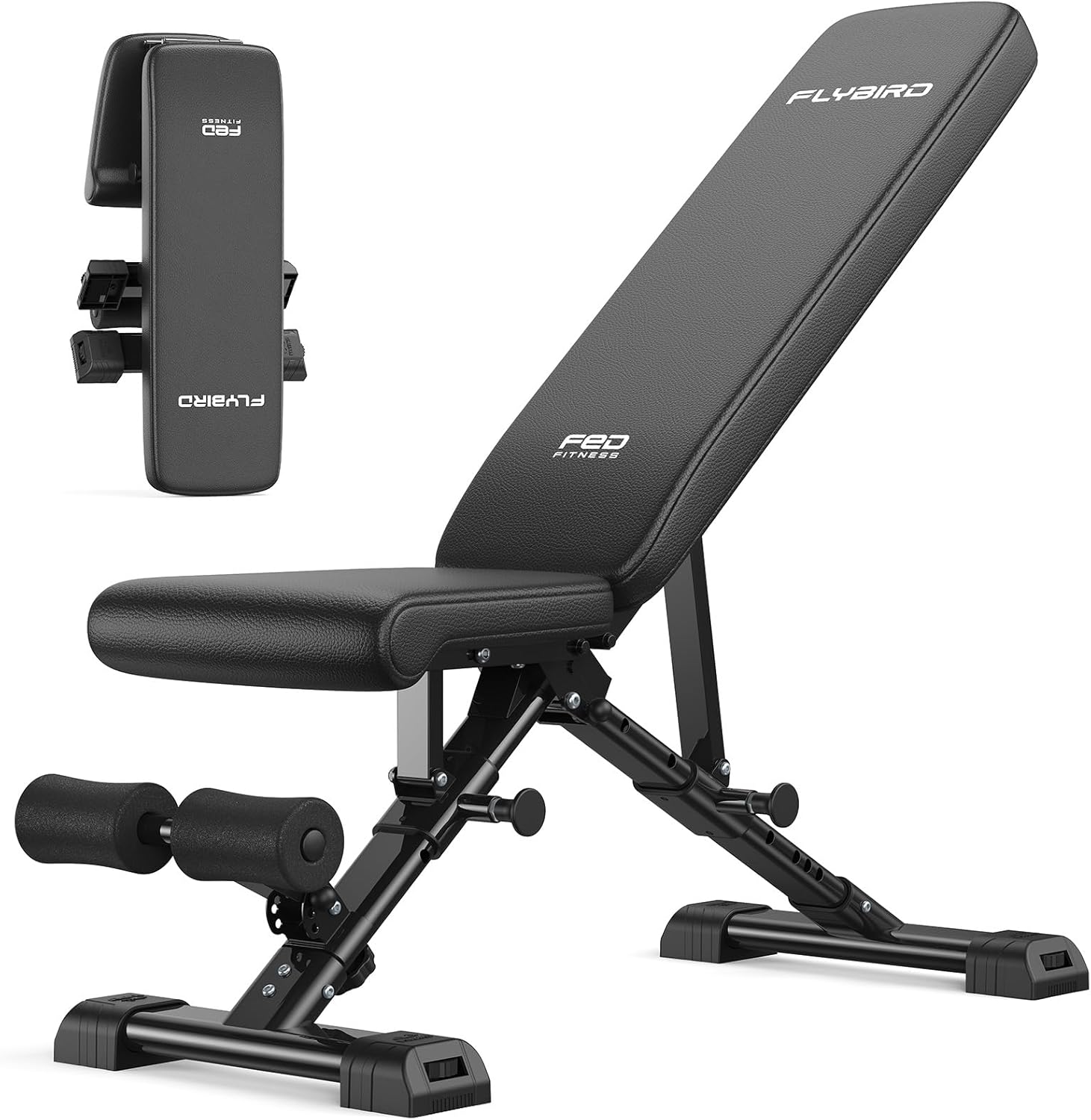 FLYBIRD WB5 Weight Bench FLYBIRD WB5 Weight Bench | Warranty Description: 1 year Item Dimensions D x W x H: 46"D x 13"W x 48.5"H Material: Breathable leather &Alloy Steel | Check price |
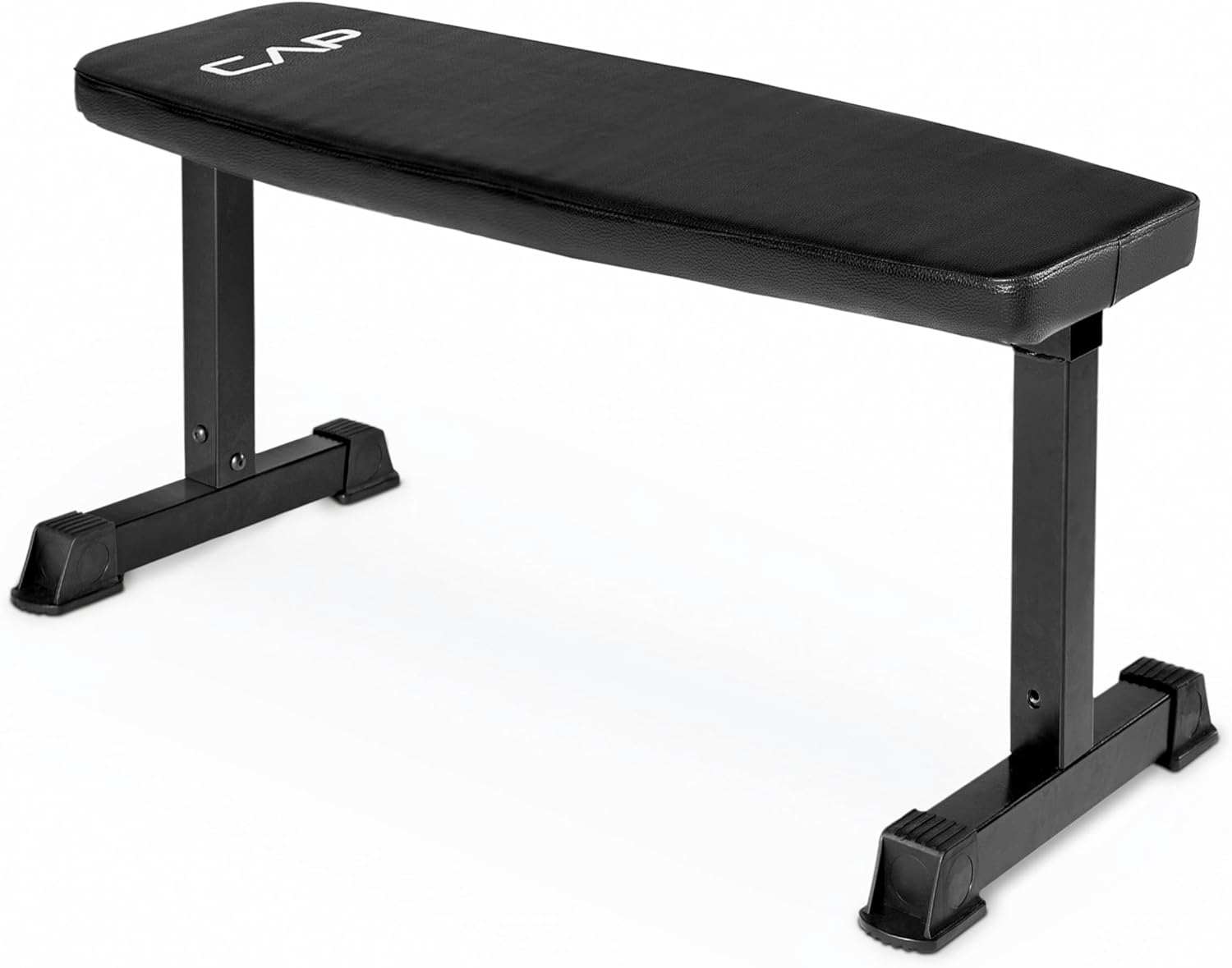 Cap Barbell Flat Weight Bench Color Series Cap Barbell Flat Weight Bench Color Series | Warranty Description: 30 day manufacturer Item Dimensions D x W x H: 18.11"D x 42.52"W x 19.09"H Material: Alloy Steel, Vinyl | Check price |
 FLYBIRD WB2 Weight Bench FLYBIRD WB2 Weight Bench | Material: Sweat-Proof Leather & Alloy Steel Frame Material: Alloy Steel EU Spare Part Availability Duration: 7 Years | Check price |
 Weight Bench Press Weight Bench Press | Item Dimensions D x W x H: 9.84"D x 12.6"W x 31.5"H Material: Alloy Steel | Check price |
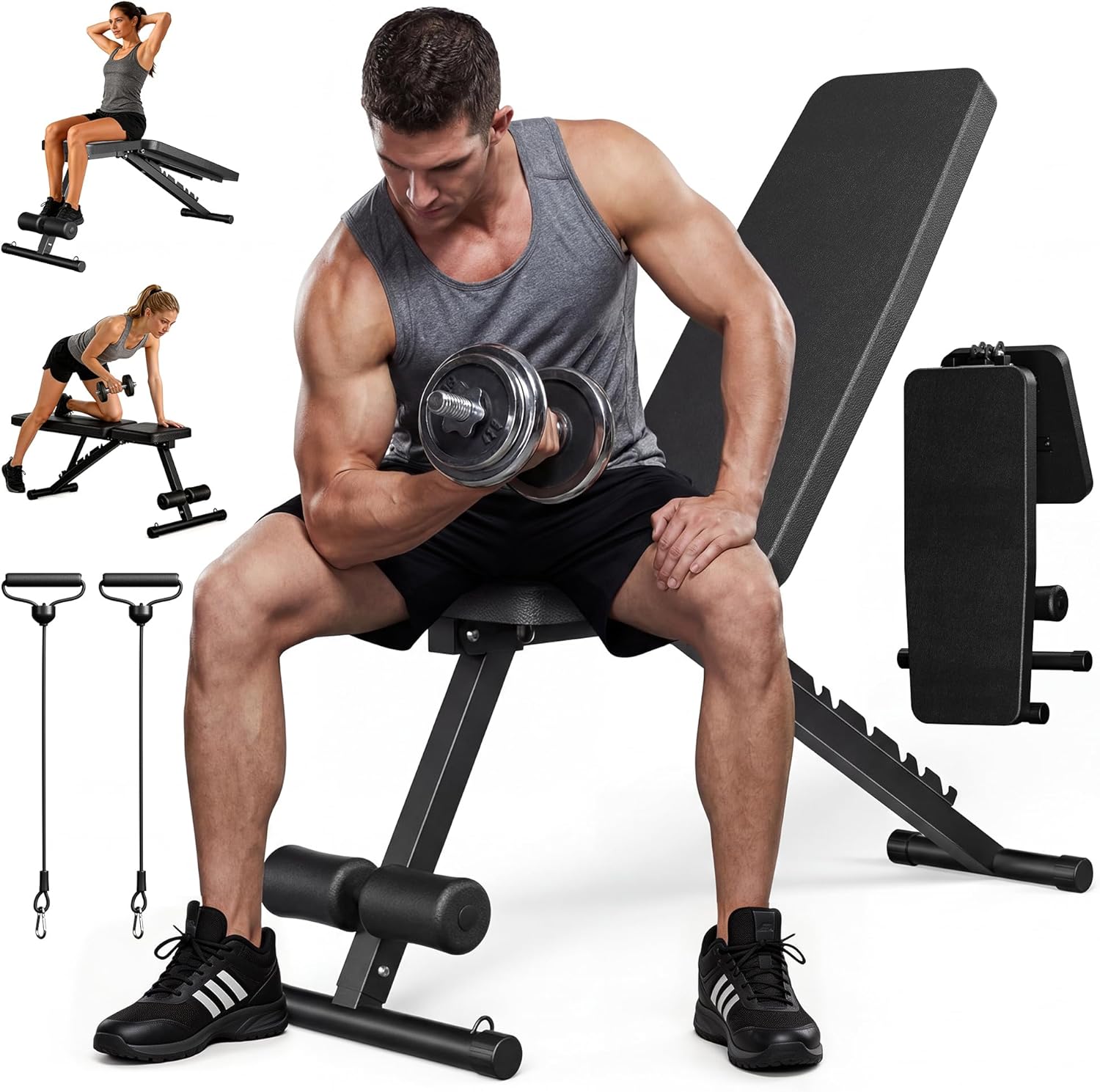 Adjustable Weight Bench for Home Gym Adjustable Weight Bench for Home Gym | Item Dimensions D x W x H: 44.9"D x 16.7"W x 17.7"H Material: Alloy Steel | Check price |
As an Amazon Associate we earn from qualifying purchases at no extra cost to you.
Quick Comparison
| Bench | Type | Adjustability | Typical Pad Height | Best For | Footprint |
|---|---|---|---|---|---|
| Cap Barbell Flat Weight Bench Color Series | Fixed flat bench, powder-coated steel | None — flat only | Roughly 17–18 in, standard press height | Barbell and dumbbell pressing, rows, hip work, step-ups | About 43 in long, stores upright against a wall |
| Category reference: adjustable FID bench | Flat / incline / decline | Multiple back and seat angles | Often 18–20 in (higher due to mechanism) | Incline pressing, seated shoulder work | Larger, heavier, harder to stash |
| Category reference: competition flat bench | Fixed flat, heavy gauge | None | 17 in to spec | Maximal pressing, powerlifting standards | Wide, heavy, permanent placement |
How to Choose
- Match pad height to your legs, not to a spec sheet. Seventeen inches is the competition standard for a reason: it lets most lifters plant their feet flat and drive through the floor. Sit on it before you commit to a routine — if your heels dangle, you’ll lose leg drive and start squirming on heavy sets.
- Check pad width against your shoulders. Around 11 to 12 inches is the sweet spot. Narrower pads let your shoulder blades pinch together freely but leave broad lifters feeling like they’re balancing on a beam. Wider pads feel secure but can block retraction and quietly shorten your range of motion.
- Look at the steel, not the sticker. Thicker wall tubing, welded joints instead of long bolt runs, and a wide stance at the feet are what kill wobble. Give any bench a hard shove side to side once assembled; a bench that rocks empty will rock worse loaded.
- Decide honestly whether you need incline. Adjustability sounds free but costs you height, stability, weight, and money. If your program is flat pressing, rows, and dumbbell work, a fixed flat bench is the better tool — and you can always add an adjustable one later.
- Plan where it lives. A flat bench that tips up and leans in a closet or slides under a rack changes what’s possible in a small space. Measure your press area, then measure the gap between rack uprights, before you order anything.
Top Picks Reviewed
Cap Barbell Flat Weight Bench Color Series
This is the bench that gets recommended by people who have used far more expensive ones. The build is deliberately simple: a powder-coated steel frame with angled legs, a single fixed pad, and floor protectors on the feet. Nothing adjusts, which means nothing loosens, slips a notch mid-set, or develops that hollow rattle that adjustable benches earn after a year of use. Assembly is a short job with the supplied hardware — bolt the legs to the frame, seat the pad, snug everything down, then re-check the bolts after your first week of training, which is good practice on any bolt-together bench.
The pad is firm rather than plush. That’s the right call for pressing: soft foam compresses under your shoulder blades and turns a stable base into a mattress. The vinyl cover wipes clean, and the color options — the whole point of the Color Series — mean you can pick something other than another black rectangle for your garage. Cap lists a generous weight capacity for this frame, and it comfortably handles the loads most home lifters put on it, but check the current listing for the exact figure and treat it as body weight plus bar plus plates combined, not just the barbell.
Where it’s honest about its price: the footprint is compact and light enough to shift with one hand, which is a real advantage in a shared space, but it also means it isn’t a bolted-down competition slab. If you’re benching near your one-rep max, set it on rubber flooring, keep the feet against the floor protectors, and be deliberate about your setup. Also plan for a rack or spotter — this is a bench, not a bench press station, so there are no uprights and no safeties. Used for barbell pressing inside a rack, dumbbell work, chest-supported rows, hip thrusts, and step-ups, it does everything a flat bench should for a fraction of what specialty models cost.
Frequently Asked Questions
Is a flat bench enough, or should I buy adjustable?
If your training centers on barbell bench press, dumbbell presses, rows, and lower-body accessory work, flat is enough. Adjustable benches earn their keep when you specifically program incline pressing or need seated back support for overhead work. Many lifters end up owning both: a rock-solid flat bench for heavy pressing and an adjustable one for accessories.
How much weight capacity do I actually need?
Add your body weight to your heaviest planned bench, then add a margin. A 200-pound lifter working toward a 250-pound bench should be looking for a rating comfortably above 450 pounds. Ratings are static figures measured under controlled conditions, so treat them as a ceiling to stay well under, not a target to approach.
Do I need a squat rack to use this bench?
For barbell bench pressing, yes — you need uprights to unrack from and safeties or a spotter to bail into. A standalone flat bench is perfectly usable without a rack for dumbbell presses, flyes, rows, skull crushers, hip thrusts, and step-ups, which is plenty of programming on its own.
How do I keep the pad and frame in good shape?
Wipe sweat off the vinyl after each session — salt is what cracks the surface over time — and skip harsh solvents. Store it out of direct sun and away from damp concrete. Re-torque the bolts every month or two, and if a chip appears in the powder coat, dab it with touch-up paint before rust gets a start.
Final Thoughts
Buy the bench that disappears under you. That means correct height so your feet drive into the floor, a pad firm and wide enough to support a retracted upper back, and a frame that doesn’t flinch when the bar comes down. The Cap Barbell Flat Weight Bench Color Series hits those marks without asking for rack money, and its lack of moving parts is a feature rather than a compromise. Get it inside a rack, keep the bolts tight, and put the savings toward plates — that’s where the progress actually comes from.
Write Your Review
No reviews yet. Be the first to share your experience!