Key takeaways
- Built-in vs. freestanding: This is the first fork in the road. Freestanding units vent from the rear and back panel, so burying one in a cabinet traps heat and shortens compressor life. Built-in models vent forward through a front grille and can sit flush. If you’re cutting a cabinet opening, buy built-in rated and don’t improvise.
- Interior dimensions over can counts: A “120 can” rating assumes perfectly stacked 12 oz cans with no wasted space. Measure your actual bottles. Tall growlers, wine bottles, and 16 oz tallboys will change the math fast, so check shelf height and whether shelves are removable rather than just adjustable.
- Glass construction and condensation: Double-pane tempered glass insulates dramatically better than single pane and resists fogging in humid rooms. A basement or garage install with single-pane glass will sweat, drip, and force the compressor to run constantly.
- Temperature range and thermostat type: Digital controls with a displayed setpoint let you dial in 34°F for soda or 50°F for red wine. Analog dials with vague numbered settings require trial and error plus a separate thermometer to verify anything.
- Noise and placement reality: Compressor units cycle audibly, typically 38 to 45 dB. That’s fine in a garage or open kitchen, distracting in a bedroom or home office where you take calls. Also confirm the hinge side is reversible before you commit to a spot near a wall.
What's inside
Shopping for a glass door mini fridge sounds simple until you start measuring. The unit that looked perfect in photos turns out to need four inches of rear clearance, or the door swings into your bar cart, or the compressor hums loud enough to compete with the TV two rooms away. I’ve installed a half dozen of these in workshops, garages, and built-in cabinetry, and the pattern is consistent: the specs that matter most are rarely the ones highlighted on the box. Can capacity is marketing. Interior dimensions, venting requirements, and reversible hinges are what determine whether the fridge actually works where you want it.
This guide covers what to check before you commit, then walks through five glass door beverage fridges I’d recommend for different situations: freestanding units for offices and rec rooms, an under-counter model built for actual cabinet integration, and a commercial display cooler for anyone stocking volume. Each review focuses on build quality, thermal performance, and the practical quirks you only notice after living with the thing.
As an Amazon Associate we earn from qualifying purchases.



How to Choose a Glass Door Mini Fridge (2026)
- Built-in vs. freestanding: This is the first fork in the road. Freestanding units vent from the rear and back panel, so burying one in a cabinet traps heat and shortens compressor life. Built-in models vent forward through a front grille and can sit flush. If you’re cutting a cabinet opening, buy built-in rated and don’t improvise.
- Interior dimensions over can counts: A “120 can” rating assumes perfectly stacked 12 oz cans with no wasted space. Measure your actual bottles. Tall growlers, wine bottles, and 16 oz tallboys will change the math fast, so check shelf height and whether shelves are removable rather than just adjustable.
- Glass construction and condensation: Double-pane tempered glass insulates dramatically better than single pane and resists fogging in humid rooms. A basement or garage install with single-pane glass will sweat, drip, and force the compressor to run constantly.
- Temperature range and thermostat type: Digital controls with a displayed setpoint let you dial in 34°F for soda or 50°F for red wine. Analog dials with vague numbered settings require trial and error plus a separate thermometer to verify anything.
- Noise and placement reality: Compressor units cycle audibly, typically 38 to 45 dB. That’s fine in a garage or open kitchen, distracting in a bedroom or home office where you take calls. Also confirm the hinge side is reversible before you commit to a spot near a wall.
The Best Glass Door Mini Fridge (2026)s Reviewed
hOmeLabs Beverage Refrigerator, 120 Cans
The most well-rounded freestanding pick here, with a genuinely useful 34°F to 50°F range, three removable wire shelves, and a mechanical thermostat that holds temperature steadily once dialed in. The reversible door and low-glare interior lighting make it easy to place, and the double-pane glass keeps condensation manageable in all but the swampiest basements.
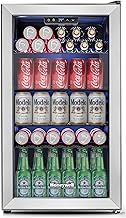
Honeywell 116 Can Beverage Cooler
Honeywell went heavier on the cabinet and door seal than most units in this class, which shows up as tighter temperature stability and a door that actually thunks shut instead of bouncing. The adjustable shelving is a bit stiff to reconfigure, but the commercial-grade compressor is the quietest of the freestanding group in my experience.
Nutrichef 108 Can Beverage Refrigerator
The standout spec is the 21°F to 64°F range, which is unusually wide and makes this the only unit here that can genuinely serve as a beer chiller or a cellar-temp wine cabinet depending on the season. At 19 by 17 by 33 inches it’s a compact footprint, though the tradeoff is fewer cans and shelf spacing that favors standard bottles over anything oversized.
EUHOMY 15 Inch Under Counter Beverage Fridge
The right answer if you’re building this into cabinetry, since it’s front-vented and rated for true built-in installation at a standard 15 inch width. Fit and finish on the stainless trim is solid, the LED lighting is clean, and 127 can capacity in that footprint is impressive, though you’ll want to verify your rough opening carefully before cutting.
Commercial 24.5″ Glass Door Display Fridge, White
This is a different category of machine: 15 cubic feet, five heavy shelves, and an auto-rebound door built for constant traffic in a shop or busy bar. Overkill for most homes, but if you’re stocking a large game room or entertaining at volume, the pull-down capacity and recovery speed are in another league entirely.
Frequently Asked Questions
Can I put a freestanding beverage fridge in a cabinet?
Not without consequences. Freestanding units dump heat out the back and sides and need roughly two to four inches of clearance on all vented surfaces plus airflow above. Enclosing one causes the compressor to run continuously, which drives up energy use and shortens its service life considerably.
Will a glass door fridge keep drinks cold enough in a hot garage?
Most of these are rated for ambient temperatures up to about 90°F. Above that, cooling performance degrades noticeably. If your garage regularly exceeds that, look for a double-pane glass model and expect the unit to cycle far more often than it would indoors.
Why is my glass door fogging up?
Usually humidity plus a single-pane or poorly sealed door. Check the gasket for gaps by closing the door on a dollar bill and pulling; if it slides out easily, the seal is weak. A small dehumidifier in the room solves most remaining cases.
Do these fridges work for storing wine?
Only models reaching the mid 50s, which rules out several units optimized for 34°F to 40°F soda storage. The Nutrichef’s 64°F upper limit makes it the most wine-capable option here, though dedicated wine coolers still offer better humidity control for long-term aging.
Final Thoughts
For most buyers, the hOmeLabs 120 can unit is the safest choice: balanced capacity, dependable temperature control, and easy placement. Choose the EUHOMY 15 inch model instead if you’re integrating into cabinetry, since front venting is non-negotiable for built-in work, and go with the Nutrichef if you want the flexibility to swing between beer-cold and wine-cellar temperatures in one cabinet.