Key takeaways
- The best heat diffuser for stovetop cooking is a thick, flat diffuser sized close to your burner, with a heat-resistant handle and construction suited to your cooktop—usually a solid cast-iron plate for maximum stability or a layered stainless-steel diffuser for…
The best heat diffuser for stovetop cooking is a thick, flat diffuser sized close to your burner, with a heat-resistant handle and construction suited to your cooktop—usually a solid cast-iron plate for maximum stability or a layered stainless-steel diffuser for lighter, more responsive cooking.
Our top picks
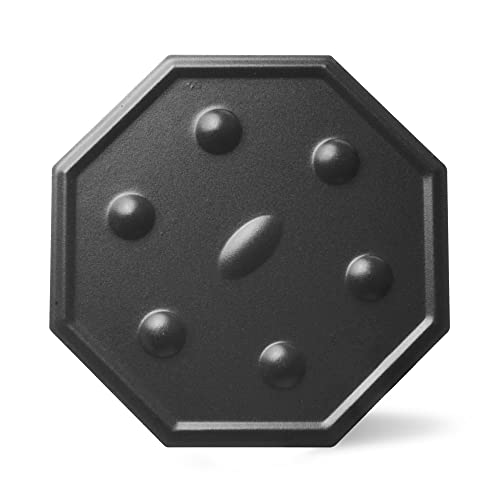
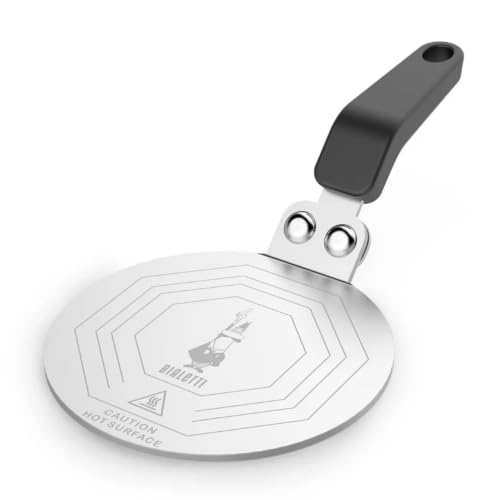
As an Amazon Associate we earn from qualifying purchases at no extra cost to you. Ratings are shown as listed on Amazon.
What a stovetop heat diffuser does
A heat diffuser sits between the burner and cookware. It spreads concentrated heat across a wider area, reducing hot spots and slowing the transfer of heat into the pan. This is useful for simmering sauces, melting chocolate, cooking rice, warming delicate custards, and using thin cookware that would otherwise scorch.
A diffuser does not make a burner cooler in the same way as turning down the control. It stores and redistributes heat, so it can remain hot after the burner is switched off. Reduce the heat gradually, allow extra preheating time, and use a dry cloth or oven mitt when touching the handle.
Best diffuser by cooking situation
| Cooking situation | Best choice | Useful specification | Why it fits |
|---|---|---|---|
| Long, gentle simmering | Solid cast iron | 8–10 inches wide, about 0.4–0.8 inches thick | High thermal mass smooths temperature changes and resists hot spots |
| Melting chocolate or butter | Layered stainless steel | 6–8 inches wide, roughly 0.1–0.25 inches thick | Spreads heat without adding as much stored heat as cast iron |
| Small saucepan on a compact burner | Small steel diffuser | 5–7 inches wide, with a low-profile handle | Reduces overhang and leaves room for nearby controls |
| Large stockpot or Dutch oven | Large cast-iron plate | 9–11 inches wide and rated for the cookware load | Provides a more even support area under a broad vessel |
| Glass or ceramic cooktop | Flat-bottomed, smooth diffuser approved by the cooktop maker | No raised feet, sharp edges, or rocking base | Minimizes scratching and preserves contact with the cooking surface |
Material comparison: cast iron, stainless steel, and aluminum
| Material or construction | Heat behavior | Advantages | Trade-offs |
|---|---|---|---|
| Solid cast iron | Slow to heat and slow to cool; excellent heat retention | Very stable, durable, and effective for low simmering | Heavy, can rust if left damp, and may damage glass if dragged or dropped |
| Layered stainless steel | Moderate heat retention with broad heat distribution | Rust-resistant, easier to handle, and usually compatible with induction | Thin models may warp; it can still develop a hotter center on a powerful burner |
| Aluminum core with steel exterior | Heats relatively quickly and spreads heat well | Lightweight and responsive for delicate tasks | May be unsuitable for induction unless it has a magnetic steel base |
| Steel plate with vented or patterned underside | Moderate heat buffering | Often affordable and lighter than cast iron | Raised patterns can be unstable on glass or ceramic surfaces |
For the most even low-temperature cooking, thickness and mass matter more than a decorative finish. A very thin metal disk may spread heat initially but can transmit a strong burner’s center hot spot almost immediately. A thick plate offers better buffering, but it also takes longer to respond when you change the control.
How diameter affects performance
Choose a diffuser that is at least as wide as the heated portion of the pan base, but not so large that it extends far beyond the burner or interferes with adjacent controls. For a typical 6-inch burner, a 7–8-inch diffuser is a practical starting point. An 8–10-inch diffuser suits a larger burner or a medium saucepan. A 10–11-inch plate is appropriate only when the burner grate or cooktop provides full, stable support.
Measure the pan base rather than the rim. A saucepan advertised as 10 inches wide may have a much smaller flat base. The diffuser should support the flat base with little overhang. Excessive overhang creates a hot exposed ring, makes the plate easier to bump, and can transfer heat toward knobs or the edge of a glass cooktop.
Thickness, weight, and response time
Thickness is a compromise between evenness and control. A diffuser around 0.1–0.25 inches thick is light and relatively responsive. A 0.25–0.5-inch plate gives more stable simmering without becoming excessively heavy. Cast iron around 0.4–0.8 inches thick provides the strongest heat buffering, but it may take 5–15 minutes to heat fully depending on the burner and plate size.
Check the combined weight of the diffuser, pan, and food. A large cast-iron diffuser can weigh several pounds before cookware is added. On a gas range, confirm that the diffuser sits securely on the grate and does not rock. On a glass cooktop, never slide a heavy diffuser across the surface; lift it instead.
Handle design and everyday safety
A removable or folding handle is useful when storage space is limited, but the attachment must be rigid enough that the plate cannot twist while carrying it. A fixed metal handle is simple and durable, although it can become hot and may project into the path of a neighboring pan.
- Choose a handle with a clear heat-resistant grip or use an appropriate oven mitt.
- Prefer a handle that stays outside the burner area and does not sit over another flame.
- For a crowded small kitchen, look for a low-profile or removable handle.
- Avoid loose, hollow handles that can trap grease and moisture.
- Keep childr
Affiliate disclosure. As an Amazon Associate we earn from qualifying purchases at no extra cost to you. Prices accurate as of the date shown.Best Heat Diffuser for Stovetop CookingCheck price on Amazon