Uneven baking usually starts with heat distribution, not a broken oven. When someone asks why is my oven cooking unevenly, the first checks are pan placement, whether preheating finished, clearance around the food, and bakeware that absorbs extra heat. Persistent problems can also come from temperature calibration, a damaged door seal, or a failing heating or convection component.
Quick Answer: Start with one centered pan in a fully preheated oven, leaving room for air to circulate. Compare results using the same recipe and pan. If every batch remains consistently underdone, measure average oven temperature before changing settings. Stop using the appliance and arrange service for sparking, unexpected smoke, a gas odor, or visible damage.
As an Amazon Associate we earn from qualifying purchases.
By DIY Ideas 4 Home Editorial Team
Why Your Oven Cooks Unevenly: Common Causes
The location of the over-browned patch is a useful clue. A cake with one dark edge points toward placement or airflow; several consistently underbaked batches suggest a different problem. Whirlpool’s “How to Correct Uneven Baking or Browning” and Samsung’s US oven guidance identify ordinary setup issues before advising owners to investigate calibration or service.
| Symptom or Sign | Likely Cause | First Check | DIY or Pro |
|---|---|---|---|
| Pan browns near one wall | Blocked airflow or offset rack | Center pan and clear surrounding space | DIY |
| Top dark but underside pale | Short preheat or rack too high | Finish preheat; try manual’s suggested rack | DIY |
| Cookies dark underneath | Dark pan or wrong cooking mode | Check pan finish and recipe’s mode | DIY |
| Multi-rack batches look different | Overcrowding or convection setup | Stagger pans; check mode instructions | DIY |
| All dishes consistently cook too fast or slow | Temperature offset | Measure temperatures over several cycles | DIY, then pro if persistent |
| One side remains cold or fan grinds | Seal, heater, sensor or fan issue | Visually check cooled appliance | Pro |
1. The Oven Has Not Fully Preheated
A preheat chime does not mean you can ignore the cooking instructions for every recipe or oven model. Putting a delicate cake into a cold cavity changes how the top, bottom, and pan heat up, and frequently opening the door then creates further temperature disturbances. Whirlpool’s uneven-browning guidance specifically warns that inadequate preheating can leave the top too brown while the bottom lags behind.
Whirlpool’s “How to Use an Oven” gives roughly 10 to 15 minutes to reach 350°F as a general example, while also stating that the timing varies by model and cooking mode. Follow your oven’s preheat indication and the recipe, rather than treating that range as a stopwatch rule. If the cavity seems slow to warm compared with its usual behavior, note the change; do not assume a fixed preheat time proves a heater has failed.
2. Racks or Crowded Pans Block Hot Air
Where the pan sits matters as much as the thermostat setting. Large roasting pans close to the oven wall, cookie sheets pushed toward one side, and foil spread over the rack can all interfere with circulation. Whirlpool’s “Oven Temperature Incorrect” guidance recommends at least 2 inches between baking pans and the oven walls and warns against covering the whole rack or oven floor with aluminum foil.
The center rack is a reasonable starting point for cookies and layer cakes, but the best level depends on what you are making and on your owner’s manual. Several pans on different racks should be staggered rather than stacked directly over one another. If a sheet cooks unevenly only when the oven is full, repeat the recipe with a single centered tray before suspecting an expensive repair.
3. The Bakeware Changes Browning
Two pans can turn out different cookies under the same oven setting. Dark, dull surfaces absorb more radiant heat, while shiny pans reflect more; insulated cookie sheets also change how the bottom sets. Whirlpool’s “How to Correct Uneven Baking or Browning” explicitly connects pan finish with the amount of browning. An older warped sheet may further put one section closer to a heating surface or cause liquid batter to pool.
For a useful comparison, bake one batch on the same clean, flat aluminum pan at the same rack height. Whirlpool’s biscuit test specifies a low-sided shiny pan and provides a distinct adjustment for dark pans, so do not compare results from dark nonstick and shiny aluminum as though they were equivalent. Swapping pans is an inexpensive experiment; replacing an oven based on a single scorched tray is not.
4. Convection Settings Do Not Match the Recipe
Convection baking moves heated air with a fan, while conventional bake relies on a different heating pattern. That difference can help with multiple trays, but only when the rack setup and recipe suit the mode. Samsung’s US guide “How to Use Your Samsung Convection Oven” says certain Samsung models automatically apply a 25°F convection conversion to recipes written for conventional baking. The conversion behavior is model-specific, not a rule that every oven follows.
Check the displayed mode, then read your model’s explanation of fan cycling and automatic conversion. A fan that starts and stops periodically is not necessarily broken: Samsung’s fan troubleshooting page describes normal on-off operation and door-triggered stopping on supported models. Sudden grinding or a fan that never circulates air during a mode requiring it is a different clue and deserves a service assessment.
5. The Temperature Average Is Off
Ovens intentionally cycle heating on and off, so one thermometer reading above or below the selected temperature cannot diagnose calibration. A repeatable difference in the average temperature can, however, make a recipe finish too quickly or too slowly. ThermoWorks’ Square DOT documentation describes a rolling 15-minute average specifically to separate ordinary heat cycling from a sustained offset. That is more informative than checking a dial at an arbitrary moment.
Whirlpool’s “How to Evaluate if Temperature Calibration is Needed” offers a practical bake test using an 8-count can of refrigerated biscuits on a low-sided pan. Its instructions call for 1 to 2 inches between biscuits, 2 inches of clearance around the sheet, and adjusting a dark-pan test temperature 25°F lower than the package recommendation. These figures describe Whirlpool’s test procedure, not universal corrections for every recipe or brand.
6. A Seal or Heating Component Needs Service
Once position, pan, preheat, and average-temperature checks have been ruled out, examine the appliance from the outside when it is completely cool. A visibly torn or displaced door gasket can let heated air escape; a door that does not close squarely deserves attention. Electric ovens may have failing bake or broil elements, sensors, or fan motors, while gas ovens have different ignition and burner systems. Their symptoms overlap, so a scorch pattern alone cannot identify the failed part.
A heating element that no longer works, arcing, abnormal fan noise, or a door seal that is clearly damaged is a reason to contact the manufacturer or a qualified appliance technician. Do not take off oven covers to probe live terminals or work on gas piping. Internal components can remain hazardous after the appliance is turned off, and a quick cleaning or thermostat adjustment will not repair unsafe wiring or ignition.
How to Fix Uneven Oven Cooking Step by Step
Use the same food, pan, and oven setting when comparing results so the changes mean something. This sequence begins with no-cost adjustments and moves toward temperature measurement only when needed. An oven that heats unpredictably or shows an electrical or gas hazard should be assessed professionally instead of being repeatedly used for test batches.
Step 1: Restore Space Around the Food
Let the oven cool, remove unauthorized bottom liners, and inspect the rack position specified in the owner’s manual. Center a single sheet or dish without letting it touch the walls or another pan. Whirlpool advises at least 2 inches of surrounding clearance in its oven-temperature support guide. Leave the factory-installed components in place and do not block designed air vents.
Run your usual recipe once, using the same batch size as before. If browning becomes more even, the original arrangement was probably restricting heat movement. When multiple racks are unavoidable, stagger the pans and follow the rack placements specified for your cooking mode. Try to judge color near the end of the bake rather than repeatedly opening the door, which can make the next result harder to interpret.
Step 2: Repeat With a Known Pan and Preheat
Choose a clean, unwarped baking sheet and use the rack recommended for the food. Wait for the oven’s own preheat signal unless the model-specific manual instructs otherwise. Whirlpool’s calibration support recommends comparing a repeatable biscuit bake; for that test it also says not to open the door before the package’s minimum cooking time. Record which side of the pan browns first, rather than relying on a general impression.
If the outcome changes only when you switch to a dark or insulated sheet, treat that as a cookware issue first. For the Whirlpool biscuit procedure, its documented 25°F reduction for dark/nonstick pans is specific to that test; if following a different recipe, use the bakeware and adjustment directions actually supplied. Avoid making two changes at once, such as moving the rack while also increasing the temperature.
Step 3: Check Mode and Average Temperature
Confirm whether you selected Bake, Convection Bake, or a specialty mode, then read the manual for any automatic conversion. If everything is consistently overdone or underdone despite repeatable setup, place an oven-safe air thermometer where the manufacturer permits, clear of walls and heating elements. Keep its display or readout in a safe position; never wedge cables through a door in a way that damages the gasket.
ThermoWorks’ Square DOT instructions recommend allowing its air-temperature probe to average for at least 20 minutes without disturbing the oven, while the display reports a rolling 15-minute average. A basic mechanical dial can indicate general behavior but may be harder to interpret because the air temperature rises and falls each heating cycle. Compare a meaningful average with the target and recheck if readings look inconsistent; thermometer placement affects results.
Step 4: Calibrate Carefully or Request Service
If repeatable testing shows a sustained temperature offset, consult the exact owner’s manual for an available electronic oven-calibration feature. Whirlpool’s calibration-evaluation guide cautions owners to adjust no more than 10°F at a time before baking the same comparison again. Do not blindly copy another oven’s menu sequence or compensate for a single unusually brown cake by applying a large offset.
If a constant average-temperature error remains after permitted adjustments, or if heating is dramatically weaker on one side, schedule service and provide the technician with your measurements, oven model number, and photos of the baking pattern. That record can help distinguish a settings issue from a component fault. For gas odors, leave the building and contact the gas utility or emergency services from outside; do not attempt an additional bake test.
Products That Help
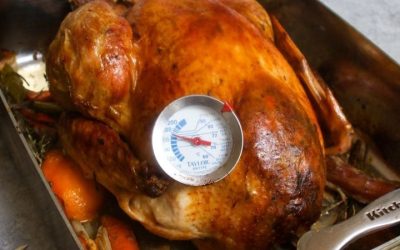
The Taylor Large Dial Oven Thermometer 5932 is a simple hanging or standing dial thermometer with a 100°F to 600°F range and a 3-inch face, according to Taylor’s 5932 product page. It is useful for getting an initial sense of cavity temperatures without buying electronics, although one snapshot cannot establish the oven’s cycling average. Taylor listed it at $12.99 as of October 2026; check the current price before buying.
For repeated calibration checks, the ThermoWorks Square DOT TX-1220-WH includes an oven air probe and reports a rolling 15-minute average, according to the Square DOT product page and setup guide. The brand listed a $79 regular price and a promotional price around $63 in October 2026. Separately, the ThermoWorks ThermoPop 2 TX-3120-RD is an instant-read food probe with a 4.5-inch tip and a manufacturer-stated 2 to 3 second response for checking finished poultry or casseroles. Its listed price was about $39 before promotions. The ThermoPop measures food, not the oven’s ambient heat; buy it for doneness checks, not calibration.
When to Call a Pro
Call an appliance-service technician if the same side repeatedly underheats after you change pans and rack positions, if the door cannot close tightly, if the oven fails to hold a reasonable average, or if a convection fan makes scraping or grinding noises. A licensed electrician or qualified gas-appliance technician should handle internal electrical or fuel-system faults. Stop cooking immediately if you see sparks or uncontrolled smoke; if you smell gas, evacuate and call the utility or emergency number from outside.
Keep food safety separate from the appearance of browning. The FoodSafety.gov minimum-temperature chart, last reviewed November 2024, calls for 165°F in poultry, 160°F in ground meat, and 145°F with a 3-minute rest for whole cuts of beef, pork, veal, and lamb. A browned crust or a casserole that looks finished does not replace checking an appropriate internal temperature where applicable. An erratic oven makes a food thermometer more important, not less.
Frequently Asked Questions
Even when the oven is operating normally, its cooking modes and the shape of a baking dish can change the finished result. These quick answers address situations that are not solved simply by increasing the thermostat setting.
Should I Rotate Food Halfway Through Baking?
Rotate a sheet if you know your oven has a recurring hot spot and the recipe allows a brief interruption, ideally after the food has started to set. Whirlpool’s oven-use guide suggests rotating food to address visible hot spots. Avoid opening the door repeatedly for delicate cakes, souffles, or breads early in their rise; movement and heat loss can make them collapse or bake differently.
Why Do Cookies Brown More on the Bottom?
Dark metal pans, a rack too low for the recipe, or unusually strong bottom heat can darken cookie bases before the tops look done. Compare results using a light-colored sheet on the rack recommended in your manual. Whirlpool’s uneven-browning guidance distinguishes shiny pans from dark pans because the surfaces absorb and reflect heat differently. Do not place foil directly on the oven floor to solve the problem.
Does Convection Always Cook More Evenly?
No. A working convection fan can improve circulation, especially for certain large or multiple-pan bakes, but it does not overcome pans crowded against the wall or an incorrect mode. Samsung’s US convection guide says some models automatically lower a conventional recipe setting by 25°F. If the oven also applies that conversion, making a second manual reduction could leave food undercooked. Check the model’s setting first.
Can I Trust the Oven Thermometer at Any Moment?
No. The air temperature rises and falls as the thermostat cycles the heating system. ThermoWorks explains that its Square DOT uses a rolling 15-minute average to give a steadier measurement than a momentary air reading. A sustained trend, measured after adequate preheating with the probe safely positioned, matters more than a single high or low number. If that trend remains abnormal, follow the manual’s calibration guidance or seek service.
Final Thoughts
A useful diagnosis comes from repeatability: change one variable, run the same bake again, and write down where the color changes. If the result improves with one centered pan and adequate preheating, there is little reason to buy a repair part. If the question “why is my oven cooking unevenly” persists after those checks, use the Taylor 5932 for a basic temperature indication or the ThermoWorks Square DOT for an averaged air reading, then compare with your oven’s manual. Check current product prices and model requirements before buying; let a technician address suspected internal heating or gas faults.