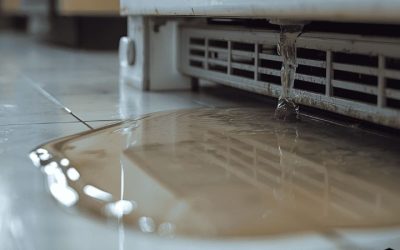
When you wonder why is my dishwasher not draining, the first suspects are food debris around the filter, a blocked hose, or a clogged sink or garbage disposal connection. A newly replaced disposal may also have its dishwasher inlet plug still installed. Before taking anything apart, confirm the cycle actually finished: a little water hidden in the sump may be normal, but a pool covering the tub floor is a reason to investigate.
Quick Answer: Start with the dishwasher’s cancel or drain function, then switch off its power before checking the filter, under-sink hose, disposal inlet, and air gap. Do not open electrical housings or reach into a garbage disposal. Persistent pooling, a burning smell, or repeated breaker trips calls for professional service.
As an Amazon Associate we earn from qualifying purchases.
By DIY Ideas 4 Home Editorial Team
Why Your Dishwasher Is Not Draining: Common Causes
A dishwasher pump moves used wash water through a hose to the kitchen drain, sometimes through a countertop air gap. Whirlpool’s Dishwasher Not Draining support guidance identifies restrictions at the filter, sump, hose and sink connection as useful first checks. Where water remains and what happened just before the problem appeared can narrow the diagnosis without replacing parts on speculation.
| Symptom or Sign | Likely Cause | First Check | DIY or Pro |
|---|---|---|---|
| Water above filter after completed cycle | Debris in filter or sump | Inspect removable filter | DIY with power off |
| Slow draining after moving appliance | Pinched or blocked drain hose | Look under sink for bends | DIY if accessible |
| Stopped draining after disposal replacement | Disposal inlet plug or sink obstruction | Verify disposal connection | DIY inspection; installer for plug removal |
| Water spilling from sink-top air gap | Blocked air gap outlet path | Inspect removable cap | DIY if accessible |
| Humming, grinding or no pumping | Pump blockage or component failure | Consult model error code | Service if basic checks fail |
Food Debris in the Filter or Sump
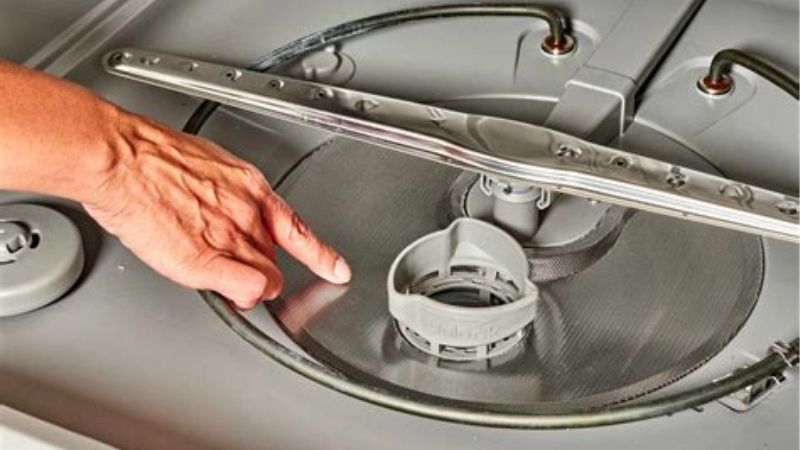
The filter catches scraps before they enter the water-handling system. Labels from jars, seeds, broken glass, and greasy residue can accumulate around the filter or in the recessed sump. A restricted path can leave a shallow pool at the end of a cycle even when the motor and controls appear to be operating. Bosch’s Dishwasher Is Not Draining support page puts filter and pump-area debris at the top of its owner-level troubleshooting guidance.
Look for visible buildup, a filter that was not locked into place, or water that lingers immediately around its opening. Do not assume every model has the same filter assembly: some designs use different retention tabs or self-cleaning arrangements. A full removal procedure belongs in the owner’s manual, and our separate guide to cleaning a dishwasher filter covers that maintenance task in detail.
A Kinked or Partially Clogged Drain Hose
The drain hose carries water away from the machine. Moving the dishwasher for flooring work or crowding the under-sink cabinet with supplies can flatten it, bend it sharply, or pull its mounting point down. Food residue can also lodge at the narrower connection to the sink tailpiece. Unlike a failed pump, this problem often appears after a kitchen change rather than gradually from ordinary wear.
Check the visible hose before disconnecting anything. Whirlpool’s Dishwasher Not Draining instructions say to look for crushed sections, sagging and buildup at the outlet. An external kink may be correctable without buying parts; a split, brittle, or permanently flattened hose warrants a model-compatible replacement. Do not force wire or pointed tools through the plastic, since a puncture can trade a drainage complaint for an under-sink leak.
A Blocked Disposal Inlet or Sink Drain
If the kitchen sink empties slowly too, the dishwasher may be discharging into an already restricted drain. If the sink is clear but the dishwasher stopped draining immediately after installation of a garbage disposal, inspect the small dishwasher inlet: a factory knockout plug left in place prevents water from entering the disposer. Whirlpool’s Newly Installed Dishwasher Not Draining support article specifically calls out this installation oversight.
Use the sink normally to identify whether the blockage affects both fixtures. With the disposal turned off and its power isolated, an installer can inspect the dishwasher hose connection and confirm the inlet is open. Avoid putting fingers into the disposer or attempting to remove its plug while it is energized. A blockage farther along the shared household drain may require a plumber rather than a dishwasher technician.
A Clogged Air Gap or Incorrect Hose Loop
Some U.S. kitchens have a small capped fitting next to the faucet called an air gap. It helps prevent wastewater from being drawn back toward the dishwasher. GE Appliances’ Dishwasher – Cleaning the Air Gap support instructions describe removing the outer cover and plastic cap to clear collected material. Water spilling from that fitting during a drain attempt is a useful sign that the discharge path beyond it may be blocked.
Other installations use a raised drain-hose loop instead, depending on the appliance instructions and local plumbing code. GE’s Dishwasher – Water in the Bottom of the Tub support note describes a high loop at least 32 inches above the floor for its illustrated arrangement. That is a GE-specific reference, not a universal height for every dishwasher: check the exact installation manual and local air-gap requirements before moving any hose.
A Blocked Drain Pump or Failed Component
Once the external route is clear, the issue may be at the pump or its cover. A piece of hard debris can obstruct an accessible impeller area on some models; other failures involve a pump motor, wiring, door switch or control. A humming sound alone does not identify the faulty part, and silence during a presumed drain can reflect an interrupted cycle rather than a dead pump.
Bosch’s Dishwasher Error Codes support documentation links E24 and E25 on applicable models to drainage restrictions or pump-cover problems, while pump faults can have distinct codes. These codes are not interchangeable across manufacturers. Check the exact model’s display and manual, and never pull apart an electrical pump assembly merely because a generic video shows an apparently similar machine.
How to Fix a Dishwasher That Will Not Drain
The safest troubleshooting order follows the water’s path rather than the price of replacement parts: confirm a real failure, remove loose debris, verify that the kitchen drain can accept water, then check the visible hose and retest. Whirlpool’s Dishwasher Not Draining guide advises turning off power at the breaker before hands-on inspection. Keep towels, a shallow pan, a flashlight, and protective gloves nearby, especially when standing water may contain glass or food residue.
Step 1: Confirm the Cycle and Shut Off Power
Check that the door was latched, the cycle was not paused, and the dishwasher has reached its actual end. Use the manufacturer’s cancel or drain command while all covers remain installed, listening for the expected discharge into the sink plumbing. A running wash cycle may have water in the tub by design; judge the result only after the model’s drain sequence has had time to finish. Take note of any error message rather than pressing reset repeatedly until it disappears.
If the problem remains, switch the appliance off at the breaker or unplug it from a dry, accessible outlet before opening the filter area or handling hose clamps. If a leak is reaching an outlet or wiring, do not touch wet electrical parts; isolate the circuit safely and get help. Remove standing water with a cup and absorbent towels instead of tilting the appliance. This makes the sump visible and reduces the spill when a hose is opened.
Step 2: Check the Accessible Filter and Sump
Pull out the lower rack and identify the filter arrangement in the model’s manual. On machines with removable filters, inspect the screen and lift it out only in the documented direction. Rinse debris off gently, using a nonabrasive brush if needed, and look into the exposed sump with a flashlight. Remove loose objects carefully with gloves or an appropriate grabber; glass can be difficult to spot in murky water. Do not use a metal pick against the pump housing.
Where the manufacturer permits owner access to a pump cover, follow those specific instructions and refit the cover until it is properly seated. Bosch’s Cleaning Your Dishwasher Pump guidance cautions about sharp objects in the pump area. If there is no removable cover in your manual, stop at the visible sump rather than prying. The check is complete when the filter and any permitted cover sit securely, debris is gone, and no part has been left loose inside the tub.
Step 3: Inspect the Sink, Disposal and Air Gap
Verify that water leaves the kitchen sink freely. If a garbage disposal serves as the drain connection, turn it off before looking under the cabinet, and follow its instructions for clearing any visible obstruction. If the dishwasher or disposal was newly installed, have the installer confirm that the disposer inlet was opened and any knockout plug was retrieved. A blocked inlet cannot be fixed by cleaning the dishwasher tub or adding a chemical cleaner.
If an air gap is mounted on the sink, turn off the dishwasher and follow the fitting’s instructions to lift its cover and inspect the removable cap. GE Appliances’ Dishwasher – Cleaning the Air Gap note also recommends checking the larger hose from the air gap to the disposal or sink drain. A clean cap with overflow during the next drain test points attention downstream. If both sink and dishwasher back up, stop and investigate the house drain before running another wash cycle.
Step 4: Inspect the Visible Hose and Connection
Look beneath the counter for a compressed hose, a sharp elbow behind stored bottles, a loose clamp, or an unsupported low section. The installation guide determines whether an air gap, high loop or both are required; avoid choosing a mounting height from unrelated online advice. If the hose is accessible and the power and water are isolated, place a shallow pan underneath before disconnecting its sink end. Be prepared for residual wastewater even if the tub appears empty.
Examine the hose outlet and tailpiece for a plug of food or grease. Whirlpool’s Dishwasher Not Draining page describes flushing a removable hose with warm water and using a gentle flexible cleaner when appropriate. Refit the connection securely without overtightening the clamp or crushing plastic fittings. Replace the hose if it is split, badly flattened or cannot be cleared without damage; match the replacement to your machine’s specified dimensions and connection style rather than purchasing solely by length.
Step 5: Retest and Evaluate Pump Behavior
With the filter locked, pump cover secure where applicable, hose reattached and cabinet dry, restore power. Run a short rinse or model-specific drain program while watching the air gap and under-sink joints for leaks. The test is successful when water exits to the sink plumbing and the tub returns to its normal residual level after the complete cycle. If the sink backs up or the air gap spills, the downstream drainage path still needs attention.
If there is still a deep pool, record whether you hear draining, humming, scraping, or no pump operation. Note the displayed code and the model number on the appliance tag before arranging service. Do not repeatedly force the machine through full wash cycles when water cannot leave. A repair technician can distinguish a failed pump from a sensor, door-latch or control problem with model-specific checks rather than guessing from a sound.
Products That Help
If the old hose is kinked beyond recovery, the Everbilt 98308 Corrugated Dishwasher Drain Hose is an 8 ft replacement sold with a stainless steel clamp and outlet adapter, according to its Home Depot product listing. It is worth considering only after measuring the route and confirming connection size, appliance compatibility and installation requirements. A new hose will not repair an unopened disposal inlet or a defective motor.
For a damaged connection at a compatible disposer, the InSinkErator 08301D Dishwasher Connector Kit includes an inlet connector, a hose clamp and 3 spring clamps, according to InSinkErator’s product page. The kit is a connection accessory, not a clog-removal tool; verify the disposer inlet and drain-hose dimensions before buying. Neither product is a substitute for isolating power or calling a plumber when the household drain itself is blocked.
When to Call a Pro
Call an appliance service technician if the visible drain path is clear but the pump will not operate, the machine reports a recurring drain fault, or accessing the next component requires opening powered housings or working around wiring. Call a plumber for persistent sink backups, leaking joints in inaccessible plumbing, or uncertainty about code-required air-gap installation. A burning smell, repeated breaker trip, damaged cable, or water reaching electrical connections warrants stopping the appliance immediately.
For repairs, write down the full model and serial identifiers, exactly when water accumulates, and any error code. This is particularly important if a dishwasher has been moved or a disposal was recently replaced: the service provider can examine the modified drain route before ordering an expensive pump. If repair would require a major electrical assembly and the appliance is aging, request a documented estimate before choosing repair over replacement.
Frequently Asked Questions
Not every puddle, error message or unusual sound means the dishwasher needs a new drain pump. The answers below distinguish normal cycle behavior from signs that justify a targeted check or service visit.
Can a Canceled Wash Cycle Leave Water Behind?
Yes. Canceling a cycle does not necessarily mean its drain routine has completed. Some machines require a separate cancel-and-drain operation or a closed, latched door before the pump can run. Follow the sequence printed for your model and wait for it to finish before inspecting the result. If the control is unresponsive or the dishwasher cannot complete the sequence, leave it off and record the symptom for service.
What Do Bosch E24 and E25 Codes Mean?
On supported Bosch models, E24 generally points toward a drainage restriction, while E25 can signal a blocked drain pump or an unsecured pump cover. Bosch’s U.S. Dishwasher Error Codes documentation explains the distinction, but different model generations may display related codes differently. Look up the specific code in your own owner’s guide, check only the covers that guide permits you to access, and seek Bosch support if it continues after clearing visible obstructions.
Should I Pour Chemical Drain Cleaner Into the Dishwasher?
No. Whirlpool’s Dishwasher Not Draining instructions advise against putting drain-opening chemicals inside the dishwasher because they can harm components and create handling hazards. Use the manufacturer’s owner-accessible cleaning and drain checks instead. If a household sink line is obstructed, treat it as a separate plumbing problem and tell the plumber what, if any, chemical product has already entered that line. Never mix cleaners or try to neutralize one cleaner with another.
Does a Countertop Dishwasher Have the Same Drain Setup?
Not necessarily. Many portable countertop units discharge into a sink through a removable hose arrangement, so they may not have the fixed disposal connection, under-counter loop or sink-top air gap discussed for built-in machines. A loose faucet adapter, pinched outlet hose or incorrect hose elevation can produce similar symptoms. Follow the countertop unit’s installation and drain instructions rather than modifying its hose to match a built-in dishwasher diagram.
Final Thoughts
Before booking a repair, photograph the under-sink plumbing with the dishwasher off and compare it with the installation drawing for the exact model. That comparison can reveal a hose rerouted during recent cabinet work, and it gives a technician useful evidence if the filter, sink connection and air gap are already clear. If the pump still fails the proper drain test, request a model-specific diagnosis instead of ordering an unconfirmed replacement; use our dishwasher filter cleaning guide for ongoing maintenance once drainage is restored.