Key takeaways
- Base construction: Tip the chair and look for a cast or thick-gauge steel plate bolted through the frame, not screwed into particleboard. Solid wood pedestal bases distribute load better and won’t loosen at the fasteners over time.
- Rotation feel: A quality mechanism spins smoothly and stops where you leave it, with no wobble at the top of the pedestal. Any side-to-side play out of the box will get worse, not better.
- Seat depth versus footprint: Measure your space, then subtract. A 24-inch deep seat swallows a small room. Barrel chairs with 20 to 22 inches of depth read as substantial without eating the walkway.
- Upholstery and wear: Chenille and sherpa hide crumbs and pet hair but pill at the arms. Genuine leather costs more upfront and looks better at year five. Velvet sits between the two and shows crushing where you sit most.
- Assembly reality: Fully assembled chairs skip the weakest link, which is you tightening bolts by feel. If assembly is required, check whether the legs thread into metal inserts or straight into wood. Inserts last.
What's inside
A swivel chair sounds like a simple purchase until you’re standing in a showroom spinning the seat and hearing a faint grind after the third rotation. That noise is the tell. Underneath the upholstery, swivel chairs live or die by their base plate, and the difference between a mechanism that rides on sealed ball bearings and one that pivots on stamped metal washers is roughly two years of daily use. Most buyers never see that hardware before it fails, because it’s hidden behind a dust cover stapled to the underside of the frame.
I’ve flipped enough chairs upside down on my workbench to know what separates a keeper from a returns-label candidate. This guide looks at six swivel and accent chairs through a builder’s lens: how the base is anchored, whether the frame is hardwood or engineered board, how much seat depth you actually get, and what the assembly step reveals about overall build quality. Below are the picks worth your money in 2026, followed by the criteria I use when sizing up any rotating seat.
As an Amazon Associate we earn from qualifying purchases.


🛒 Best Price Today on Amazon
Prime members get fast, free shipping on everything above, plus member-only deals. New members get a 30-day free trial — cancel anytime.
How to Choose a Home Furnishings Swivel Chair (2026)
- Base construction: Tip the chair and look for a cast or thick-gauge steel plate bolted through the frame, not screwed into particleboard. Solid wood pedestal bases distribute load better and won’t loosen at the fasteners over time.
- Rotation feel: A quality mechanism spins smoothly and stops where you leave it, with no wobble at the top of the pedestal. Any side-to-side play out of the box will get worse, not better.
- Seat depth versus footprint: Measure your space, then subtract. A 24-inch deep seat swallows a small room. Barrel chairs with 20 to 22 inches of depth read as substantial without eating the walkway.
- Upholstery and wear: Chenille and sherpa hide crumbs and pet hair but pill at the arms. Genuine leather costs more upfront and looks better at year five. Velvet sits between the two and shows crushing where you sit most.
- Assembly reality: Fully assembled chairs skip the weakest link, which is you tightening bolts by feel. If assembly is required, check whether the legs thread into metal inserts or straight into wood. Inserts last.
The Best Home Furnishings Swivel Chair (2026)s Reviewed
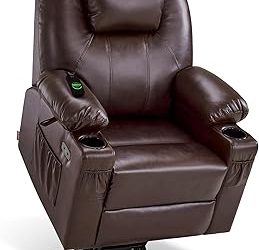
CHITA Genuine Leather Swivel Chair
This is the one I’d buy with my own money. The solid wood base and real leather hide put it in a different category than the foam-and-fabric crowd, and arriving fully assembled means no wondering whether you torqued the pedestal correctly. At 300 pounds of stated capacity and a 33-inch square footprint, it works as a reading chair or a desk-adjacent perch.
Christopher Knight Home Coles 360° Velvet Swivel Chair
The iron frame under the velvet is the reason this one holds its shape while cheaper barrel chairs sag at the back corners. No assembly required, which for a swivel chair removes the single most common failure point, and the walnut-toned base keeps it from reading as too soft for a modern room.
Swivel Accent Chair Set of 2, Bronze Nail Trim
Buying two matched swivel chairs at this price is unusual, and the bronze nailhead detail gives them a tailored edge that photographs well flanking a fireplace. Expect to do some assembly and check the base bolts after the first month, but the cream upholstery and traditional lines punch above the cost.
Swivel Barrel Chair with Sherpa Teddy Upholstery
Sherpa is a texture play more than a durability play, but on a curved-back barrel frame it delivers genuine comfort for the money. Best suited to a bedroom corner or low-traffic reading nook rather than the chair everyone drops into after dinner.
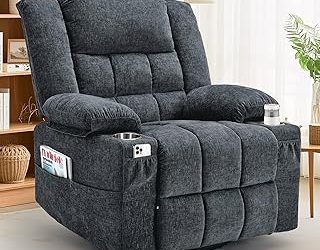
Rexulqo Oversized Accent Chair with Storage
A 24.5-inch seat depth plus under-seat storage makes this the utility player of the group, ideal for a den where blankets and remotes need a home. It’s a stationary chenille armchair rather than a swivel, so choose it for lounging depth, not rotation.
Frequently Asked Questions
Do swivel chairs need maintenance?
Very little. Once a year, tip the chair and snug the base bolts with a hex key, and hit the bearing race with a light spray of dry lubricant if you hear any dryness. That five-minute job prevents most squeaks.
Will a swivel chair damage hardwood floors?
The chair body doesn’t move, so scuffing is rare, but grit trapped under the base pads can grind. Add adhesive felt pads to any hard plastic feet and vacuum around the base regularly.
How much clearance does a swivel chair need?
Since the base stays put, you only need clearance for the arms as they rotate. Leave about six inches beyond the widest point of the chair on all sides so knuckles and side tables stay clear.
Is leather worth the premium over fabric?
For a chair you’ll use daily for a decade, yes. Leather resists pilling, wipes clean, and develops patina instead of wear patterns. For a guest room chair used twice a year, fabric is the smarter spend.
Final Thoughts
If you want one chair that still looks right in 2036, the CHITA genuine leather swivel is the pick, with a solid wood base and no assembly guesswork. The Christopher Knight Coles velvet chair is the value play for anyone who wants an iron-framed swivel without the leather premium, and the cream nailhead set of two is hard to beat when you need symmetry in a living room on a working budget.