Key takeaways
- Nickel-safe chemistry: Evaporator plates on Scotsman, Manitowoc, and most premium units are nickel-plated. Standard acid cleaners strip that plating over repeated cycles. Confirm the label says nickel-safe before it touches the machine.
- Tablets vs. liquid: Tablets pre-measure the dose, which matters on countertop units with a 3-quart reservoir where over-concentrating is easy. Liquid gives you control for larger commercial bins and lets you dilute for a wipe-down of the exterior housing.
- Active ingredient: Citric acid handles limescale gently and rinses clean with minimal aftertaste. Phosphoric acid formulas cut heavier commercial buildup faster but demand a more thorough flush cycle afterward.
- Supply math: Manufacturers generally recommend cleaning every three to six months, so a 24-tablet pack is roughly a year across two machines, not one. Buy to your actual cadence rather than the marketing claim.
- Compatibility with your model: Sealed countertop units like the GE Opal have narrow tubing and internal pumps that clog differently than open commercial bins. Look for explicit nugget-maker mention if that’s what you own.
What's inside
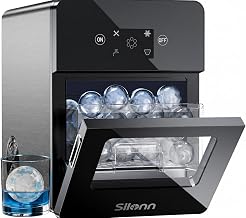
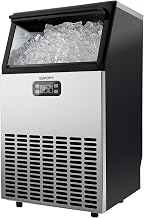
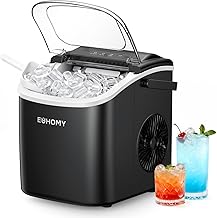
Pull the reservoir out of a countertop nugget machine that’s been running six months without a clean, and you’ll find the real problem: a pinkish film along the water line, chalky white crust on the evaporator fingers, and ice that tastes faintly of pennies. Mineral scale builds fastest where water sits and evaporates, and the biofilm follows it. Most owners notice the taste before the mechanical symptoms, but by then the machine is already working harder, cycling longer, and producing softer, cloudier cubes.
The fix is a purpose-built descaler, not vinegar and hope. This guide covers what actually matters when picking one, including nickel-safe formulation, tablet versus liquid dosing, and how the different concentrates behave in small sealed reservoirs versus larger commercial units. Below are six cleaners worth your money in 2026, with honest notes on where each one fits.
As an Amazon Associate we earn from qualifying purchases.


🛒 Best Price Today on Amazon
Prime members get fast, free shipping on everything above, plus member-only deals. New members get a 30-day free trial — cancel anytime.
How to Choose a/an Ice Maker Cleaner (2026)
- Nickel-safe chemistry: Evaporator plates on Scotsman, Manitowoc, and most premium units are nickel-plated. Standard acid cleaners strip that plating over repeated cycles. Confirm the label says nickel-safe before it touches the machine.
- Tablets vs. liquid: Tablets pre-measure the dose, which matters on countertop units with a 3-quart reservoir where over-concentrating is easy. Liquid gives you control for larger commercial bins and lets you dilute for a wipe-down of the exterior housing.
- Active ingredient: Citric acid handles limescale gently and rinses clean with minimal aftertaste. Phosphoric acid formulas cut heavier commercial buildup faster but demand a more thorough flush cycle afterward.
- Supply math: Manufacturers generally recommend cleaning every three to six months, so a 24-tablet pack is roughly a year across two machines, not one. Buy to your actual cadence rather than the marketing claim.
- Compatibility with your model: Sealed countertop units like the GE Opal have narrow tubing and internal pumps that clog differently than open commercial bins. Look for explicit nugget-maker mention if that’s what you own.
The Best Ice Maker Cleaner (2026)s Reviewed
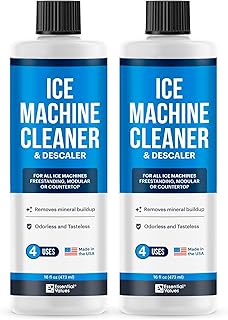
Essential Values Ice Machine Cleaner and Descaler (2 Pack)
Two 16-ounce bottles of liquid concentrate give you the most flexibility of anything here, and it’s the one I reach for on older Scotsman and KitchenAid units with genuine crust rather than light film. Dilution control means you can go stronger on a neglected evaporator and lighter on a routine maintenance pass.
Ice Machine Cleaner Tablets Descaler (24 Pack)
Straightforward nickel-safe tablets that dissolve fully in cold reservoir water, which matters more than it sounds since undissolved residue is what ends up in your pump. The mold and odor claims hold up in practice on countertop units, though heavy biofilm still needs a manual wipe of the reservoir corners afterward.
ACTIVE Ice Machine Cleaner Descaler (24 Tablets)
ACTIVE lists Frigidaire, Opal, and GE Profile explicitly, and that specificity shows in how well the tablets suit small sealed reservoirs where dose precision matters. Fast dissolve, clean rinse, and no lingering chemical smell in the first ice batch after flushing.
Ice Machine Cleaner Tablets, Citric Acid–Based (36 Tablets)
The citric acid base makes this the mildest option on plated components, and 36 tablets is genuine long-haul value if you’re maintaining several machines or a small bar setup. It works slower on hardened scale, so plan a longer soak rather than expecting a single quick cycle to clear years of buildup.
Affresh Ice Machine Cleaner
The safest pick if you want a name your appliance warranty department recognizes, and it handles routine hard-water maintenance on residential units without drama. Less aggressive than the concentrates above, so treat it as prevention rather than rescue.
Frequently Asked Questions
Can I just use vinegar instead?
Vinegar dissolves light limescale but it’s roughly 5% acetic acid, far weaker than a purpose-built descaler, and the smell lingers in plastic tubing for several ice batches. It also does nothing meaningful against biofilm.
How often should I run a cleaning cycle?
Every three months on hard water, every six on softened or filtered water. If ice starts tasting off or cubes come out smaller and cloudier, clean regardless of the calendar.
Is the first batch of ice after cleaning safe to eat?
Discard it. Run two or three full cycles and dump the ice, then a fresh water rinse of the reservoir. Residual descaler is dilute but there’s no reason to drink it.
Will descaler damage the plastic reservoir?
No. These formulas target mineral deposits and are inert against food-grade ABS and polypropylene. The metal components are the concern, which is why nickel-safe labeling matters.
Final Thoughts
For most countertop and nugget machines, the ACTIVE 24-tablet pack hits the right balance of dose precision and brand compatibility. If you’re dealing with real scale on a Scotsman or older KitchenAid, the Essential Values liquid concentrate gives you the strength and control to actually clear it. And for anyone who just wants dependable quarterly maintenance without thinking hard about it, Affresh remains the low-risk default.