Key takeaways
- Water supply reality check: Most built-in icemakers need a 1/4″ cold water line within reach of the rear inlet. Before you buy, locate your nearest supply point — under-sink saddle valves are quick but a proper tee fitting with a shutoff is the install worth doing.
- Door swing and clearance: Measure the full arc, not just the cabinet opening. French doors need roughly half the width of a single swing; side-by-sides need less but demand deeper reach-in space. Reversible doors solve corner-kitchen headaches.
- Where the ice bin lives: Freezer-mounted bins steal usable cubic feet. In-door dispensers save freezer space but add mechanical parts. Undercounter dedicated units keep your main freezer fully intact.
- Production versus storage: A unit rated at 120 lbs per 24 hours with only 30 lbs of storage means continuous use or frequent transfers. For hosting, storage capacity matters more than peak output.
- Ambient temperature tolerance: If the fridge lands in a garage, mudroom, or unconditioned basement, confirm it’s rated for low ambient operation. Standard compressors stall in cold rooms and the icemaker quits first.
What's inside
Buying a fridge with a built-in ice maker sounds simple until you’re standing in your kitchen with a tape measure, realizing the water line stub-out is three feet from where the unit needs to sit. Then come the real questions: does the icemaker eat half the freezer? Will the door swing clear the island? Is the drain plumbed or does it rely on evaporation? Most listings gloss over exactly the details that determine whether installation takes an afternoon or turns into a weekend of drywall patching and compression fittings.
This guide approaches ice maker refrigerators the way you’d approach any install you plan to do yourself: measuring twice, checking hookup requirements, and knowing what’s serviceable later. We’ve sorted through French door, side-by-side, top mount, and undercounter formats to flag which layouts suit real kitchens, which ones handle garage duty, and where the ice production numbers actually mean something.
As an Amazon Associate we earn from qualifying purchases.


How to Choose a/an Ice Maker Refrigerators (2026)
- Water supply reality check: Most built-in icemakers need a 1/4″ cold water line within reach of the rear inlet. Before you buy, locate your nearest supply point — under-sink saddle valves are quick but a proper tee fitting with a shutoff is the install worth doing.
- Door swing and clearance: Measure the full arc, not just the cabinet opening. French doors need roughly half the width of a single swing; side-by-sides need less but demand deeper reach-in space. Reversible doors solve corner-kitchen headaches.
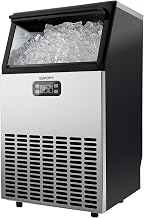
- Where the ice bin lives: Freezer-mounted bins steal usable cubic feet. In-door dispensers save freezer space but add mechanical parts. Undercounter dedicated units keep your main freezer fully intact.
- Production versus storage: A unit rated at 120 lbs per 24 hours with only 30 lbs of storage means continuous use or frequent transfers. For hosting, storage capacity matters more than peak output.
- Ambient temperature tolerance: If the fridge lands in a garage, mudroom, or unconditioned basement, confirm it’s rated for low ambient operation. Standard compressors stall in cold rooms and the icemaker quits first.
The Best Ice Maker Refrigerators (2026)s Reviewed
18 Cu.Ft. French Door Refrigerator with Ice Maker
A sensible middle-of-the-road pick that hits the standard 30-inch to 33-inch opening most kitchens already have framed, with a bottom freezer drawer that keeps frozen goods at knee level instead of eye level. The three cooling modes are genuinely useful if you rotate between grocery hauls and lean weeks, and the frost-free design means no scraping sessions with a plastic spatula.
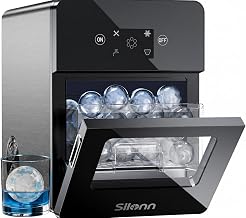
2 in 1 Ice Maker & Beverage Fridge
This is the pick for anyone building out a bar, coffee station, or island cabinet run — one drawer for ice, one for drinks, and no freezer real estate sacrificed upstairs. Adjustable cube thickness is a nice touch for cocktail work, and the reversible stainless door means you can plan the install around your cabinet layout rather than the other way around.
KoolMore Counter Depth French Door Refrigerator
Counter-depth is the detail worth paying for here: at 22.5 cubic feet it delivers real capacity without bumping proud of your countertops, which is the giveaway that ruins an otherwise clean cabinet run. The four-door layout gives you a separate flex zone, useful for produce or beverages you’d rather not bury.
BLACK+DECKER 18 Cu. Ft. French Door Refrigerator
White appliances are back in a big way, and this one pairs a familiar 18-cubic-foot French door layout with ENERGY STAR certification and auto defrost. It’s a straightforward install with no exotic parts, which matters when you’re the one connecting the water line and leveling the feet.
Commercial Cool 20 Cu. Ft. Top Mount Refrigerator
Top mount remains the most space-efficient format per dollar, and 20 cubic feet in a two-door footprint is generous. The black finish hides fingerprints better than brushed steel, and adjustable temperature control plus the freezer-mounted icemaker covers the essentials without extra electronics to fail later.
Frequently Asked Questions
Can I install the water line myself?
Yes, if you’re comfortable with a compression fitting and know where your cold supply runs. Use a proper tee with a quarter-turn shutoff rather than a saddle valve, run braided stainless rather than plastic tubing, and leave a service loop behind the unit.
Why is my new icemaker producing cloudy or small cubes?
Give it 24 to 48 hours after install. Early batches often come out hollow or cloudy while the fill valve calibrates and trapped air clears the line. If it persists, check the water pressure — most units want at least 20 psi.
Do I need a floor drain for an undercounter ice maker?
Depends on the model. Some use gravity drains and need a nearby standpipe; others rely on evaporation and just need adequate airflow. Check the spec sheet before you cut into cabinetry.
Will an ice maker refrigerator work in an unheated garage?
Only if the unit is specifically garage ready. Standard models struggle below roughly 55°F ambient because the thermostat stops cycling the compressor, which shuts down ice production.
Final Thoughts
For most kitchens, the KoolMore Counter Depth French Door is the strongest all-round buy — real capacity in a footprint that won’t disrupt your cabinet line. The BLACK+DECKER 18 Cu. Ft. French Door is the easier install and the better value if you don’t need a flex zone, while the 2 in 1 Ice Maker & Beverage Fridge is the smart addition for anyone who’d rather add dedicated ice than compromise their main freezer.