Key takeaways
- Weight rating with margin: Pick a chair rated at least 100 pounds above your actual weight. Static ratings are tested by setting a load down gently, not by someone dropping into the seat after work. That impact force is what shears rivets.
- Seat width and depth together: A 28-inch seat is useless if the depth is only 19 inches — your thighs will hang off the front edge. Measure your own seated hip width and thigh length, then look for 22 inches of depth minimum on a tall frame.
- Frame material at the stress points: Hardwood or steel where the mechanism bolts in, not particleboard. If the listing says “engineered wood” without qualification, expect the mounting screws to strip out eventually.
- Power versus manual: Power recliners remove the yank-the-lever problem entirely and let you stop at any angle. Manual chairs have fewer parts to fail, but the release handle on an underbuilt one is the first thing to break.
- Lift function if mobility matters: A lift base raises the whole chair to standing height. Dual-motor lifts move the back and footrest independently, which matters for anyone who needs a zero-gravity or full lay-flat position.
What's inside
Anyone over six feet tall and past 250 pounds has felt it: you sink into a standard recliner and the seat back stops somewhere around your shoulder blades, the armrests hit at the wrong height, and the footrest ends mid-calf. Six months later the frame starts creaking on one side and the mechanism gets sticky. Most recliners are built to a 250-pound spec and an average 5’9″ frame, which means a big-and-tall body is loading the joints in ways the engineering never accounted for.
I’ve pulled apart enough furniture to know where the failures happen — thin-gauge steel at the scissor mechanism, staple-only joinery instead of corner blocks, and foam that bottoms out because it was cut for a lighter load. This guide looks at recliners rated 400 pounds and up, with seat widths in the 24 to 28 inch range and extended footrests. I’ve flagged what’s genuinely reinforced versus what just has a big number printed on the box, plus what to check the day it arrives.
As an Amazon Associate we earn from qualifying purchases.


🛒 Best Price Today on Amazon
Prime members get fast, free shipping on everything above, plus member-only deals. New members get a 30-day free trial — cancel anytime.
How to Choose a Large Man Recliner (2026)
- Weight rating with margin: Pick a chair rated at least 100 pounds above your actual weight. Static ratings are tested by setting a load down gently, not by someone dropping into the seat after work. That impact force is what shears rivets.
- Seat width and depth together: A 28-inch seat is useless if the depth is only 19 inches — your thighs will hang off the front edge. Measure your own seated hip width and thigh length, then look for 22 inches of depth minimum on a tall frame.
- Frame material at the stress points: Hardwood or steel where the mechanism bolts in, not particleboard. If the listing says “engineered wood” without qualification, expect the mounting screws to strip out eventually.
- Power versus manual: Power recliners remove the yank-the-lever problem entirely and let you stop at any angle. Manual chairs have fewer parts to fail, but the release handle on an underbuilt one is the first thing to break.
- Lift function if mobility matters: A lift base raises the whole chair to standing height. Dual-motor lifts move the back and footrest independently, which matters for anyone who needs a zero-gravity or full lay-flat position.
The Best Large Man Recliner (2026)s Reviewed
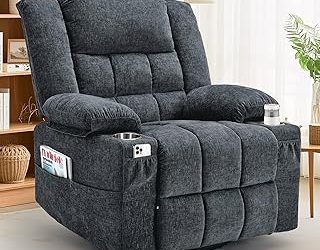
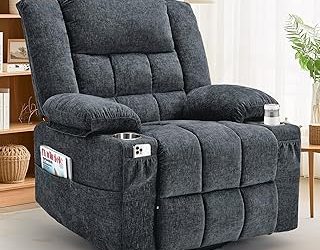
Manual Adjustable Oversized Recliner with Phone Holder
A straightforward 400-pound manual chair with a genuinely useful phone slot and a footprint narrow enough for an RV or a smaller living room. Fewer electronics means fewer failure points, though you’ll want to snug the mechanism bolts after a couple weeks of use.
Watson & Whitely Oversized Genuine Leather Power Recliner
Real leather over an extra-wide power base, with a power headrest that adjusts independently — that last detail is what makes a tall frame comfortable rather than just accommodated. The navy finish holds up better than lighter leathers against body oils and denim transfer.
FUNECORP Big Man Power Lay Flat Lift Recliner
Dual motors, a 28-inch seat, heat and vibration, plus USB-C charging built in. The flip-arm storage is a smarter idea than it sounds — it keeps the remote from disappearing into the seat cushion, which is where every recliner remote eventually goes.
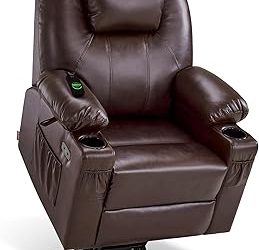
JIKFRIMA Big Man 500lbs Power Lift Recliner
The 500-pound rating is the headline here, and the extended footrest actually supports a long inseam instead of stopping at the ankle. Heat and massage are a bonus; the reason to buy it is the lift base and the load capacity.
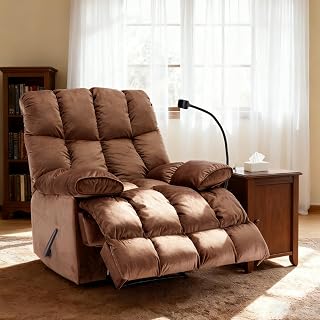
Euthymia Oversized Velvet Recliner
Velvet over a heavy-duty 400-pound frame, which reads more like furniture and less like medical equipment — a real consideration if the chair sits in a shared living room. Vacuum the pile every few weeks with a brush attachment and it won’t flatten in the high-contact zones.
Frequently Asked Questions
How much clearance do I need behind the chair?
Most wall-hugger designs need four to six inches; traditional mechanisms need twelve to eighteen. Measure with a tape from the baseboard, not the wall, since baseboard trim eats an inch you’ll forget about.
Can I assemble one of these alone?
Physically yes, on most models — the back typically slides onto steel brackets. But the boxed weight runs 100 to 180 pounds, so getting it through a doorway is the two-person part, not the assembly.
Do power recliners need a dedicated outlet?
No, they draw very little. Do plug the transformer directly into the wall though, not a lightweight extension cord, and leave slack so the reclining motion doesn’t tug the connector loose.
What actually fails first on these chairs?
The mechanism mounting hardware works loose before the frame or motor gives out. Flip the chair once a year, run a socket wrench over every bolt, and you’ll add years to it.
Final Thoughts
For most buyers the FUNECORP dual-motor lift recliner hits the best balance of width, lay-flat travel, and useful extras. If you need maximum capacity, the JIKFRIMA 500-pound lift chair is the safer structural bet, and the Watson & Whitely leather power recliner is the one to pick when the chair has to look like it belongs in the room.