Key takeaways
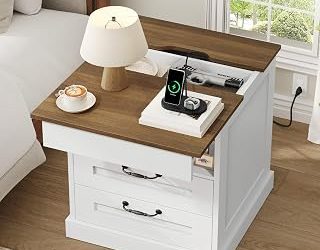
- Measure before you buy: Pull the drawer out and measure interior width, depth, and clearance under the drawer slides. Add at least an inch of slack for the lid swing and any exterior hinge, and check that the door still opens fully once the safe sits inside.
- Anchoring hardware: Look for pre-drilled base holes and included lag bolts or a steel cable. A safe you can carry off is a lockbox, not security. Bolting through a drawer bottom into a cross member, or into a wall stud for drop-down models, is a fifteen-minute job with a drill and a socket driver.
- Multiple access paths: Biometrics are fast, but fingerprint readers struggle with wet or cold hands. Insist on at least three methods, typically fingerprint plus keypad plus a mechanical override key you store somewhere other than the nightstand.
- Silent mode and light control: Confirmation beeps and bright LEDs defeat the purpose at night. Silent operation with a dimmed interior light is worth more than an extra millimeter of steel.
- Power and battery access: Rechargeable packs are convenient until they die mid-sleep. Prefer AA-powered units or models with a low-battery warning and an accessible compartment you can reach without unbolting the whole safe.
What's inside
Anyone who has knelt on the floor at 2 a.m. fumbling for a keypad in the dark understands the real problem with bedside storage: most gun safes are designed as boxes first and bedroom furniture second. They rattle around loose in a drawer, chew through batteries, block the charging cable you actually use every night, or announce themselves with a beep loud enough to wake the whole house. Meanwhile the safes that do fit the nightstand often trade away steel thickness or a reliable fingerprint reader to get there.
I approached this roundup the way I’d approach any shop project: measure the space, check the fasteners, test the mechanism cold. Below are the nightstand safes worth mounting in 2026, plus what to look for in wall thickness, anchoring hardware, and access methods before you commit to drilling holes in furniture you like.
As an Amazon Associate we earn from qualifying purchases.




🛒 Best Price Today on Amazon
Prime members get fast, free shipping on everything above, plus member-only deals. New members get a 30-day free trial — cancel anytime.
How to Choose a Nightstand Gun Safe (2026)
- Measure before you buy: Pull the drawer out and measure interior width, depth, and clearance under the drawer slides. Add at least an inch of slack for the lid swing and any exterior hinge, and check that the door still opens fully once the safe sits inside.
- Anchoring hardware: Look for pre-drilled base holes and included lag bolts or a steel cable. A safe you can carry off is a lockbox, not security. Bolting through a drawer bottom into a cross member, or into a wall stud for drop-down models, is a fifteen-minute job with a drill and a socket driver.
- Multiple access paths: Biometrics are fast, but fingerprint readers struggle with wet or cold hands. Insist on at least three methods, typically fingerprint plus keypad plus a mechanical override key you store somewhere other than the nightstand.
- Silent mode and light control: Confirmation beeps and bright LEDs defeat the purpose at night. Silent operation with a dimmed interior light is worth more than an extra millimeter of steel.
- Power and battery access: Rechargeable packs are convenient until they die mid-sleep. Prefer AA-powered units or models with a low-battery warning and an accessible compartment you can reach without unbolting the whole safe.
The Best Nightstand Gun Safes (2026), Reviewed
FTOP Biometric Clock Safe with Wireless Charging
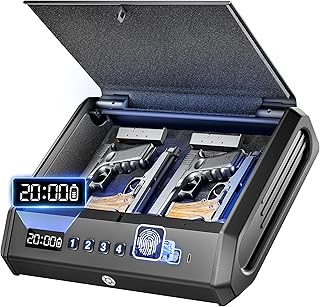
This one solves the outlet-crowding problem by absorbing the alarm clock and phone charger into the safe itself, so the nightstand top stays clear and nothing looks out of place. The humidity and temperature readout is genuinely useful if you store ammunition or documents alongside a handgun, though the wireless pad means it needs a permanent power run.
Quick Access Drop-Down Bedside Safe
Mounted to a bed frame rail or the side of a nightstand, the drop-down design puts the grip at hand height instead of buried under folded clothes. Plan on locating a stud or using a solid frame member, because the whole point of the hinge geometry is defeated by a wobbly mount.
Large Biometric Pistol Safe with Silent Mode
The standout here is capacity: it swallows a full-size pistol with a light attached plus a spare magazine, and stores up to 100 fingerprints for households with multiple authorized adults. AA batteries and true silent operation make it the most maintenance-friendly option in the group.
BILLCONCH Biometric Safe with USB Charging
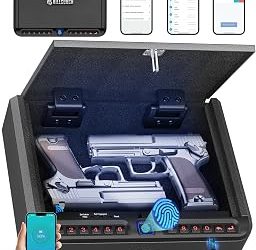
A tidy, well-finished box with a bright interior light, a USB pass-through for keeping a phone or weapon light topped off, and the expected fingerprint, PIN, and key trio. The lid opens on a strong gas-assist hinge that stays put, which matters more than most spec sheets suggest.
BILLCONCH Smart Safe with App and Voice Guidance
Four access methods plus app notifications make this the pick if you want a log of every time the door opened, which is reassuring in a house with curious kids. Voice guidance can be muted, and the included security cable gives you an anchoring option when drilling into the furniture isn’t on the table.
Frequently Asked Questions
Can I bolt a safe into a cheap particleboard nightstand?
Not directly. Particleboard strips out under load. Sandwich a piece of hardwood or a steel plate under the drawer bottom, run bolts through both layers, and use washers on the underside to spread the force.
How reliable are fingerprint readers in the dark?
Modern capacitive sensors read fine without light, but they fail on damp, dusty, or very cold fingers. Enroll the same finger three or four times at slightly different angles, and practice the keypad code so it’s muscle memory.
Are these safes fire resistant?
Almost none of them are. Compact bedside safes are built for rapid access and theft deterrence, not fire ratings. Store deeds, passports, and backup drives in a dedicated fire-rated box elsewhere.
How often should I test the safe?
Monthly. Cycle the lock with each access method, confirm the batteries, and verify the safe hasn’t shifted on its mounts. Add it to the same routine as testing your smoke detectors.
Final Thoughts
For most bedrooms, the Large Biometric Pistol Safe is the sensible default: roomy, quiet, and easy to keep powered with AA cells. Choose the FTOP clock safe if you want the nightstand surface to stay uncluttered and the safe to disappear into the decor, or the BILLCONCH Smart Safe if access logging and app alerts matter in a busy household. Whichever you pick, budget twenty minutes and a drill for a proper mount, because the anchoring is the part that turns a box into a safe.