Key takeaways
- Discover the best oil to lubricate window fans, compare five fan-safe motor oils, and learn the right viscosity, applicator, and oiling steps for quieter fans.
Disclosure: As an Amazon Associate, this site earns from qualifying purchases made through links on this page.


Why Your Window Fan Needs the Right Oil
A window fan that once ran quietly can slowly turn into a source of squeaks, humming, and sluggish blades. In most cases, the problem is not a dead motor. It is dried-out lubrication inside the motor bearings. Window fans pull dusty outdoor air through the housing for hours at a time, and the thin film of oil that protects the motor shaft gradually evaporates or thickens with dust. When that film disappears, metal rubs against metal, the motor works harder, and the fan gets louder and slower.
Adding the best oil to lubricate window fans is one of the simplest maintenance jobs in a home. A few drops in the right place can restore smooth rotation, cut noise, and add seasons of life to a fan that might otherwise be thrown away. The key is choosing an oil made for small electric motors rather than grabbing whatever is already in the garage. Heavy grease, automotive engine oil with detergents, and penetrating sprays can all cause more harm than good inside a small fan motor.
This guide explains what makes an oil safe for a window fan motor, compares five lubricating oils suited to the job, and walks through the oiling process step by step.
Signs Your Window Fan Motor Needs Lubrication
A high-pitched squeal or rhythmic grinding noise during operation is the most obvious signal. It means the lubricant film has dried out and the shaft is making direct contact with the bearing surfaces. A slow start is another warning: if the blades take a long time to reach full speed or need a manual nudge to begin spinning, the bearings are experiencing resistance that lubrication can usually relieve.
Excess heat is a third sign. If the motor housing feels unusually hot to the touch after only a few minutes of use, the motor is working harder than it should.
Not every noisy fan needs oil. A fan with a bent blade, a loose mounting bracket, or a failing capacitor will keep making noise after lubrication. Clean the blades and grille first, check that the fan sits level in the window, and listen closely. If the noise comes from the motor housing itself and changes with fan speed, lubrication is the most likely fix.
How to Choose Oil for a Window Fan Motor
Window fan motors are small, fractional-horsepower motors with sleeve bearings or small ball bearings. They need a light, stable oil, and the details on the label matter more than the brand name.
Match the viscosity
For most small fan motors, a light machine oil with an SAE 20 or equivalent rating is the industry standard. Oil in this range is thin enough to flow into tight clearances around the shaft, yet thick enough to maintain a protective film between moving parts. Oil that is too heavy creates drag and traps dust, while oil that is too thin may not protect the bearings during long runs on high speed.
Choose a non-detergent formula
Detergent additives found in automotive engine oils are designed to suspend contaminants inside a car engine, where a filter and regular oil changes handle the debris. Inside a small fan motor, detergents can strip away existing lubrication and leave deposits that increase wear. Look for oil labeled non-detergent or specifically formulated for electric motors, sewing machines, or small appliances.
Consider synthetic versus mineral oil
Mineral-based light machine oils have kept fans running for decades and remain a solid choice for basic maintenance. Synthetic oils generally resist oxidation better, hold their viscosity across a wider temperature range, and last longer between applications. Synthetic oil is worth considering for a fan that runs for long stretches or sits in a sunny window. For a lightly used fan that gets oiled once a season, a quality mineral oil is usually enough.
Look at the applicator
Window fan motors often hide their oil ports behind the grille, the blade hub, or a small housing cover. A bottle with a precision spout, a needle tip, or a telescoping tube makes it possible to place two or three drops exactly where they belong without flooding the motor. A wide-mouth bottle invites over-oiling, and excess oil attracts dust and drips onto wiring.
Know what to avoid
Penetrating sprays and water-displacing solvents are not lubricants for this job. They evaporate quickly, leave behind a thin film that attracts dust, and can wash out the remaining good oil. Heavy greases belong in gearboxes, not in small sleeve bearings. Cooking oils go rancid and gum up. If a product is not labeled for electric motors or small machinery, do not put it in a fan motor.
The Best Oils to Lubricate Window Fans
Every oil below is a lubricating oil suited to small electric fan motors. None of them is a fan itself, and each one brings a different strength, from classic motor oil to synthetic formulas and precision applicators.
1. 3-IN-ONE Motor Oil
3-IN-ONE Motor Oil is the classic choice for small electric motors, and it is the most direct match for a window fan. The formula is a high-grade blend with an SAE 20 equivalent rating, designed to reduce wear in fractional-horsepower motors. The manufacturer describes it as suitable for motors of one-quarter horsepower and larger, which covers the small motors found in almost every residential window fan.
The bottle includes a Marksman Twist Spout, a small extendable spout that lets you direct drops into an oil port without removing the whole motor assembly.
This is the best starting point if you want a single, purpose-built motor oil. It is especially well suited to older window fans that have started to squeal, since the SAE 20 weight matches what most small sleeve-bearing motors were designed to run on. Use it sparingly, two or three drops per port, and wipe away any excess before reassembling the fan.
2. 3-IN-ONE Multi-Purpose Oil, 8 OZ
3-IN-ONE Multi-Purpose Oil is the versatile sibling of the dedicated motor oil above. It lubricates, cleans, and helps protect metal parts against rust and corrosion, which makes it useful beyond the fan itself. Around the house, the same bottle can serve hinges, casters, sliding door tracks, and other light-duty moving parts, so it earns its shelf space even if you only oil the fan once or twice a year.
The oil contains no detergent additives that could damage motor components, and the squeeze bottle with its twist spout gives good control over each drop. An indicator strip on the bottle shows how much oil remains. The eight-ounce size lasts through many maintenance sessions, which makes it a practical pick for a household with several fans.
For window fans specifically, this oil works well for general bearing lubrication and for freeing a motor that has become stiff after months in storage. It is a good choice if you want one bottle that handles the fan and a dozen other small jobs around the home.
3. Liberty Oil Synthetic Oil

Liberty Oil Synthetic is a one-hundred-percent synthetic oil made for precision lubrication of small mechanisms, including fan motors. Synthetic lubricants hold their viscosity better than mineral oils when a motor housing warms up during extended use, which is exactly the situation a window fan faces on a hot afternoon when it runs for hours on high speed.
The formula is clear and nonstaining, so a stray drop will not mark the fan housing or the window frame. Because it does not break down or turn to sludge as quickly as conventional oil, it is a strong option for fans that run around the clock, such as a bedroom fan left on all night through the summer.
This oil is the best pick for high-temperature use and for anyone who prefers to oil less often. Synthetic oil is also a good match for newer fans with tight bearing tolerances, where a stable, clean lubricant protects the motor without leaving residue.
4. Supco Zoom Spout Oiler MO98, 4 OZ
The Supco Zoom Spout Oiler solves the hardest part of oiling a window fan: reaching the bearing. Its telescoping spout extends several inches, letting you deliver oil into recessed ports without taking the motor apart.
Inside the bottle is a high-grade, non-detergent turbine oil with a paraffin base. Turbine oil is the industry standard for small electric motors because it resists gumming, withstands high temperatures without breaking down, and stays light enough to penetrate tight bearing clearances. The manufacturer lists a viscosity range of 92 to 99 at 140 degrees Fahrenheit, which places it squarely in the light machine oil category that fan motors need.
This oiler is the best choice for hard-to-reach motors, including fans where the oil ports sit behind a fixed grille or deep inside the housing. It is also a favorite among appliance repair technicians. Two or three drops are enough; the precision spout makes it easy to stop before you over-apply, and the four-ounce bottle lasts for many seasons of fan maintenance.
5. SINGER All-Purpose Oil, 3.38 FL OZ
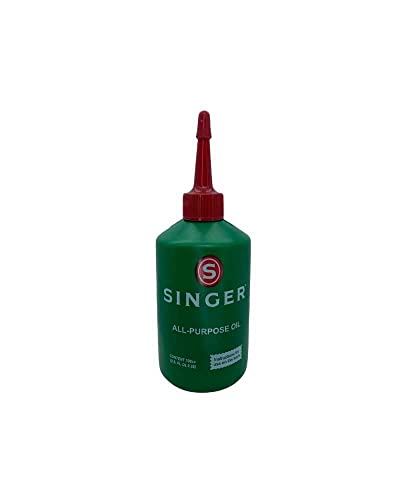
SINGER All-Purpose Oil is a highly refined, clear mineral oil originally made for sewing machines, and its properties translate well to window fan motors. It is non-yellowing, free of the additives that cause buildup in small motors, and light enough to flow easily into sleeve bearings without resistance.
Because the formula is gentle, it will not damage plastic or rubber parts, which makes it a safe choice for older fans with aged internal components. It is a good option for light, regular maintenance rather than rescuing a badly neglected motor. If your fan runs smoothly but is starting to make a faint noise at startup, a few drops of this oil at the beginning of the season can keep the problem from developing further.
The small bottle is easy to store with other household supplies, and the precision applicator helps place drops exactly where they are needed. This is the best pick for casual do-it-yourselfers who want a simple bottle for seasonal fan care and other light-duty oiling jobs around the house.
Comparison at a Glance
| Oil | Type | Best For | Applicator |
|---|---|---|---|
| 3-IN-ONE Motor Oil | SAE 20 mineral motor oil | Older or squeaky window fans | Twist spout |
| 3-IN-ONE Multi-Purpose Oil, 8 OZ | Non-detergent multi-purpose oil | Whole-house use plus fan care | Twist spout |
| Liberty Oil Synthetic Oil | One-hundred-percent synthetic oil | Hot rooms and fans that run all day | Precision applicator |
| Supco Zoom Spout Oiler MO98, 4 OZ | Non-detergent turbine oil | Hard-to-reach oil ports | Telescoping spout |
| SINGER All-Purpose Oil, 3.38 FL OZ | Clear refined mineral oil | Light seasonal maintenance | Precision applicator |
If you want one recommendation, start with a dedicated motor oil such as the 3-IN-ONE Motor Oil or the Supco Zoom Spout Oiler. Choose the synthetic Liberty Oil if your fan runs for long hours in a hot room.
How to Oil a Window Fan Step by Step
Oiling a window fan takes about fifteen minutes once you know the process. Work slowly, and never rush the safety steps.
First, unplug the fan. Never attempt to lubricate a motor while the unit is connected to power, and do not rely on the speed switch alone.
Next, remove the front grille and the blades if your model allows it. Most window fans have a grille held by screws or clips, and blades that lift off the motor shaft after a small retaining nut or clip is removed. Keep the screws together in a small dish. Wipe dust from the blades, the grille, and the motor housing with a dry cloth. Dust pushed into a bearing along with fresh oil creates a grinding paste that accelerates wear.
Locate the oil ports. On many window fan motors, they are small holes or felt pads at the front and rear of the motor shaft. If you cannot find a port, check the fan manual or the manufacturer label on the motor housing. Some modern fans use sealed bearings with no oil port; if your fan has sealed bearings, do not force oil into it. Sealed bearings are meant to run without added lubrication.
Apply two or three drops of oil into each port. That is enough. The bearing only needs a thin film, and excess oil will seep out, attract dust, and can drip onto wiring. If your oil has a telescoping or needle applicator, use it to reach the port directly rather than pouring from the bottle.
Rotate the blades by hand for a few turns to distribute the oil along the shaft and into the bearing. Let the fan sit for a few minutes so the oil can settle, then wipe away any excess from the housing with a clean cloth.
Reassemble the grille and blades, return the fan to the window, plug it in, and run it on low speed for a few minutes. A properly oiled fan should start promptly and run more quietly than before. If the squeal remains after oiling and a short test run, the bearings may be worn beyond what lubrication can fix, and replacement parts or a new fan may be the better path.
Common Oiling Mistakes to Avoid
Over-oiling is the most frequent mistake. More oil does not mean more protection. Excess oil collects dust, creates a gummy mess, and can eventually cause electrical problems if it drips onto internal wiring.
Using the wrong product is the second mistake. Heavy grease, thick gear oil, and detergent automotive oil all create drag or deposits inside a small motor. Penetrating sprays evaporate and leave a film that attracts grit. Stick to a light, non-detergent oil made for electric motors or small machinery.
Skipping the cleaning step is the third mistake. A dusty motor housing, dirty blades, and clogged vents make the motor work harder no matter how good the oil is. Clean first, oil second.
Finally, do not oil a fan while it is plugged in, and do not ignore a fan that keeps getting louder after oiling. Lubrication is maintenance, not repair. A bearing that is scored or worn will not heal with oil, and continuing to run a damaged motor can overheat the windings. If oiling does not help within a day or two of use, it is time to look at replacement parts or a new fan.
Frequently Asked Questions
What kind of oil should I use on a window fan?
Use a light, non-detergent oil with an SAE 20 equivalent rating, or a synthetic oil made for small electric motors. Turbine oil and light machine oil are both appropriate. Avoid detergent automotive oils, penetrating sprays, heavy grease, and cooking oils.
How often should I oil a window fan?
For a fan used daily through the warm season, oil the motor once at the start of the season and again midway through if it starts to sound dry. A lightly used fan usually needs attention once a year. Fans that run around the clock in hot rooms may benefit from a synthetic oil, which holds up longer between applications.
Can I use a general household oil on a window fan?
A light, non-detergent household machine oil can work if it is labeled for small motors or machinery. Do not use penetrating sprays, heavy greases, or automotive engine oils with detergents.
Why is my window fan still noisy after oiling?
The bearings may be worn beyond what lubrication can restore, the blades may be unbalanced or dirty, or the noise may come from a loose grille or mounting bracket. Clean the fan, check that everything is tight and level, and run it again. If the grinding continues, the motor may need replacement.
Final Thoughts
The best oil to lubricate window fans is a light, non-detergent oil made for small electric motors, applied in small amounts at the right places. A dedicated motor oil is the safest default, a telescoping oiler is the best tool for hard-to-reach ports, and a synthetic oil is the best choice for fans that run hot or run all day.
A few drops of the right oil, once or twice a season, is a small job with an outsized payoff: quieter rooms, cooler-running motors, and fans that last years longer than neglected ones.
More from Amazon
Programs that pair well with the guide above. Offers and eligibility are set by Amazon and may change.
A free business account with business pricing and bulk-buying tools for work, shop or home office.
Create a business accountFree shipping on eligible items, Prime Video and more. Eligible new members can start with a free trial.
Start a Prime free trialAudiobooks and podcasts to listen to on the go. Eligible new members can start with a free trial.
Try Audible freeAd-free music streaming. Eligible new subscribers can start with a free trial.
Try Music Unlimited freeAs an Amazon Associate we earn from qualifying purchases.