Key takeaways
- Direct-to-metal vs. primer-required: DTM coatings chemically bind to bare and lightly rusted steel, which saves a day of work on ornate ironwork. Primer-required enamels get harder, but only if you actually prime.
- Oil-based vs. water-based: Oil enamels cure to a tougher, more chip-resistant film and self-level beautifully on tubing. Water-based acrylics dry in an hour, clean up with tap water, and stay flexible through freeze-thaw cycles.
- Coverage math, not can size: A bistro set eats roughly a quart across two coats. Chairs with woven or scrolled detail can double that, so buy one container more than you think you need to avoid a batch mismatch.
- Sheen and heat: Gloss shrugs off water and wipes clean, but shows every dent. Matte and satin hide surface pitting on older frames. Dark colors on south-facing aluminum get hot enough to be uncomfortable.
- Application method: Brush-on gives you thicker mil build in one pass and better rust encapsulation. Spray is faster on mesh and lattice but needs three light coats to match the same protection.
What's inside
Every spring, the same thing happens: you pull the cover off the patio set and find rust blooming along the weld seams, paint flaking off the chair backs in coin-sized chips, and a chalky haze on what used to be a glossy finish. Metal furniture takes a beating that wood never does — thermal expansion in direct sun, condensation trapped under feet and joints, and hardware that wicks moisture straight into bare steel. Most people grab whatever spray can is on sale, get one decent season out of it, and repeat the cycle. The failure almost always traces back to the coating, not the effort.
I’ve stripped, sanded, and recoated enough wrought iron and tube-steel chairs to know which products actually bond and which ones peel by August. This guide covers six paints I’d genuinely reach for on outdoor metal, sorted by what they’re good at — direct-to-rust coatings that skip the primer step, traditional oil-based enamels for maximum hardness, and all-in-one refinishing paints when you want color and coverage without a full teardown. I’ll also walk through surface prep, since that’s where most jobs are won or lost.
As an Amazon Associate we earn from qualifying purchases.



🛒 Best Price Today on Amazon
Prime members get fast, free shipping on everything above, plus member-only deals. New members get a 30-day free trial — cancel anytime.
How to Choose a Paint For Metal Patio Furniture (2026)
- Direct-to-metal vs. primer-required: DTM coatings chemically bind to bare and lightly rusted steel, which saves a day of work on ornate ironwork. Primer-required enamels get harder, but only if you actually prime.
- Oil-based vs. water-based: Oil enamels cure to a tougher, more chip-resistant film and self-level beautifully on tubing. Water-based acrylics dry in an hour, clean up with tap water, and stay flexible through freeze-thaw cycles.
- Coverage math, not can size: A bistro set eats roughly a quart across two coats. Chairs with woven or scrolled detail can double that, so buy one container more than you think you need to avoid a batch mismatch.
- Sheen and heat: Gloss shrugs off water and wipes clean, but shows every dent. Matte and satin hide surface pitting on older frames. Dark colors on south-facing aluminum get hot enough to be uncomfortable.
- Application method: Brush-on gives you thicker mil build in one pass and better rust encapsulation. Spray is faster on mesh and lattice but needs three light coats to match the same protection.
The Best Paint For Metal Patio Furniture (2026)s Reviewed
Rust-Oleum Stops Rust Brush On Protective Enamel, Gloss White
This is the benchmark oil-based enamel for outdoor steel, and it earns that reputation — it flows out to a hard, glassy shell that resists chipping from stacked chair legs better than any acrylic I’ve used. Plan on a slow cure and good ventilation; it’s tacky for hours and fully hard in a few days.
Meuvcol Metal Paint, 35 oz Rust Preventive Coating
A water-based matte coating with genuine rust-preventive chemistry, which is a rare combination and the reason it’s my pick for anyone who hates solvent fumes. The flat finish does a real favor to older wrought iron with pitting, and the 35 oz jug covers a four-chair set with two coats.
Metal Paint Waterproof Anti-Rust, 16 oz Black
Sold as a direct-to-metal coating for gates and railings, and it behaves like one — brush it over stable surface rust after a wire-brush knockdown and it seals rather than bubbles. At 25–30 sq ft per can it’s best for touch-ups, a single loveseat, or refinishing hardware and feet.
Rust-Oleum Painter’s Touch Latex Brush-On, Gloss Black
The fast, forgiving option: recoat in an hour, clean the brush in the sink, and get a chip- and fade-resistant gloss that holds color through summer sun. It needs a proper metal primer underneath on bare steel, so budget for that step rather than gambling on adhesion.
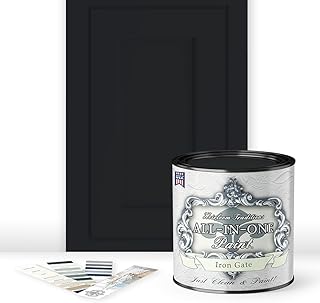
ALL-IN-ONE Paint by Heirloom Traditions, Iron Gate
Paint, primer, and topcoat in a single product, and it grips slick powder-coated aluminum without sanding — genuinely useful on modern patio sets where you can’t get tooth on the surface. The Iron Gate shade reads as a deep charcoal that hides pollen and water spots well.
Frequently Asked Questions
Do I have to remove all the rust first?
No, but you must remove all loose rust. Hit the frame with a wire brush or 80-grit until nothing flakes under your thumbnail, then wipe with denatured alcohol. Rust-preventive coatings seal tight, sound oxidation — they can’t bond to powder.
Can I paint over powder-coated aluminum?
Yes, and this is where all-in-one paints like Beyond Paint or ALL-IN-ONE shine, since they bond to glossy factory finishes with just a degrease and scuff. Traditional enamels need a bonding primer or they’ll sheet off in strips.
How many coats does outdoor metal need?
Two, always, with the second going on perpendicular to the first. Total film thickness is what stops moisture, and a single heavy coat sags on vertical tubing while still coming up thin at the edges.
When can the furniture go back outside?
Wait at least 24 hours for water-based paints and 72 for oil enamels before use, and give it a full week before stacking pieces or setting cushions down. Paint that’s dry to the touch is nowhere near fully cured.
Final Thoughts
For classic wrought iron that needs maximum durability, the Rust-Oleum Stops Rust brush-on enamel is still the one I’d stake a season on. If you want low odor and easy cleanup without giving up rust protection, the Meuvcol coating covers a lot of furniture for the money, and Beyond Paint remains the smart choice when you’re refinishing slick powder-coated frames with no stripping or priming in the plan.