Key takeaways
- Rust-inhibiting formula: Look for language like “stops rust” or “rust preventive” on the label. These contain corrosion inhibitors that chemically slow oxidation at the surface, which matters enormously on older pieces where you can’t sand back to bare, clean metal in every crevice.
- Oil-based vs. water-based: Oil-based (alkyd) enamels cure harder and bond better to metal, making them the default choice for furniture that lives outside year-round. They take longer to fully cure, but the tradeoff in durability is worth the patience.
- Any-angle spray valve: Patio furniture is a nightmare of undersides, joint welds, and chair-leg interiors. A can that sprays upside down without sputtering saves you from awkward contortions and lets you coat the spots where rust actually starts.
- Sheen and texture: Gloss reflects light and shows every dent and sanding scratch. Flat and satin hide surface imperfections beautifully. Textured finishes hide them almost completely, which makes them a rescue option for pitted metal.
- Coverage per can: A standard 12 oz can covers roughly 12 to 15 square feet at proper film thickness. For a four-chair dining set, budget three to four cans minimum. Running out mid-project means a visible lap line where the first batch flashed off.
What's inside
Every spring, the same scene plays out on patios across the country: you pull the cover off a wrought iron bistro set and find orange freckles creeping along the welds, paint flaking off the chair backs, and a powdery chalk residue that transfers to your hand. Metal patio furniture takes a beating from UV, morning dew, sprinkler overspray, and the freeze-thaw cycle, and once the factory finish gives up, rust moves fast. Replacing the set costs hundreds. Refinishing it costs less than a pizza and a Saturday afternoon.
The catch is that not all aerosols are built for this job. Grab the wrong can and you’ll be sanding off a gummy, peeling mess next season. This guide breaks down the spray paints that actually hold up on outdoor metal, what separates a rust-inhibiting formula from a general-purpose one, and how to pick the right sheen and texture for the piece you’re reviving. I’ve stripped, prepped, and resprayed enough tube-frame chairs and cast aluminum tables to know which cans earn a spot on the shelf.
As an Amazon Associate we earn from qualifying purchases.




🛒 Best Price Today on Amazon
Prime members get fast, free shipping on everything above, plus member-only deals. New members get a 30-day free trial — cancel anytime.
How to Choose a Spray Paint For Metal Patio Furniture (2026)
- Rust-inhibiting formula: Look for language like “stops rust” or “rust preventive” on the label. These contain corrosion inhibitors that chemically slow oxidation at the surface, which matters enormously on older pieces where you can’t sand back to bare, clean metal in every crevice.
- Oil-based vs. water-based: Oil-based (alkyd) enamels cure harder and bond better to metal, making them the default choice for furniture that lives outside year-round. They take longer to fully cure, but the tradeoff in durability is worth the patience.
- Any-angle spray valve: Patio furniture is a nightmare of undersides, joint welds, and chair-leg interiors. A can that sprays upside down without sputtering saves you from awkward contortions and lets you coat the spots where rust actually starts.
- Sheen and texture: Gloss reflects light and shows every dent and sanding scratch. Flat and satin hide surface imperfections beautifully. Textured finishes hide them almost completely, which makes them a rescue option for pitted metal.
- Coverage per can: A standard 12 oz can covers roughly 12 to 15 square feet at proper film thickness. For a four-chair dining set, budget three to four cans minimum. Running out mid-project means a visible lap line where the first batch flashed off.
The Best Spray Paint For Metal Patio Furniture (2026)s Reviewed
Rust-Oleum Stops Rust, Semi-Gloss Black
This is the workhorse I reach for on tube-frame and wrought iron pieces, because semi-gloss lands in the sweet spot: enough sheen to look intentional and shed water, but not so much that it telegraphs every imperfection in the substrate. The oil-based enamel lays down thick and levels well, and after a full cure it shrugs off rain and patio-chair scuffing.
Rust-Oleum Stops Rust, Gloss Black (2 Pack)
If your metal is in good shape and you want that crisp, factory-fresh look, gloss black delivers depth that flatter sheens can’t match. The two-pack is the practical buy for anything larger than a single chair, and the harder gloss film is genuinely easier to wipe clean when pollen and bird droppings show up.
Rust-Oleum Stops Rust Textured, Aged Iron
This is my secret weapon for furniture that’s seen better days. The multi-color textured formula builds a subtly speckled, slightly rough surface that swallows pitting, weld seams, and imperfect sanding, turning flaws into character rather than mistakes you have to explain.
Rust-Oleum Universal All Surface Metallic, Oil Rubbed Bronze
The patented comfort trigger on Universal cans makes a real difference when you’re spraying an entire set in one session and your index finger starts to protest. The oil rubbed bronze reads warm and expensive against greenery, and the strong-adhesion formula grips aluminum and previously painted surfaces with minimal fuss.
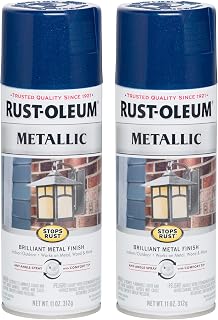
Rust-Oleum Stops Rust Metallic, Cobalt Blue (2 Pack)
When you want a set that becomes the focal point rather than the background, this saturated cobalt with a metallic shimmer does the job while keeping the same rust-resistant backbone as the rest of the Stops Rust line. Apply it in light, even passes; metallics show lap marks more readily than solid colors.
Frequently Asked Questions
Do I have to remove all the old paint first?
No, but you do have to remove everything that’s loose. Scrape and wire-brush any flaking paint and rust scale, scuff the remaining sound finish with 180 to 220 grit so the new coat has tooth, then wipe down with a degreaser and let it dry completely. Paint over loose material and it will fail from underneath no matter how good the aerosol is.
Do I need a separate primer?
On bare or heavily rusted metal, yes: a rust-inhibiting primer meaningfully extends the life of the topcoat. Over a sound existing finish that you’ve scuffed and cleaned, these self-priming enamels can go straight on with good results.
How many coats, and how long between them?
Two to three light coats beat one heavy coat every time. Heavy passes sag and run on vertical chair legs. Recoat within the window printed on the can, usually about an hour, or wait a full 48 hours; recoating in between can wrinkle the film.
When can I actually sit on the chairs?
Dry to the touch happens in under an hour, but oil-based enamel needs several days to a week to fully harden. Rushing it means cushion imprints and fabric transfer permanently pressed into your new finish. Spray in dry weather between roughly 50 and 90°F, and give it the week.
Final Thoughts
For most metal patio sets, the Stops Rust Semi-Gloss Black is the safest, most forgiving pick and the one I’d hand to a first-timer. If your frames are pitted or scarred from years outside, the Textured Aged Iron will hide sins nothing else can, and the Universal Oil Rubbed Bronze is the move when you want warmth and a genuinely comfortable trigger for a full-set project. Prep well, spray light, and you’ll get years out of a Saturday’s work.