Our Short List of 3

- Type: Compound-action expander pliers
- Model: 751-909
- Ring diameter range: 2 to 4 in
- Ring support: Multiple grip points around the ring

- Type: Expander pliers, tapered jaws
- Model: 33500
- Fits: Most passenger car rings
- Ring thickness range: 3/64 to 1/4 in

- Type: Expander pliers, slotted jaws
- Model: 790-3
- Finish: Nickel plated
- Jaw feature: Slot in each jaw resists ring twist
All 5 Picks at a Glance
| Product | Specs | Action |
|---|---|---|
| 1. Stens 751-909 Piston Ring Expander — compound action with support at several points |
| Check price on Amazon |
| 2. Lisle 33500 Piston Ring Installer — the simple tapered-jaw classic |
| Check price on Amazon |
| 3. Hazet 790-3 Piston Ring Pliers — German-made, with anti-twist jaw slots |
| Check price on Amazon |
 4. LCYLFH Adjustable Piston Ring Installer (LC-PRI202407) — chrome vanadium with a cushioned grip |
| Check price on Amazon |
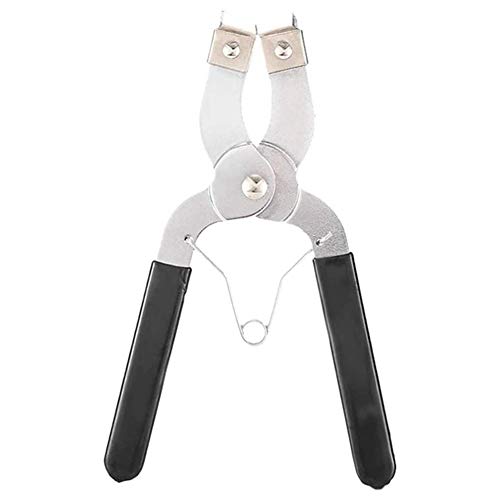 5. Adjustable Piston Ring Expander Pliers — the unbranded adjustable option |
| Check price on Amazon |
Key takeaways
- Five piston ring expanders and installer pliers compared on jaw design, ring range, adjustable stops and grip, so rings go on without snapping.
A piston ring is a thin, brittle loop of cast iron or steel that only seals when it stays perfectly round. Getting it onto the piston means opening it just wide enough to pass over the crown, and that is where fingers fail. Spread a ring by hand and the force lands on two short arcs near the gap: the ring twists, takes a permanent bend, or snaps outright, and a bent ring never seals evenly again. A ring expander solves this by gripping the ring ends in shaped jaws and opening the whole loop evenly, a little at a time.
Do not confuse this tool with a ring compressor. A compressor is a band or sleeve that squeezes fitted rings flush so the piston can slide into the bore, the final step of assembly. An expander works earlier and in the opposite direction: it opens each ring so you can lift it off the piston during teardown, or walk a fresh ring down over the crown and settle it into its groove. The five picks below cover both classic end-grip pliers and compound-action tools that support the ring at several points.
Disclosure: As an Amazon Associate, we earn from qualifying purchases made through links on this page, at no extra cost to you.
How to Choose a Piston Ring Expander
Even opening matters more than strength. A good expander pulls the ring ends apart along the ring’s own curve, so diameter grows uniformly around the full circumference. Cheap or improvised methods pry one side, which cocks the ring and loads it unevenly. Look for jaws shaped to the ring, with pockets or a raised lip that captures each ring end so the ends cannot slip off sideways mid-squeeze.
Open the ring only as far as the job needs. A ring needs to clear the piston crown and the lands between grooves, nothing more. Every extra fraction of opening adds stress, and cast iron gives no warning before it breaks. Work in small squeezes, support the far side of the ring with your free hand, and ease the ring down the piston rather than forcing it. An adjustable stop, where fitted, lets you set a hard limit on jaw travel so a heavy squeeze cannot over-open the ring.
Match the tool to your ring diameters. Passenger car rings commonly sit in the 3 to 4.5 in bore world, while large diesel rings run far bigger and need longer, stronger pliers with a wider jaw span. Small engines, motorcycles and outdoor equipment sit at the other end. Check the maker’s stated ring range against your bore before ordering, and pick a tool whose comfortable middle covers your size rather than one straining at its limit.
Know which rings the pliers are for. Expander pliers are made for the compression rings, the stiff top and second rings. The three-piece oil ring in the bottom groove, a wavy spacer with two thin steel rails, is flexible enough to fit by hand: seat the spacer, then spiral each rail in with your thumbs. Forcing pliers onto thin rails only risks kinking them.
Pair the tool with the steps around it. Before new rings go on, clean each groove: a snapped segment of an old ring makes an ideal scraper for lifting out carbon without gouging the aluminium. Fit rings from the bottom groove upward, markings facing the crown, and stagger the end gaps around the piston following the engine maker’s diagram, never lining them up. A quick end gap check, ring squared inside the bore and the gap read with feeler blades, belongs to the same bench session, though it needs its own tools and care.
The 5 Best Piston Ring Expanders
1. Stens 751-909 Piston Ring Expander — compound action with support at several points
- Type: Compound-action expander pliers
- Model: 751-909
- Ring diameter range: 2 to 4 in
- Ring support: Multiple grip points around the ring
Most ring pliers hold a ring by its two ends and nothing else. The Stens 751-909 works differently: a compound-action linkage drives jaws that grasp the ring at multiple points around its circumference, so the loop stays supported and round while it opens. That support is what makes this design forgiving on stiff rings, because no single arc carries the whole load. An adjustable stop caps how far the jaws can travel, which guards against the classic mistake of squeezing a ring past the point it needed to go. The trade-off is in the handles: they are plain contoured steel with no rubber grip, so long sessions on a full engine set are less kind to your palms. For builders who re-ring engines often, this is the most controlled tool here.
2. Lisle 33500 Piston Ring Installer — the simple tapered-jaw classic
- Type: Expander pliers, tapered jaws
- Model: 33500
- Fits: Most passenger car rings
- Ring thickness range: 3/64 to 1/4 in
The Lisle 33500 has been the default ring plier in home garages for decades, and its appeal is simplicity. Tapered jaws slide into the ring gap and spread the ends as you squeeze, covering most passenger car rings and ring thicknesses from 3/64 to 1/4 in. At just a few ounces it is easy to handle on small engines, motorcycles and outdoor equipment as well as car pistons. The honest limitation of this end-grip format is that the ring is held only at its gap, so a rushed squeeze can twist the ring or open it too far. Work slowly, keep your free hand under the far side of the ring, and it does the job cleanly. Few tools this small earn their drawer space so well.
3. Hazet 790-3 Piston Ring Pliers — German-made, with anti-twist jaw slots
- Type: Expander pliers, slotted jaws
- Model: 790-3
- Finish: Nickel plated
- Jaw feature: Slot in each jaw resists ring twist
Hazet builds the 790-3 in Germany to the pattern of a classic end-grip plier, then fixes the format’s main weakness. The jaws carry a slot that the ring sits in as it opens, which keeps the ring from twisting out of plane while you squeeze, the failure that ruins rings with plain tapered jaws. The whole tool is nickel plated, and the build feels a step sturdier than budget pliers, with a hinge that stays tight over years of engine work. Hazet does not publish a ring diameter range for this model in the data we could check, so confirm fit against your bore size with the seller if you work on unusually large or small engines. For car and truck rebuilds in the common sizes, this is the premium, buy-it-once option.
4. LCYLFH Adjustable Piston Ring Installer (LC-PRI202407) — chrome vanadium with a cushioned grip
- Type: Adjustable expander pliers
- Model: LC-PRI202407
- Material: Chrome vanadium steel
- Grip: Vinyl-dipped handles
The LCYLFH installer is a newer adjustable design aimed at home builders who want one tool for varied engines. The body is chrome vanadium steel, a step up in hardness and spring resistance from the plain carbon steel of many budget pliers, and the handles carry a vinyl grip that stays comfortable across a full set of pistons. The maker emphasises scratch-free expansion: jaw faces shaped to spread the ring without digging into its coated outer face, which matters on modern low-tension rings with thin performance coatings. Published data is thin, with no firm ring diameter range given, so treat this as a car-size tool and confirm dimensions before tackling large diesel rings. Within that scope it is a well-judged modern pick.
5. Adjustable Piston Ring Expander Pliers — the unbranded adjustable option
- Type: Adjustable expander pliers
- Brand: Not published
- Model: Not published
- Material: Not published
This unbranded listing covers the other common expander format: a simple adjustable plier whose mounting tip engages the ring gap and stretches the ring open as the handles close. There is no compound linkage and no multi-point support, so technique does the heavy lifting: small squeezes, a steadying hand on the far side of the ring, and patience as you walk the ring over the crown. Maker data is sparse, with no published model number, material or firm size range, which is exactly why it sits last here despite the sensible design. As a first expander for an occasional car rebuild, bought with eyes open about the thin documentation, it covers the core task: opening a compression ring evenly instead of by thumbs alone.
Comparison Table
| Pick | Type | Ring range | Adjustable stop | Grip |
|---|---|---|---|---|
| Stens 751-909 | Compound-action pliers | 2 to 4 in | Yes | Contoured steel |
| Lisle 33500 | Tapered-jaw pliers | Most passenger car rings | No | Plain steel |
| Hazet 790-3 | Slotted-jaw pliers | Not published | No | Plain steel |
| LCYLFH LC-PRI202407 | Adjustable pliers | Not published | No | Vinyl-dipped |
| Adjustable expander (unbranded) | Adjustable pliers | Not published | No | Plain steel |
Frequently Asked Questions
Can I fit piston rings by hand instead of using an expander?
You can, and many rings have died that way. Fingers load the ring unevenly near its gap, so it twists as it opens; cast iron and thin steel rings either snap or take a permanent bend, and a bent ring never seals evenly against the bore. Expander pliers open the loop along its own curve, which is the whole point of owning them.
Do I need the pliers for the oil ring as well?
No. The three-piece oil ring, a wavy spacer plus two thin rails, is flexible by design and goes on by hand: seat the spacer in the bottom groove, then spiral each rail in with your thumbs. Expander pliers are for the stiff compression rings above it. Forcing pliers onto thin rails risks kinking them.
How far should I open a ring with the expander?
Only far enough to clear the piston crown and slip down into place, and no further. Open in small squeezes, support the far side of the ring with your free hand, and if your pliers have an adjustable stop, set it before the first ring. A ring opened past its elastic limit stays sprung and loses sealing tension.
What size expander do I need for my engine?
Match the tool to ring diameter. Most passenger car work falls in the 3 to 4.5 in bore range that mid-size pliers cover; large diesel rings need bigger, stronger tools, and small engines need compact ones. Check the maker’s stated range where one is published, and choose a tool whose middle range covers your bore.
In what order do rings go on, and where should the gaps sit?
Fit from the bottom groove upward: oil ring assembly first, then the second ring, then the top ring, with any printed markings facing the crown. Stagger the end gaps around the piston according to the engine maker’s diagram so no two gaps line up. Clean each groove with a piece of broken old ring before the new rings go near the piston.
Conclusion
Ring work rewards patience and punishes force, and the right expander is mostly a device for staying patient: it opens a brittle ring evenly, only as far as needed, with the ends held so they cannot slip. Pick the Stens 751-909 if you re-ring engines often and want multi-point support with an adjustable stop. Pick the Lisle 33500 for a proven, featherweight classic, or the Hazet 790-3 if anti-twist jaw slots and German build appeal. The LCYLFH suits varied home use with a kinder grip, and the unbranded adjustable covers the basics for an occasional rebuild. Whichever you choose, clean the grooves, fit from the bottom up, and stagger those gaps.
More from Amazon
Programs that pair well with the guide above. Offers and eligibility are set by Amazon and may change.
A free business account with business pricing and bulk-buying tools for work, shop or home office.
Create a business accountFree shipping on eligible items, Prime Video and more. Eligible new members can start with a free trial.
Start a Prime free trialAudiobooks and podcasts to listen to on the go. Eligible new members can start with a free trial.
Try Audible freeAd-free music streaming. Eligible new subscribers can start with a free trial.
Try Music Unlimited freeAs an Amazon Associate we earn from qualifying purchases.