Key takeaways
- Compressor vs. thermoelectric: Thermoelectric coolers use a fan and no compressor, so there is no cycling clunk at all — but they only pull the interior 30-40°F below ambient. Compressor models get genuinely cold and hold temperature better, and modern quiet compressors run around 38dB, roughly a library. Pick based on whether you need cold or need silence.
- Cabinet mass and mounting: Heavier units vibrate less. Press on the side panel of a candidate: if it flexes and drums, that panel will amplify compressor buzz. Fridges with rubber-isolated compressor feet and a thicker back panel run noticeably calmer.
- Leveling feet you can actually adjust: Threaded, adjustable feet are worth more than any noise spec. A fridge sitting on three of four corners will hum through the floor no matter how good the compressor is. If a unit ships with fixed plastic pads, budget for felt shims.
- Freezer or no freezer: A separate freezer compartment means a longer duty cycle and more total run time, so it will make more noise over a night than a fridge-only box of the same size. Skip the freezer unless you genuinely need it.
- Thermostat granularity: Multi-step mechanical thermostats or digital controls let you dial the setpoint just cold enough, which shortens run cycles. A two-position dial forces the compressor to work harder than your use case requires.
What's inside
Anyone who has tried to sleep six feet from a running compressor knows the problem: spec sheets brag about capacity and energy ratings, but nobody prints the decibel number where you can find it. You unbox the thing, plug it in, and then spend the next three nights listening to a hum that kicks on every twenty minutes. Cheap mini fridges also tend to rattle because the compressor is bolted to a thin steel shell with no isolation, which turns the whole cabinet into a sounding board. I have shimmed, felted, and re-leveled enough of them to know that the quiet ones are quiet by design, not by accident.
This guide sorts the genuinely low-noise options from the ones that only claim to be. I looked at compressor type versus thermoelectric cooling, cabinet construction, door seal quality, and how each unit behaves on an uneven floor — the single most common cause of a fridge that sounds fine in the store and buzzes at home. Below you will find picks for bedrooms, home offices, dorms, and desktop setups, plus the checklist I run through before buying anything with a compressor in it.
As an Amazon Associate we earn from qualifying purchases.


How to Choose a/an Quiet Mini Fridge (2026)
- Compressor vs. thermoelectric: Thermoelectric coolers use a fan and no compressor, so there is no cycling clunk at all — but they only pull the interior 30-40°F below ambient. Compressor models get genuinely cold and hold temperature better, and modern quiet compressors run around 38dB, roughly a library. Pick based on whether you need cold or need silence.
- Cabinet mass and mounting: Heavier units vibrate less. Press on the side panel of a candidate: if it flexes and drums, that panel will amplify compressor buzz. Fridges with rubber-isolated compressor feet and a thicker back panel run noticeably calmer.
- Leveling feet you can actually adjust: Threaded, adjustable feet are worth more than any noise spec. A fridge sitting on three of four corners will hum through the floor no matter how good the compressor is. If a unit ships with fixed plastic pads, budget for felt shims.
- Freezer or no freezer: A separate freezer compartment means a longer duty cycle and more total run time, so it will make more noise over a night than a fridge-only box of the same size. Skip the freezer unless you genuinely need it.
- Thermostat granularity: Multi-step mechanical thermostats or digital controls let you dial the setpoint just cold enough, which shortens run cycles. A two-position dial forces the compressor to work harder than your use case requires.
The Best Quiet Mini Fridge (2026)s Reviewed
4.5 Cu.Ft Mini Fridge Freezer, 2-Door, 38dB
The clearest pick if you want real freezer capacity without a compressor that announces itself — the rated 38dB holds up in a quiet bedroom, and the 7-level thermostat lets you avoid over-cooling. The adjustable shelves are a practical touch: I pulled the middle one to fit a stockpot, which most units this size cannot do.
Midea 1.6 Cu.ft Mini Fridge
Midea builds its own compressors and it shows in how smoothly this one cycles on and off, with none of the startup thump common to rebadged budget units. Energy Star certification means shorter, more efficient run cycles, which is the quietest thing a compressor fridge can do.
4.5 Cu.Ft 2-Door Compact Refrigerator, Satin Black
Strong value for a dorm or a home office where you want a proper fridge-freezer combo and a finish that does not look like a lab appliance. The removable glass shelves clean far more easily than wire racks, and the adjustable thermostat has enough range to keep produce from freezing on the top shelf.
EUHOMY 18L Beverage Cooler, 24 Cans
A dedicated drinks fridge with a quiet compressor and digital control from 40°F to 61°F, so it works equally well for soda or cellar-temperature wine. The glass door and LED light make it a reasonable piece of furniture rather than a box you hide, which matters in a small room.
Antarctic Star 18L Beverage Cooler, 24 Can
Nearly identical in spec to the EUHOMY and a solid alternative when stock or price swings — same 40-61°F electronic control and quiet compressor in a freestanding countertop footprint. Give it a couple of inches of rear clearance; both of these coolers get louder when the condenser is pressed against a wall.
Frequently Asked Questions
How quiet is quiet enough for a bedroom?
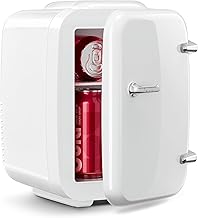
Anything at or under 40dB will disappear under normal room ambience once you are asleep. Under 35dB is essentially inaudible, which is where thermoelectric units like the Cooluli sit since they have no compressor at all.
Why did my new fridge get louder after a week?
Almost always leveling or clearance. Floors settle, feet loosen, and a unit pushed back against drywall reflects compressor noise into the room. Re-level it, pull it two to three inches off the wall, and check that nothing inside is resting against the rear panel.
Can I put a mini fridge inside a cabinet or under a desk?
Only with ventilation. Compressor models dump heat out the back and sides, and an enclosed space makes the compressor run longer and louder while shortening its life. Leave a few inches on all sides, or choose a model rated for built-in installation.
Do thermoelectric coolers ever make noise?
They have a small fan, so you get a steady low whoosh rather than intermittent cycling. Most people find constant fan noise less disruptive than a compressor switching on and off, which is why a unit like the Cooluli works well on a nightstand.
Final Thoughts
For a bedroom or dorm where you need real cold storage and a freezer, the 4.5 Cu.Ft 2-Door quiet model at 38dB is the one I would install and forget about. If you want the smoothest-running compressor in a smaller footprint, the Midea 1.6 Cu.ft is the safer long-term bet, and for drinks or skincare on a desktop the EUHOMY 18L Beverage Cooler delivers the temperature control without the cycling noise.