Key takeaways
- Motor count: Single-motor lift chairs move the back and footrest together on one linkage, so your hip angle is locked to your recline angle. Dual-motor designs separate them, letting you open the hip crease while keeping the torso upright — the setting most people with lumbar issues end up living in.
- Lay-flat and zero-gravity capability: A chair that reaches roughly 170 degrees or better takes gravitational load off the discs. Zero-gravity presets raise the knees above the heart, which reduces pelvic tilt and is the closest thing to a horizontal rest without leaving your seat.
- Seat width and frame rating: Measure your hips seated, then add three to four inches. A 26- to 28-inch seat lets big-and-tall users settle without the side bolsters compressing the hips inward, which is a common and overlooked source of sciatic irritation.
- Lumbar support geometry: Look for a back that keeps a defined pad in the small of the spine rather than a flat cushion that flattens further under load. Adjustable headrests matter here too, since forward head position pulls tension straight down the thoracic chain.
- Heat and massage placement: Heat is genuinely useful for muscle guarding, but only if the element sits at the lumbar region rather than mid-back. Vibration nodes should be zoned so you can target the lower back independently of the seat.
What's inside
Anyone who has spent an afternoon crawling under a sink or sanding trim overhead knows the specific misery of sitting down afterward. A bad back turns furniture shopping into a technical problem: too soft and your lumbar curve collapses, too firm and pressure points light up, and a recline angle that stops halfway leaves your spine bearing load it should be handing off to the frame. Most showroom recliners are built for looks and a five-minute test sit, not for the person who needs to decompress a lower back that has been under tension since 7 a.m.
This guide takes a builder’s view of the problem. We look at motor count and how it changes your ability to fine-tune hip and torso angles independently, at seat width and depth relative to body size, at whether the chair actually reaches a near-flat or zero-gravity position, and at the small hardware details — heat elements, cup holders, USB and Type-C ports, flip-arm storage — that determine whether you stay put or keep getting up. Below are six recliners worth your attention in 2026, followed by selection criteria and answers to the questions that come up most.
As an Amazon Associate we earn from qualifying purchases.




🛒 Best Price Today on Amazon
Prime members get fast, free shipping on everything above, plus member-only deals. New members get a 30-day free trial — cancel anytime.
How to Choose a Recliner Chair For Bad Backs (2026)
- Motor count: Single-motor lift chairs move the back and footrest together on one linkage, so your hip angle is locked to your recline angle. Dual-motor designs separate them, letting you open the hip crease while keeping the torso upright — the setting most people with lumbar issues end up living in.
- Lay-flat and zero-gravity capability: A chair that reaches roughly 170 degrees or better takes gravitational load off the discs. Zero-gravity presets raise the knees above the heart, which reduces pelvic tilt and is the closest thing to a horizontal rest without leaving your seat.
- Seat width and frame rating: Measure your hips seated, then add three to four inches. A 26- to 28-inch seat lets big-and-tall users settle without the side bolsters compressing the hips inward, which is a common and overlooked source of sciatic irritation.
- Lumbar support geometry: Look for a back that keeps a defined pad in the small of the spine rather than a flat cushion that flattens further under load. Adjustable headrests matter here too, since forward head position pulls tension straight down the thoracic chain.
- Heat and massage placement: Heat is genuinely useful for muscle guarding, but only if the element sits at the lumbar region rather than mid-back. Vibration nodes should be zoned so you can target the lower back independently of the seat.
The Best Recliner Chairs For Bad Backs (2026) Reviewed
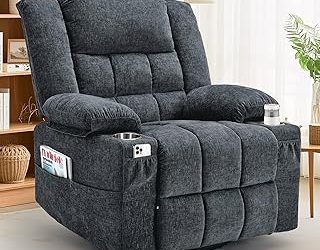
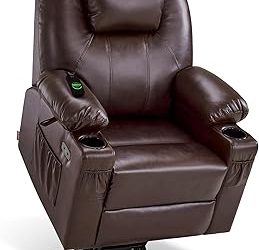
MCombo 7040 Power Lift Recliner with Heat and Massage
The 7040 in medium is the sensible starting point for average-frame users who want lift assistance without oversizing the room: FSC-certified frame construction, lumbar heat, and both USB and Type-C charging built into the side. Faux leather wipes down easily, which matters if you sit in it straight from the workshop.
Large Power Lift Recliner with Massage and Heat
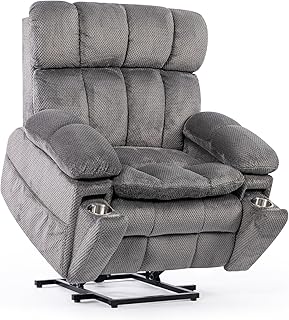
An overstuffed, wide-seat build aimed at big-and-tall users who find standard recliners pinch at the hips. The generous padding does the work of a cushion insert, and dual cup holders plus a side pocket keep the remote and a heat pack within reach.
Dual Motor 26″ Extra Wide Lift Recliner with Zero Gravity
This is the one to beat if independent back and leg adjustment is your priority — dual motors, an adjustable headrest, and a genuine lay-flat plus zero-gravity range give you far more positional control than single-motor competitors. Flip-arm storage is a practical touch for stashing a lumbar roll.
FUNECORP Big Man 28″ Lay Flat Lift Recliner
At 28 inches across with dual-motor control and heat plus vibration, this is purpose-built for larger frames that other recliners simply cannot accommodate. The lay-flat range is deep enough to use for genuine rest rather than just lounging.
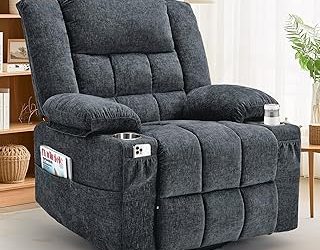
Korser Swivel Rocker Recliner with Massage and Heat
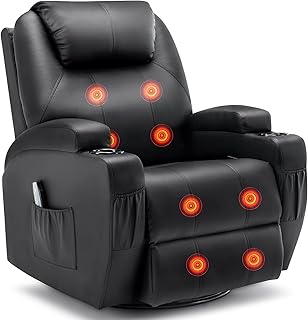
A manual, non-lift option for anyone who wants gentle motion — the 360-degree swivel and rocking action suit people whose backs stiffen from staying static. Compact enough for a bedroom or nursery corner, with heat and massage handled by remote.
Frequently Asked Questions
Is a power lift recliner worth it for back pain?
Yes, if standing from a seated position is where your pain spikes. The lift mechanism removes the hinge-forward-and-push motion that loads a compromised lumbar spine, which is often the single worst movement of the day.
Does dual motor really make a difference?
It does. Single-motor chairs tie your footrest and backrest to one path, so you take whatever hip angle the linkage gives you. Dual motors let you set them separately, which is how you find a position that unloads the lower back specifically.
How much assembly should I expect?
Most of these ship in two or three sections that click together with a metal bracket — typically 20 to 30 minutes solo, though the backrest on the wide models is heavy enough that a second pair of hands helps. Plan clearance behind the chair before you start.
Will heat and massage actually help?
Heat reliably reduces muscle guarding and improves tissue pliability, so it earns its place. Vibration massage is more subjective — pleasant and mildly relaxing, but treat it as a bonus feature rather than the reason to buy.
Final Thoughts
For most people with a bad back, the Dual Motor 26″ Extra Wide Recliner is the strongest all-around choice thanks to independent back and leg adjustment plus a real zero-gravity position. Larger frames should go straight to the FUNECORP Big Man 28″ for its extra width and lay-flat depth, while the MCombo 7040 remains the best-value power lift option for average builds who want heat, lumbar support, and modern charging without overspending.