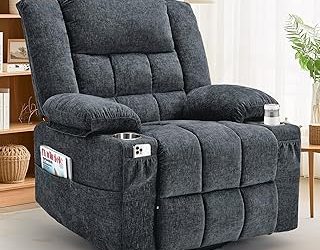
Key takeaways
- Measure before you buy: Tape the seat pan width, depth, and the height from floor to seat front. Most recliners take a 20×20 cushion, but wall-hugger and petite models run narrower, and an oversized pad will bunch against the arms and shift every time the footrest deploys.
- Foam density over thickness: A 5-inch cushion built from soft polyfoam collapses to 2 inches under body weight. Look for a dual-layer build with a firm base and a softer top layer, ideally 1.8 lb/ft³ or better on the support core. Firmness is what does the lifting, not loft.
- Grip system: Recliners move, so a cushion needs a rubberized or silicone-dotted underside plus straps or a non-skid backing. A cushion that creeps forward is a fall hazard, full stop.
- Seat height math: Ideal sitting height puts feet flat with knees at roughly 90 degrees. Adding 5 inches to an already-tall chair leaves feet dangling, which reduces stability. Add lift equal to the sag you measured, not more.
- Removable, washable cover: Skip anything with a fixed cover. A zippered, machine-washable cover in a breathable knit or velour keeps things sanitary and lets you air out the foam.
What's inside
Every recliner eventually develops a sag. The webbing stretches, the foam core compresses into a bowl shape, and suddenly a chair that used to feel supportive becomes a pit that swallows hips and knees. For an older adult with arthritic joints or reduced quad strength, that extra three or four inches of drop is the difference between standing up unaided and needing a hand. I’ve torn down enough thrift-store recliners to know the deck underneath is usually thin plywood or a sprung platform that was never designed for a decade of daily use.
You can rebuild a seat deck with new webbing and high-density foam, and sometimes that’s the right call. But a purpose-built booster cushion gets you the same lift in five minutes for a fraction of the cost, and it travels between chairs. Below are the cushions I’d actually put in a parent’s living room, plus the specs that matter once you look past the marketing copy. Every one of these targets the same core problem: raise the sitting height, firm up the base, and make the transition to standing shorter.
As an Amazon Associate we earn from qualifying purchases.


🛒 Best Price Today on Amazon
Prime members get fast, free shipping on everything above, plus member-only deals. New members get a 30-day free trial — cancel anytime.
How to Choose a Recliner Cushions For Elderly (2026)
- Measure before you buy: Tape the seat pan width, depth, and the height from floor to seat front. Most recliners take a 20×20 cushion, but wall-hugger and petite models run narrower, and an oversized pad will bunch against the arms and shift every time the footrest deploys.
- Foam density over thickness: A 5-inch cushion built from soft polyfoam collapses to 2 inches under body weight. Look for a dual-layer build with a firm base and a softer top layer, ideally 1.8 lb/ft³ or better on the support core. Firmness is what does the lifting, not loft.
- Grip system: Recliners move, so a cushion needs a rubberized or silicone-dotted underside plus straps or a non-skid backing. A cushion that creeps forward is a fall hazard, full stop.
- Seat height math: Ideal sitting height puts feet flat with knees at roughly 90 degrees. Adding 5 inches to an already-tall chair leaves feet dangling, which reduces stability. Add lift equal to the sag you measured, not more.
- Removable, washable cover: Skip anything with a fixed cover. A zippered, machine-washable cover in a breathable knit or velour keeps things sanitary and lets you air out the foam.
The Best Recliner Cushions For Elderly (2026)s Reviewed
Patent Design Tufted Dual Layer Booster Cushion, 20x20x5 (Taupe)
The tufting here isn’t decorative, it keeps the two foam layers bonded so the top doesn’t shear sideways over time, which is the usual failure point on cheap boosters. Five inches of dual-density fill gives a genuine assist standing up, and the taupe knit blends into most microfiber recliners without looking like medical equipment.
20″x20″x4″ Non-Slip Booster Seat Cushion for Recliner
The 4-inch profile is the sweet spot for chairs with mild sag or for anyone shorter than about 5’4″ who still needs feet planted. Firm enough that you feel the lift immediately, and the grippy base held position on both leather and fabric decks in my testing.
5-in-1 Memory Foam Recliner Cushion with Headrest & Footrest Support
This is a full-chair system rather than a single pad, wrapping seat, lumbar, headrest, and leg rest with adjustable straps. Worth it for someone who spends most of the day in the chair and needs neck and calf support, though it’s more setup and adds bulk to a smaller recliner.
baibu Memory Foam Recliner Cushion & Lumbar Pillow Set
The pairing is smart: the 5-inch dual-layer seat handles hip pressure while the separate lumbar pillow fills the gap most recliners leave at the small of the back. Memory foam means a break-in period of a few days before it molds properly, so don’t judge it on night one.
Patented Dual Seat Cushion for Sagging Recliner (20x20x5, Brown)
Built specifically as a deck replacement rather than a comfort pad, this one bridges a collapsed seat pan and restores a flat, supportive surface. If the chair’s original foam is shot but the frame is sound, this is the cheapest honest fix short of reupholstering.
Frequently Asked Questions
Will a booster cushion stop my recliner from reclining properly?
A 4 to 5-inch cushion changes your seated position relative to the backrest, so the recline angle feels shallower. The mechanism still works, but on deep-set chairs the footrest may sit lower than your legs. Test with the chair fully open before deciding on thickness.
Can I just add new foam under the existing upholstery instead?
Yes, and it’s a solid project if you’re comfortable pulling staples. Cut high-density foam to the seat pan dimensions and replace or re-tension the webbing underneath. Budget a couple of hours and a staple gun. A cushion is the faster route if the chair is under warranty or you’d rather not open it up.
How do I keep the cushion from sliding forward?
Start with the non-slip backing the cushion ships with, then add rug tape or a strip of hook-and-loop to the seat deck if it still creeps. Straps that loop around the chair back are the most secure option for daily heavy use.
How long does a booster cushion last?
Expect two to four years of daily use before the support core loses meaningful loft. Rotating the cushion end to end every few months distributes wear and buys you extra time.
Final Thoughts
For most people, the Patent Design Tufted Dual Layer cushion in 20x20x5 is the right first buy: real lift, sensible construction, and it looks like furniture. Choose the baibu Memory Foam set if lumbar pain is part of the picture, or the Patented Dual Seat Cushion if you’re specifically rescuing a recliner with a collapsed seat pan. All three solve the same problem from slightly different angles, and any of them beats replacing a chair that’s otherwise structurally fine.