Key takeaways
- Footprint math: Note the base diameter, not just seat width. A 360° swivel needs clear radius on all sides, so a 30-inch chair wants roughly 34 inches of open floor to spin without knocking a side table.
- Recline clearance: Manual push-back models typically need 4 to 8 inches behind the backrest. Wall-hugger designs shift the seat forward as the back drops, which is the better bet in a narrow room or against a baseboard heater.
- Motion type: Rockers use curved springs for a shorter arc; gliders ride a fixed track for smoother, longer travel. Gliders are quieter for nursery use, rockers feel livelier for TV watching.
- Assembly and frame quality: Most compact recliners ship in two or three pieces with a slot-in backrest. Look for a steel swivel plate and hardwood or plywood frame rails — particleboard bases develop a wobble within a year.
- Upholstery wear: Chenille and polyester blends hide pet hair and resist pilling. Velvet looks sharper but shows crushing on the seat deck, so plan on brushing it. Side pockets are more useful than they sound in a room with no side table.
What's inside
Measure before you shop. That’s the lesson most people learn the hard way after wrestling a recliner through a doorway only to discover it needs eight inches of rear clearance to actually recline. Rocker recliners built for tight rooms solve a real geometry problem: they pivot and recline within their own footprint instead of sprawling backward into your walkway. But the marketing on these chairs is loose, and “small space” gets stamped on plenty of frames that are anything but.
I’ve assembled these chairs, flipped them over to check the base hardware, and sat in them long enough to know where the padding gives out. This guide covers what actually matters in a compact swivel rocker — recline mechanism type, base diameter versus seat width, and the difference between a glider track and a true rocker spring — followed by reviews of the models worth your money in 2026.
As an Amazon Associate we earn from qualifying purchases.




🛒 Best Price Today on Amazon
Prime members get fast, free shipping on everything above, plus member-only deals. New members get a 30-day free trial — cancel anytime.
How to Choose a Rocker Recliner For Small Spaces (2026)
- Footprint math: Note the base diameter, not just seat width. A 360° swivel needs clear radius on all sides, so a 30-inch chair wants roughly 34 inches of open floor to spin without knocking a side table.
- Recline clearance: Manual push-back models typically need 4 to 8 inches behind the backrest. Wall-hugger designs shift the seat forward as the back drops, which is the better bet in a narrow room or against a baseboard heater.
- Motion type: Rockers use curved springs for a shorter arc; gliders ride a fixed track for smoother, longer travel. Gliders are quieter for nursery use, rockers feel livelier for TV watching.
- Assembly and frame quality: Most compact recliners ship in two or three pieces with a slot-in backrest. Look for a steel swivel plate and hardwood or plywood frame rails — particleboard bases develop a wobble within a year.
- Upholstery wear: Chenille and polyester blends hide pet hair and resist pilling. Velvet looks sharper but shows crushing on the seat deck, so plan on brushing it. Side pockets are more useful than they sound in a room with no side table.
The Best Rocker Recliner For Small Spaces (2026)s Reviewed
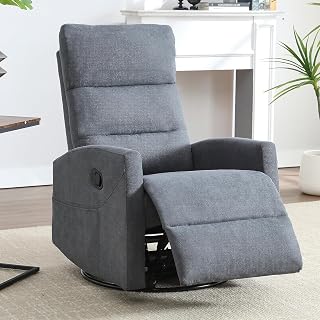
Korser 360 Swivel Rocker Recliner (Upholstered Fabric)
This is the one I’d hand a first-time buyer: the swivel plate is properly bolted, the backrest slots in without fighting you, and the recline arc stays tight enough for a 10×11 bedroom. The seat sits a bit firm out of the box and breaks in over a few weeks.
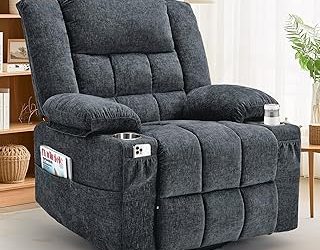
Small Swivel Rocker Recliner (Dark Grey, RV-Friendly)
The narrowest frame in this group, which makes it the practical answer for RVs, dorms, and reading nooks where anything wider simply won’t clear. Expect a shorter backrest — good for shorter torsos, less supportive if you’re over six feet.
360° Swivel Rocker Recliner Glider (Polyester, Dark Grey)
The glider track here is genuinely smooth, with none of the clunk you get from cheap spring rockers, and the polyester fabric shrugs off spills. Assembly took me under 20 minutes with the included hex key.
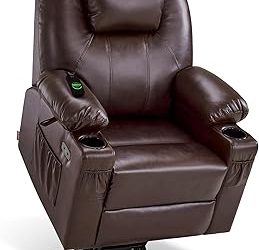
Small Swivel Rocker Recliner with Massage & Heat (Light Brown)
Heat and vibration are usually gimmicks on budget chairs, but the lumbar zone on this one puts warmth where lower-back stiffness actually lives. The high back and shaped headrest make it the most ergonomic pick here — just note it needs a nearby outlet.
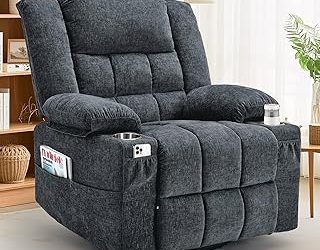
Korser Chenille Swivel Recliner with Side Pockets (Beige)
Chenille is the smart upholstery choice for a busy household, and the side pockets swallow a remote, phone, and paperback without a table. Same reliable Korser frame as the fabric model, with a slightly plusher seat cushion.
Frequently Asked Questions
How much clearance does a small rocker recliner really need?
Plan on 4 to 8 inches behind the backrest for manual recline, plus 2 to 3 inches on each side if it swivels. Tape the footprint on your floor before ordering — it takes five minutes and prevents a return.
Can these chairs handle daily use, or are they occasional seating?
Compact recliners in this price range are built for daily use but with lighter frames than full-size models. Check the stated weight capacity, keep the swivel bolts snug, and avoid dropping into the seat, which is what kills the spring base.
Is a glider or a rocker better for a nursery?
A glider. The track motion is quieter and more consistent, which matters at 3 a.m., and there’s no rocker arc to pinch a curious toddler’s fingers underneath.
How hard is assembly?
Straightforward. Most of these arrive as a base and a backrest that slides into steel brackets, then locks with two or four bolts. Budget 20 to 30 minutes, and get a second pair of hands for lifting the base out of the box.
Final Thoughts
For most rooms, the Korser 360 Swivel Rocker Recliner hits the best balance of build quality, footprint, and price. Choose the Korser Chenille model with side pockets if durability and storage matter more than a lower price, or the massage and heated light brown recliner if you want real lumbar relief from a chair that still fits a small living room.