Key takeaways
- Wood species and joinery: Beech is denser and stiffer than pine, which matters most in the rungs where deflection is felt. Look for rungs seated in bored mortises rather than surface-screwed; a through-dowel or deep blind hole distributes load into the stile instead of into a few threads.
- Your wall, not the ladder: Wood framing on 16-inch centers is the easy case. For concrete, brick, or steel stud, plan on sleeve anchors or a plywood backer board bolted across multiple studs, and treat the included lag screws as a starting point rather than a solution.
- Rung spacing and diameter: Roughly 6 inches between rungs suits mixed-age use; wider gaps favor adult climbing and hanging. Diameter around 1.25 inches fits adult hands well but can be a stretch for small kids, so consider who’s gripping most often.
- Bracket standoff: The gap between wall and ladder face determines whether you can get your knuckles behind a rung. Anything under about 3 inches makes overhand grip cramped and rules out most inversion work.
- Attachment mounting method: Pull-up and dip bars that clamp or pin into the ladder frame reposition in seconds. Bars that bolt through are more rigid but effectively permanent, so decide whether you want a fixed station or a reconfigurable one.
Mounting a Swedish ladder is one of those projects that looks trivial on the product page and gets complicated the moment you’re standing in front of a wall with a stud finder. Buyers run into the same wall (literally): specs list a load rating but not how it was measured, mounting hardware ships generic regardless of whether you’re drilling into 2×4 framing or concrete block, and rung spacing varies enough between models that a ladder sized for an adult’s pull-up hang feels awkward for a seven-year-old learning to brachiate. Add the fact that most of these units are sold flat-packed with two sides, nine dowels, and a diagram, and the difference between a rock-solid install and a creaky one comes down to details nobody advertises.
This guide approaches Swedish ladders the way a builder would: what the frame is actually made of, how the rungs are joined, what the wall bracket geometry means for clearance and leverage, and which attachments are genuinely useful versus bolt-on filler. Below you’ll find current picks, a checklist for matching a ladder to your wall and your family, short reviews of the top options, and answers to the questions that come up mid-install.
Our top picks


As an Amazon Associate we earn from qualifying purchases at no extra cost to you. Ratings are shown as listed on Amazon.
🛒 Best Price Today on Amazon
Prime members get fast, free shipping on everything above, plus member-only deals. New members get a 30-day free trial — cancel anytime.
How to Choose a/an Swedish Ladder (2026)
- Wood species and joinery: Beech is denser and stiffer than pine, which matters most in the rungs where deflection is felt. Look for rungs seated in bored mortises rather than surface-screwed; a through-dowel or deep blind hole distributes load into the stile instead of into a few threads.
- Your wall, not the ladder: Wood framing on 16-inch centers is the easy case. For concrete, brick, or steel stud, plan on sleeve anchors or a plywood backer board bolted across multiple studs, and treat the included lag screws as a starting point rather than a solution.
- Rung spacing and diameter: Roughly 6 inches between rungs suits mixed-age use; wider gaps favor adult climbing and hanging. Diameter around 1.25 inches fits adult hands well but can be a stretch for small kids, so consider who’s gripping most often.
- Bracket standoff: The gap between wall and ladder face determines whether you can get your knuckles behind a rung. Anything under about 3 inches makes overhand grip cramped and rules out most inversion work.
- Attachment mounting method: Pull-up and dip bars that clamp or pin into the ladder frame reposition in seconds. Bars that bolt through are more rigid but effectively permanent, so decide whether you want a fixed station or a reconfigurable one.
The Best Swedish Ladder (2026)s Reviewed
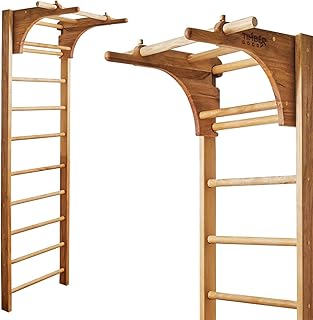
Swedish Ladder Wall Stall Bars, Solid Beech, 880 lb
The beech construction and 880-pound rating put this at the top for households where adults and kids both use it hard, and the removable pull-up and dip bars mean one anchor point covers several training modes. Expect heavier panels during install, so line up a second pair of hands before you start lifting.
GMWD Swedish Ladder with Pull-Up and Dip Attachments
GMWD’s nine-rod layout is well balanced for stretching and core work, and the suspension trainer integration is thought through rather than tacked on. The hardware kit is solid for wood framing; masonry installs will want upgraded anchors.
DHT Wood Stall Bar, Black
The blacked-out finish reads more like intentional furniture than gym equipment, which helps in a shared living space. Nine strategically spaced rods handle clinical mobility work and general strength training equally well, and the finish has held up to repeated hand contact in reported use.
Adjustable 9-Anchor Solid Pine Stall Bar
Nine anchor positions for the pull-up and dip station give this pine model real flexibility as kids grow or as you rotate exercises. Pine is lighter and easier to mount solo, though it flexes slightly more than beech under heavy loading.
Multi-Function Gymnastics Swedish Ladder
A straightforward wall-mounted wooden gymnastics bar aimed squarely at family use, with clean rung spacing that works for climbing, hanging, and assisted stretching. Good entry point if you want the core function without paying for a full attachment ecosystem.
Frequently Asked Questions
Can I mount a Swedish ladder into drywall alone?
No. These need structural anchoring into studs, masonry, or a properly fastened backer panel. Drywall anchors, even heavy-duty toggles, are not rated for dynamic hanging loads and will eventually pull through.
How much clearance do I need around it?
Plan for roughly 6 to 7 feet of unobstructed floor depth in front and enough overhead room that a hanging adult doesn’t reach the ceiling. Also check that the top rung sits low enough for kids to reach the first few rungs safely.
Beech or pine?
Beech for maximum stiffness and higher load ratings, pine for lighter weight and lower cost. Both work for typical home use; beech earns its premium if multiple adults train on it regularly.
Do I need to seal or finish the wood?
Most ship pre-finished. If yours arrives raw, a thin coat of hardwax oil on the stiles is fine, but leave rungs bare or very lightly oiled so grip isn’t compromised.
Final Thoughts
For a build-once, use-for-years install, the solid beech stall bar with its 880-pound rating and removable bars is the strongest choice, with the GMWD Swedish Ladder close behind for its well-integrated suspension and dip attachments. If aesthetics matter as much as function, the DHT black stall bar blends into a living space better than anything else here while giving up nothing in capability.