Our Short List of 3

- Display: Backlit LCD, four functions
- Tach range: 249 to 9,990 RPM
- Advance range: 0 to 90 degrees, 2 and 4 cycle
- Dwell range: 0 to 180 degrees, 2 to 12 cylinders

- Display: Split-screen LCD, tach and advance shown together
- Tach range: 249 to 9,990 RPM
- Advance range: 0 to 90 degrees
- Barrel: Slim, rotating, with built-in hand guard
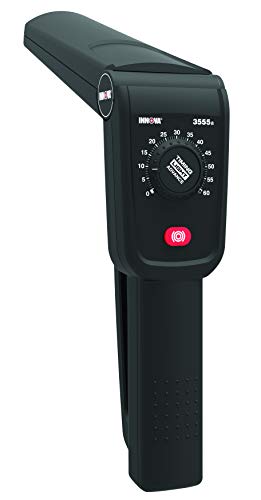
- Advance dial: 0 to 60 degrees, direct reading
- Display: None, analog dial
- Flash tube: Xenon
- Pickup: Inductive clamp on number one plug wire
All 5 Picks at a Glance
| Product | Specs | Action |
|---|---|---|
| 1. Innova 5568 Pro Digital Timing Light — the four-function shop pick |
| Check price on Amazon |
| 2. Innova 3568 Digital Timing Light — tach and advance on one screen |
| Check price on Amazon |
| 3. Innova 3555 Advance Timing Light — the analog dial-back classic |
| Check price on Amazon |
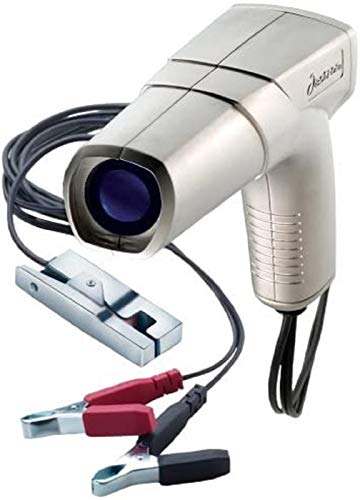 4. Actron CP7527 Inductive Timing Light — the honest basic strobe |
| Check price on Amazon |
 5. Performance Tool W80578 Self-Powered Timing Light — for engines with no battery |
| Check price on Amazon |
Our Top Picks
- Performance Tool W80578 Self-Powered Timing Light1 Count (Pack of 1)12 x 2.6 x 8 inches0.85 poundsCheck on Amazon
A timing light freezes the spinning crankshaft pulley in place, one flash at a time, so you can see exactly where the number one piston sits when its spark plug fires. That single check tells you whether ignition timing matches the maker spec, whether the advance curve still works, and whether a worn timing chain hides behind a rough idle.
The five picks below cover the full ladder: fixed-flash strobes that only confirm base timing, dial-back and digital models that shift the flash so you can read total advance against a lone top dead centre mark, a four-function digital light with tach, dwell and voltage built in, and one self-powered pick for engines with no battery to clip onto.
Disclosure: As an Amazon Associate, we earn from qualifying purchases made through links on this page, at no extra cost to you.
How to Choose a Timing Light
The pickup clamps on, nothing gets cut. Every light here uses an inductive pickup that closes around the number one spark plug wire and senses the pulse through the insulation. Clamp it with the arrow facing the plug, keep the jaw fully closed, and the strobe fires each time that cylinder fires. A clamp left half open or on the wrong wire gives a weak, wandering flash that looks like an engine fault.
Brightness decides whether you can read the marks. A xenon tube throws a hard, white flash that stays readable in a lit garage and even in shade outdoors. Budget LED strobes can look fine in a dark bay yet wash out the moment daylight reaches the pulley. If you work outside or under bright shop lights, xenon is the safer pick, and a white paint pen on the marks helps any flash.
Dial-back is what unlocks a plain pulley. Many pulleys carry only a top dead centre notch, with no degree scale at all. A basic light can only confirm that notch lines up at idle. A dial-back light, analog or digital, delays its flash by the degrees you set, walking the mark back to the pointer so the dial or screen shows the advance directly. With a basic light, the engine needs a degree scale on the pulley or a timing tape.
Digital models fold in the tach and dwell readings. Higher digital lights show engine speed and advance on one screen, which matters because timing specs are given at a set idle speed and advance must be checked as revs climb. The top model here adds dwell for points ignitions and a voltage reading for the charging system. If your engine has electronic ignition and a workshop tach already, a mid-range digital or dial-back light is enough.
Check ignition compatibility before you buy. A light reads only what its maker lists. Some digital lights misread on distributorless and coil-on-plug systems, where there may be no plug wire to clamp and the wasted-spark pulse pattern confuses the counter. Two-stroke engines fire twice as often per revolution, and only some models offer a 2-cycle mode. High-output ignitions are another trap: at least one maker warns its digital lights off multi-spark performance ignitions entirely.
Power and lead length matter more than they sound. Most lights draw 12 volts from the vehicle battery through a pair of clips, so the leads must reach from the battery to the number one plug wire with slack left over. Six-foot detachable leads are the comfortable norm; short leads force you to lean across a running engine. Self-powered lights run on their own cells, suiting magneto engines, mowers and race cars with no battery fitted, at the cost of a dimmer flash on some models.
Work safely around a running engine. The strobe makes spinning parts look frozen, which fools your hands. Route every lead clear of the fan, the belts and the pulleys before you fire the engine, and keep the pickup lead away from hot exhaust parts that melt insulation in seconds. Tie back sleeves and hair, and shut down before reaching in to turn the distributor.
The 5 Best Timing Lights
1. Innova 5568 Pro Digital Timing Light — the four-function shop pick
- Display: Backlit LCD, four functions
- Tach range: 249 to 9,990 RPM
- Advance range: 0 to 90 degrees, 2 and 4 cycle
- Dwell range: 0 to 180 degrees, 2 to 12 cylinders
The 5568 is the light to buy when timing is only part of the job. Its backlit screen shows four readings: engine speed from 249 to 9,990 RPM, advance from 0 to 90 degrees for both 2 and 4 cycle engines, dwell from 0 to 180 degrees across 2 to 12 cylinders, and system voltage from 10 to 16 volts. That covers points dwell on a classic and a quick charging check without swapping tools. The housing is heavy-duty ABS in a molded boot that shrugs off drops, the leads detach for storage in the included case, and skip circuitry keeps the count honest up to 9,990 RPM. One caution: this digital line is not cleared for multi-spark performance ignitions, so race engines belong with the self-powered pick below.
2. Innova 3568 Digital Timing Light — tach and advance on one screen
- Display: Split-screen LCD, tach and advance shown together
- Tach range: 249 to 9,990 RPM
- Advance range: 0 to 90 degrees
- Barrel: Slim, rotating, with built-in hand guard
The 3568 trims the 5568 formula down to the two readings most home tuners use. Its split-screen LCD shows tachometer and advance at the same time, so you can watch the revs and dial in advance from 0 to 90 degrees without flipping modes. The slim barrel rotates to aim the flash into crowded bays, the metal inductive pickup feels a step above the plastic clamps on budget lights, and a built-in hand guard plus one-hand operation keep the job simple. Innova lists this one for 4 cycle engines, so two-stroke owners should look at the 5568 above.
3. Innova 3555 Advance Timing Light — the analog dial-back classic
- Advance dial: 0 to 60 degrees, direct reading
- Display: None, analog dial
- Flash tube: Xenon
- Pickup: Inductive clamp on number one plug wire
No screen, no menus: the 3555 puts a direct-reading dial on the back of the light that adjusts from 0 to 60 degrees. Turn the dial until the pulley mark walks back to the pointer and read your advance off the scale. For distributor work on carbureted engines this is still the fastest workflow there is, and the xenon flash stays readable in a lit garage. Skip circuitry keeps the flash pattern clean up to 9,990 RPM. It suits conventional, electronic and computer-controlled ignitions; distributorless owners should confirm fit before ordering, since the maker reserves its full DIS claim for the basic sibling model.
4. Actron CP7527 Inductive Timing Light — the honest basic strobe
- Type: Inductive timing light, fixed flash
- Advance function: None, base timing only
- Control: On/off touch switch
- Flash tube: Xenon
The CP7527 does one job without fuss: it flashes when number one fires, so you can set and confirm base timing on any pulley that carries a degree scale. The on/off touch control replaces a trigger, which suits long checks where a held trigger tires the hand. There is no advance function and no readout, and that is the point — fewer parts, nothing to misconfigure, and a tool that can live in a drawer for years between tune-ups. It is the right buy for a classic car that needs base timing verified once a season, and the wrong buy for mapping an advance curve on a scale-free pulley.
5. Performance Tool W80578 Self-Powered Timing Light — for engines with no battery
- Power: Self-powered, 2 D-cell batteries (not included)
- Flash tube: Xenon
- Pickup: Inductive, detachable
- Ignition fit: Magneto and battery systems, all gas engines
Every other pick here needs a 12 volt battery to clip onto. The W80578 carries its own power, running on two D cells, so it works on magneto ignitions and engines with no battery: mowers, tractors, snowmobiles and dirt bikes. The xenon tube gives a strong flash, the inductive pickup detaches, and the head doubles as a plain work light. There is no advance dial and no readout, and the cells are not included, so keep spares with the tool. For a shed full of small engines, that trade pays off.
Comparison Table
| Model | Readout | Advance range | Tach | Dwell | Power source | Best for |
|---|---|---|---|---|---|---|
| Innova 5568 Pro | Backlit LCD, four functions | 0 to 90 degrees | Yes, to 9,990 RPM | Yes | 12 V battery clips | Full tune-up work |
| Innova 3568 | Split-screen LCD | 0 to 90 degrees | Yes, to 9,990 RPM | No | 12 V battery clips | Digital timing on a budget of features |
| Innova 3555 | Analog dial | 0 to 60 degrees | No | No | 12 V battery clips | Dial-back distributor work |
| Actron CP7527 | None | None | No | No | 12 V battery clips | Base timing checks |
| Performance Tool W80578 | None | None | No | No | 2 D-cell batteries | Magneto and small engines |
Frequently Asked Questions
Can a timing light work on a coil-on-plug engine?
Often there is nothing to clamp: coil-on-plug setups hide the pulse inside the coil, and many such engines have no timing adjustment anyway. Some distributorless wasted-spark systems expose a plug wire and read fine with a light the maker lists for DIS. Check the compatibility list for your engine before buying; on many modern engines the tool simply has no job to do.
What does the dial-back feature actually do?
It delays each flash by the number of degrees you set. As you add delay, the pulley mark appears to move backward until it sits on the top dead centre pointer, and the dial or screen then shows the advance the engine is running. That is how you read total advance on a pulley with only a single TDC notch.
Why does the timing mark jump around under the flash?
A mark that dances instead of holding still usually points at the engine, not the light: a stretched timing chain, a worn distributor drive, or an idle speed that will not settle. Rule out the tool first by reclamping the pickup with the jaw fully closed on the correct wire, away from neighbouring wires that can bleed a false pulse into the clamp.
Can I use a timing light on a two-stroke engine?
Only if the maker lists a 2-cycle mode, because a two-stroke fires once per revolution instead of once every two. The Innova 5568 above reads advance for 2 and 4 cycle engines; the 3568 is listed for 4 cycle work. A light with no 2-cycle setting will misreport speed and advance on a two-stroke.
How do I read the marks in bright daylight?
Pick a xenon light, shade the pulley with your body or a sheet of cardboard, and clean the marks first. A white paint pen on the correct notch, plus a matching dot on the pointer, transforms readability more than any flash upgrade. If the bay is truly washed out, working at dusk or with the doors half closed is a legitimate technique, not a compromise.
Conclusion
For most home garages the Innova 3568 is the sweet spot: tach and advance on one screen and a bright xenon flash. Step up to the 5568 if points dwell and voltage checks join your list, or if a two-stroke needs timing. The 3555 keeps analog dial-back fans happy, the Actron CP7527 covers honest base-timing checks, and the self-powered W80578 goes where no battery exists. Match the light to your ignition system first, your pulley second.
More from Amazon
Programs that pair well with the guide above. Offers and eligibility are set by Amazon and may change.
A free business account with business pricing and bulk-buying tools for work, shop or home office.
Create a business accountFree shipping on eligible items, Prime Video and more. Eligible new members can start with a free trial.
Start a Prime free trialAudiobooks and podcasts to listen to on the go. Eligible new members can start with a free trial.
Try Audible freeAd-free music streaming. Eligible new subscribers can start with a free trial.
Try Music Unlimited freeAs an Amazon Associate we earn from qualifying purchases.