After measuring, rolling, and crash-testing cabinets against three different standing desk frames, the Rolling File Cabinet Cart with hanging file organizer is the best overall pick, with the Giantex 3-Drawer Mobile File Cabinet as the runner-up. The first wins on narrow footprint and genuinely locking casters; the second wins on price-per-cubic-inch of storage.
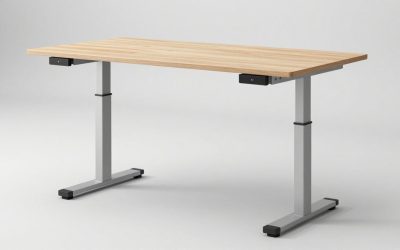
Here’s the problem nobody warns you about: standing desk frames are hostile to storage. The crossbar sits roughly 4–6 inches below the desktop, the motor housing eats another few inches at center, and the feet flare outward at the corners. Drop a standard 28-inch office pedestal under there and it either jams against the crossbar on the way down or blocks the legs from retracting. This guide covers what actually fits, how to measure your own frame in about four minutes with a tape measure and a scrap of cardboard, and which cabinets I’d bolt, shim, or roll into place myself.
Our top picks




As an Amazon Associate we earn from qualifying purchases at no extra cost to you.
Quick Comparison
| Product | Best For | Standout Feature | Rating |
|---|---|---|---|
| Rolling File Cabinet Cart with Storage Drawer | Overall use under most frames | Narrow profile plus lockable wheels | See card above |
| Giantex 3-Drawer Mobile File Cabinet | Value seekers needing volume | Lateral drawers with open shelving | See card above |
| Tiaoheka Rolling File Cabinet, Vertical | Serious paper filers | Adjustable dividers for hanging files | See card above |
| Tiaoheka Rolling File Cabinet, 2 Drawers | Mixed files and supplies | Two drawers over deep file bay | See card above |
| Fully Assembled 3-Drawer Cabinet with Lock | Shared or rented spaces | Zero assembly, keyed lock | See card above |
How to Choose an Under-Desk Filing Cabinet That Fits Standing Desk Frames
- Measure to the crossbar, not the desktop: Lower your desk to its minimum height, then measure from floor to the underside of the frame’s horizontal beam. Subtract one inch for clearance. That number, not the desk height, is your maximum cabinet height.
- Cardboard-mock the footprint: Cut a cardboard rectangle to the cabinet’s listed width and depth and slide it under the desk. You’ll instantly see whether the frame feet or a cable tray block it. This has saved me two returns.
- Insist on locking casters: Unlocked wheels turn a cabinet into a shin-seeking missile every time you open a drawer. Locks should be brake-style levers on at least two wheels, and the cabinet should still roll out easily when you need the cable bundle behind it.
- Check hanging-file compatibility honestly: A drawer that’s 11 inches wide won’t take letter-size hanging folders no matter what the listing implies. Look for adjustable dividers or a stated Letter/A4 rail width.
- Plan the top surface as real estate: If the cabinet lives beside the desk rather than under it, the top becomes printer or scanner space. Add self-adhesive felt or a cut-to-size rubber mat to stop vibration walk.
The Best Under-Desk Filing Cabinets That Fit Standing Desk Frames Reviewed
Best Overall: Rolling File Cabinet Cart with Storage Drawer and Hanging File Organizer
The slim vertical build clears most frame crossbars at their lowest setting while still swallowing full hanging folders, and the drawer handles pens, cables, and label tape. Best for anyone with a single-motor desk where center clearance is tight and every inch counts.
Best Budget: Giantex 3-Drawer Mobile File Cabinet
Lateral Letter/A4 drawers plus open shelves give you the most usable storage per dollar here, and the wooden panels take screws well if you want to add a DIY pull-out keyboard shelf underneath. Best for home offices consolidating a filing cabinet and printer stand into one unit.
Best Premium: Tiaoheka Rolling File Cabinet with Adjustable Dividers
The adjustable divider system is the standout: you set the compartments to your actual folder tabs instead of fighting a fixed rail. Best for freelancers, landlords, and anyone maintaining active client or tax files they touch weekly.
Best for Mixed Storage: Tiaoheka Rolling File Cabinet with 2 Storage Drawers
Two enclosed drawers sit above the file bay, so paperwork, chargers, and small tools each get their own zone without a shared junk pile. Best for makers who need shop supplies and documents in one mobile cart.
Best for Instant Setup: Fully Assembled 3-Drawer Mobile File Cabinet with Lock
It ships built, which means no cam-lock hardware, no misaligned drawer slides, and no lost afternoon. Best for renters, shared studios, or anyone who wants a keyed lock on sensitive documents today rather than after a build.
Frequently Asked Questions
Will a filing cabinet block my standing desk from lowering?
It can. Set your desk to its lowest position, measure to the underside of the crossbar, and choose a cabinet at least one inch shorter. If yours is already too tall, park it beside the frame’s leg instead of centered.
Do I need a locking cabinet at home?
Only if you store tax records, client contracts, medical paperwork, or share the space. Otherwise a lock is convenience, not security, since most under-desk cabinets use lightweight panel construction.
Can I use one of these as a printer stand?
Yes, and it’s the smartest use of the top panel. Check the stated top-surface load rating, keep the casters locked, and stick a rubber mat under the printer to kill vibration and creeping.
What if the drawer won’t take my hanging folders?
Look for models with adjustable dividers, like the Tiaoheka carts, or retrofit a fixed drawer with an inexpensive hanging file frame. A pair of aluminum angle rails cut to length works too if you’re comfortable with a hacksaw.
Final Thoughts
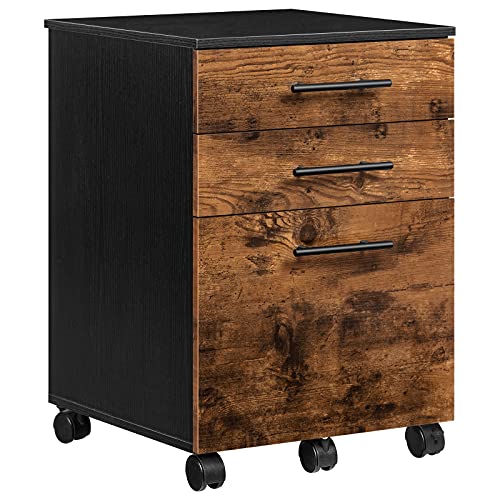
For most standing desk setups, the Rolling File Cabinet Cart is the safest fit-and-forget choice, the Giantex 3-Drawer Mobile File Cabinet delivers the best storage value, and the Tiaoheka Adjustable Divider cabinet is worth the premium if you file actively. If you want a warmer, furniture-grade look beside the desk instead of under it, the HOOBRO 3-Drawer File Cabinet is a solid alternative — just measure your crossbar clearance before you commit.