Our Short List of 3

- Roll size: 3 ft x 250 ft (750 sq ft of coverage)
- Fabric weight: 5 oz per square yard
- Construction: Two-layer needle-punched mat
- Material: Polypropylene
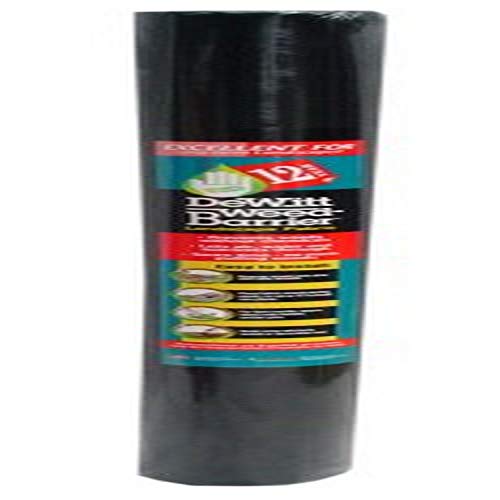
- Roll size: 4 ft x 50 ft (200 sq ft of coverage)
- Model: 12YR450
- Stated service life: 12 years under cover
- Material: Polypropylene

- Roll size: 3 ft x 300 ft (900 sq ft of coverage)
- Fabric weight: 3.2 oz per square yard
- Model: SBLT3300
- Construction: Woven polypropylene with guide stripes every 12 inches
All 5 Picks at a Glance
| Product | Specs | Action |
|---|---|---|
| 1. ECOgardener Premium 5oz Landscape Fabric, 3ft x 250ft |
| Check price on Amazon |
| 2. DeWitt 12-Year Weed Barrier Fabric, 4ft x 50ft |
| Check price on Amazon |
| 3. DeWitt Sunbelt Woven Ground Cover, 3ft x 300ft |
| Check price on Amazon |
 4. Agfabric Landscape Ground Cover Weed Barrier, 3ft x 50ft |
| Check price on Amazon |
 5. VEVOR Weed Barrier Fabric Heavy Duty, 4ft x 300ft, 5.8oz |
| Check price on Amazon |
Key takeaways
- Compare the best weed barriers for garden beds, gravel paths and driveways, from light spunbond rolls to heavy woven geotextile, with sizing help.
A weed barrier only earns its keep when it is matched to the ground it covers. The thin roll that works under a bark-covered flower bed will shred under a gravel path, and the heavy woven sheet built for a driveway is wasted money under a row of shrubs. Weight, weave and roll size decide how long the fabric lasts, how well water moves through it and how much work you save each season.
This guide compares five fabrics that cover the main jobs around a home: a needle-punched roll for planted beds, a mid-weight homeowner fabric, a striped woven ground cover for rows and greenhouses, a woven sheet with printed planting lines, and a thick dual-layer geotextile for gravel and paths. Each pick links to its exact listing so you can check the roll size before you order.
Disclosure: As an Amazon Associate, we earn from qualifying purchases made through links on this page, at no extra cost to you.
How to Choose a Weed Barrier
Woven or non-woven. Woven fabric is made from flat polypropylene tapes crossed over and under each other. It is strong, resists tearing when you pull it taut, and suits gravel, paths and any spot where stone or foot traffic presses down on it. Non-woven fabric is a mat of fibres punched or bonded together. It drapes better over uneven soil, grips slopes, and is the gentler choice under organic cover in planted beds.
Weight in ounces. Fabric weight is given per square yard. Rolls near 3 oz feel thin and suit short-lived beds or a layer under bark that you plan to renew. Rolls from 4 to 5 oz handle most home beds and borders. Rolls at 5.8 oz and above are geotextile grade, built for driveways, French drains and ground that takes real loads.
Water flow. Every fabric here lets rain and irrigation pass through, but the rate differs. Needle-punched mats pass water freely and suit beds you water often. Tight weaves shed a little more water at the surface, which matters on slopes where runoff is already a problem.
Roll size and coverage. Measure the bed, then add overlap. Seams should overlap by at least 6 inches, and each edge needs a few extra inches to tuck under the cover layer. A 3 ft roll fits most borders; a 4 ft roll covers wide beds and path bases with fewer seams.
Cover it up. Fabric is a layer, not a finish. Sun breaks down even treated polypropylene over time, so the sheet should sit under bark, wood chips, gravel or stone. Plan the cover layer before you order the fabric, and keep pins or staples on hand to hold seams flat while you spread the cover.
Where fabric is the wrong tool. Under long-lived perennial beds, fabric can become a headache years later: roots grow into it, soil builds up on top of it, and weeds root in that new soil layer anyway. For beds you intend to keep for a decade, fabric under gravel, paths, patios and driveways is the smarter use, while planted beds often do better with a thick organic cover layer alone. If you do lay fabric in a bed, pick a permeable one and cut generous planting holes.
The 5 Best Weed Barriers
1. ECOgardener Premium 5oz Landscape Fabric, 3ft x 250ft
- Roll size: 3 ft x 250 ft (750 sq ft of coverage)
- Fabric weight: 5 oz per square yard
- Construction: Two-layer needle-punched mat
- Material: Polypropylene
This is the bed fabric of the group. ECOgardener builds the roll from two needle-punched layers at 5 oz per square yard, dense enough to block light-hungry weeds while still letting air and water reach the soil. The mat form drapes over uneven ground instead of bridging across dips, which keeps it in contact with the soil on sloped beds where woven sheets tend to tent and lift.
The 3 ft width suits borders, raised bed surrounds and tree rings, and the 250 ft length covers a whole yard of beds from one roll. Because the fibres are punched rather than woven, cut edges do not unravel into strands, so planting holes stay tidy. Cover it promptly: the maker rates it for all seasons, but any fabric left bare in strong sun ages faster.
2. DeWitt 12-Year Weed Barrier Fabric, 4ft x 50ft
- Roll size: 4 ft x 50 ft (200 sq ft of coverage)
- Model: 12YR450
- Stated service life: 12 years under cover
- Material: Polypropylene
DeWitt sells this roll as its mid-grade homeowner fabric, with a stated working life of twelve years under cover. The 4 ft by 50 ft size is the handiest format in this guide for a single project: one roll handles a long border, a vegetable patch or the base of a short path without leaving a large leftover roll in the shed.
The fabric is light enough to cut with household scissors and pin down alone, yet it holds up under a normal depth of bark or stone. DeWitt positions the 12-Year line between its thin seasonal fabric and the heavy Pro grades, which is exactly where most home beds sit. If your project is one bed rather than a whole landscape, this is the roll that matches the job.
3. DeWitt Sunbelt Woven Ground Cover, 3ft x 300ft
- Roll size: 3 ft x 300 ft (900 sq ft of coverage)
- Fabric weight: 3.2 oz per square yard
- Model: SBLT3300
- Construction: Woven polypropylene with guide stripes every 12 inches
Sunbelt is DeWitt’s woven workhorse, a 3.2 oz polypropylene sheet striped every 12 inches so rows line up without a tape measure. Growers use it on greenhouse floors, nursery rows and vegetable plots where the fabric itself is the walking surface, and it is approved for most government weed control work, a sign of how consistent the weave is from roll to roll.
At 3 ft by 300 ft, one roll covers long runs in a single pass, and the woven tapes shrug off boot traffic and dragged pots that would scuff a fibre mat. It also works bare better than most fabrics here, since the weave is UV stabilised for open ground. Under gravel it doubles as a separation layer that keeps stone from sinking into soft soil.
4. Agfabric Landscape Ground Cover Weed Barrier, 3ft x 50ft
- Roll size: 3 ft x 50 ft (150 sq ft of coverage)
- Construction: Woven polypropylene with printed planting lines
- Fabric weight: Not published for this roll
- Material: Polypropylene
Agfabric’s woven sheet is the pick for gardeners who plant in grids. The surface carries printed lines that make it simple to space seedlings evenly and cut neat, regular holes for transplants, a small detail that saves real time across a full vegetable bed. The flat woven tapes give the sheet a smooth, firm feel that hoses down clean at the end of the season.
The trade-off is at the edges: cut woven fabric can fray, so fold edges under or pin them beneath the cover layer. Staples also need a firm push through this dense weave. In return you get a tough, permeable sheet that blocks weeds across beds, greenhouse floors and orchard rows, in a 50 ft roll sized for home plots.
5. VEVOR Weed Barrier Fabric Heavy Duty, 4ft x 300ft, 5.8oz
- Roll size: 4 ft x 300 ft (1,200 sq ft of coverage)
- Fabric weight: 5.8 oz per square yard
- Model: VV-FCB-PE 4*300FT 5.8OZ
- Construction: Dual layer, woven face with needle-punched backing
The heaviest fabric here, this VEVOR roll pairs a woven face with a needle-punched layer at 5.8 oz per square yard. That dual build is what you want under gravel driveways, stone paths and patio bases, where the sheet has to block weeds, separate stone from soil and survive pointed loads without tearing.
The 4 ft by 300 ft roll covers 1,200 sq ft, enough for a full driveway apron or a long path network from a single purchase. Permeability stays high for a fabric this dense, so puddles do not sit on top after rain. It is overbuilt for a flower bed, and that is the point: buy it for ground that carries weight, and let the lighter rolls above handle the beds.
Comparison Table
| Product | Roll size | Weight | Build | Best for |
|---|---|---|---|---|
| ECOgardener Premium | 3 ft x 250 ft | 5 oz | Needle-punched mat | Planted beds and slopes |
| DeWitt 12-Year | 4 ft x 50 ft | Not published | Homeowner grade sheet | Single beds and borders |
| DeWitt Sunbelt | 3 ft x 300 ft | 3.2 oz | Woven, striped | Rows and greenhouse floors |
| Agfabric Ground Cover | 3 ft x 50 ft | Not published | Woven, printed lines | Vegetable beds |
| VEVOR Heavy Duty | 4 ft x 300 ft | 5.8 oz | Dual layer | Gravel and driveways |
FAQ
Does weed barrier fabric stop weeds completely?
It blocks most weeds that sprout from seed in the soil below, because they cannot reach light. It does not stop seeds that land on top of the cover layer and root there, and tough perennial roots already in the ground can push through thin fabric. Pull surface weeds while they are small and keep the cover layer topped up.
Should I put fabric under mulch in a flower bed?
You can, and a permeable needle-punched fabric such as the ECOgardener roll is the better choice for that job. Go in knowing the long-term trade-off: after several years, soil and decomposed mulch build up above the sheet and weeds root in that layer. Many gardeners skip fabric in long-lived beds and rely on a deeper mulch layer instead.
What is the best fabric to put under gravel?
A heavy woven or dual-layer geotextile, such as the VEVOR 5.8 oz roll. Under gravel the fabric works as a separation layer as much as a weed block, keeping stone from sinking into the soil and mud from working up into the stone. Lighter bed fabrics tear and stretch under that load.
How much overlap do seams need?
Overlap adjoining sheets by at least 6 inches, and pin both layers along the seam. On slopes, lay the upper sheet over the lower one so water runs across the seam instead of under it. Leave extra fabric at edges to tuck under the cover layer or bury in a shallow trench.
Can I cut planting holes in woven fabric?
Yes. Cut an X with a sharp knife, fold the flaps back and plant through the opening. A heated tool or a careful pass with a flame along the cut edge melts the tapes and limits fraying on woven rolls such as the Agfabric and Sunbelt. Keep holes only as wide as the plant needs, since every opening is a doorway for weeds.
Conclusion
Match the fabric to the load it carries. For planted beds and slopes, the ECOgardener needle-punched roll gives the best balance of weed block and water flow. For one modest project, the DeWitt 12-Year roll is the right size at the right grade. Rows and greenhouse floors belong to the striped DeWitt Sunbelt, vegetable grids suit the printed Agfabric sheet, and gravel, paths and driveways need the dual-layer VEVOR. Whichever roll you choose, lay it flat, overlap the seams and cover it the same day, and the fabric will repay you with seasons of far less weeding.
More from Amazon
Programs that pair well with the guide above. Offers and eligibility are set by Amazon and may change.
A free business account with business pricing and bulk-buying tools for work, shop or home office.
Create a business accountFree shipping on eligible items, Prime Video and more. Eligible new members can start with a free trial.
Start a Prime free trialAudiobooks and podcasts to listen to on the go. Eligible new members can start with a free trial.
Try Audible freeAd-free music streaming. Eligible new subscribers can start with a free trial.
Try Music Unlimited freeAs an Amazon Associate we earn from qualifying purchases.