A blade caked with pitch behaves like a dull blade: it burns the cut, needs more feed pressure, throws more heat into the carbide, and leaves a rough edge that sanding barely fixes. Many woodworkers send perfectly sharp blades out for a $20 to $30 sharpening when ten minutes with a cleaner would have solved it. The wrong cleaning method is just as costly. Oven cleaner and other strong alkalis attack the brazing that holds carbide teeth and can etch the plate; wire brushes chip carbide edges; and scraping with a screwdriver leaves scratches that pitch grabs onto even faster. A proper cleaning uses a mild solvent, a soak, and a nylon brush.
What You Need
| Item | Why | Optional? |
|---|---|---|
| Blade and bit cleaner (citrus-based or water-based) or simple green concentrate | Dissolves pitch without attacking brazing or plate coatings | No |
| Shallow pan 1 to 2 inches larger than the blade (a 12 to 14 inch pizza pan works) | Lets the whole blade soak flat in 1/4 inch of solution | No |
| Nylon or brass-bristle brush and old toothbrush | Scrubs tooth gullets without scratching carbide or the plate | No |
| Nitrile gloves and safety glasses | Carbide teeth cut skin easily; cleaners irritate eyes | No |
| Shop towels or paper towels | Drying the blade immediately prevents rust spots | No |
| Dry lubricant or paste wax | Protects the plate and slows future buildup | Yes |
| Blade wrench and hex key for your saw | Removes and reinstalls the blade | No |
| Plastic scraper or old credit card | Lifts thick deposits after soaking | Yes |
Step-by-Step
Step 1: Unplug and remove the blade (5 minutes)
Unplug the saw or pull the battery. Lock the head down, remove the guard cover, and press the spindle lock while loosening the arbor bolt with the supplied wrench. Most miter saws use a left-hand thread on the arbor bolt, so it loosens clockwise; check the arrow on the guard. Lift the blade out with gloved hands, noting which way the teeth point.
Our top picks
As an Amazon Associate we earn from qualifying purchases at no extra cost to you.
Step 2: Inspect before cleaning (3 minutes)
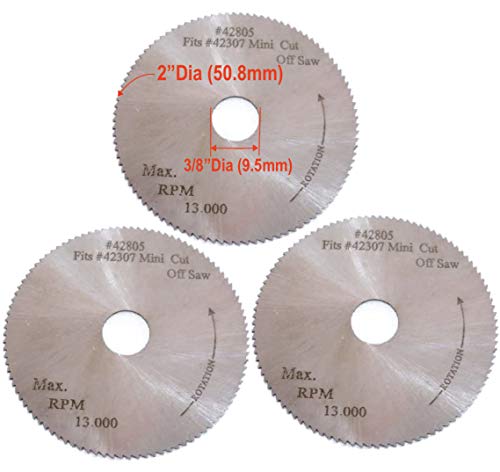
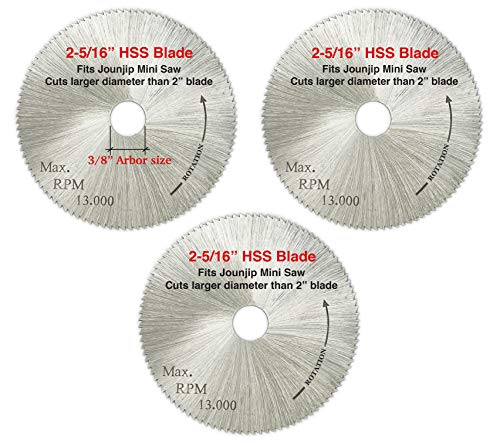
Hold the blade up to a light. A brown or black glaze on the plate near the teeth and in the gullets is pitch. Missing or chipped carbide tips, a warped plate, or cracks at the expansion slots mean the blade needs a sharpening shop or the trash, not cleaning. Small HSS blades for mini cut-off saws, such as the 2 inch 100 tooth 3-pack at about $11.99 or the 2-5/16 inch 3-pack at about $18.99, are cheap enough that replacing beats cleaning if they are also dull.
Step 3: Soak (10-20 minutes)
Lay the blade flat in the pan and pour in enough cleaner to cover the teeth, about 1/4 inch. Ready-to-use blade cleaners go on straight; concentrates like simple green dilute 1:1 with warm water. Light pitch lifts in 10 minutes; a blade that has been cutting pine or cherry for months may need 20. Do not leave a blade soaking overnight in anything alkaline, and do not soak coated blades in solvents stronger than the cleaner’s label allows.
Step 4: Scrub the gullets and plate (5 minutes)
With the blade still wet, scrub from the center outward with the nylon brush, then work each gullet with the toothbrush. Pitch comes off as a brown sludge. For stubborn spots, push a plastic scraper along the plate toward the tooth, never across the carbide edge. Flip and repeat on the other face. A brass brush is acceptable on the steel plate but keep it away from the tips.
Step 5: Rinse and dry immediately (3 minutes)
Rinse under warm water if the cleaner is water-based, then dry the blade completely with towels and, if you have it, a blast of compressed air through each gullet. Carbon steel plates begin to spot-rust within an hour if left damp, especially in a humid shop.
Step 6: Protect the plate (3 minutes)
Wipe a thin coat of dry lubricant or paste wax over both faces of the plate, avoiding the teeth, and buff it off. This reduces friction, cuts the rate of new pitch buildup roughly in half, and protects against rust. Let it cure for a few minutes before reinstalling.
Step 7: Reinstall and test (5 minutes)
Mount the blade with the teeth pointing down at the front, toward the fence, following the rotation arrow on the guard. Snug the arbor bolt firmly with the wrench, roughly 20 to 30 ft-lb; do not use an impact driver. Replace the guard cover, plug in, and make a test cut on scrap. The cut should feel noticeably lighter and the edge should be free of burn marks.
Mistakes to Avoid
Oven cleaner: sodium hydroxide dissolves pitch beautifully and also weakens the silver brazing holding carbide tips, and it strips PTFE coatings. Wire wheels or steel brushes on the teeth. Scraping with a steel putty knife across the carbide. Soaking a blade with an aluminum or plastic hub insert in strong solvent. Reinstalling a wet blade. Cleaning a blade and assuming a dull one is now sharp; if burning continues after cleaning, the carbide needs grinding. Mixing cleaners, which can create fumes.
How Often
For a miter saw used on weekends, clean the blade every 2 to 3 months or after about 200 cuts in resinous wood such as pine, fir, or cherry. Trim carpenters cutting pre-primed MDF and pine all day clean weekly. A useful trigger is visual: when you can see a brown ring on the plate behind the teeth, or when the cut starts to smell scorched, it is time. Clean before sending a blade out for sharpening too; most shops charge extra for pitch removal.
When to Call a Pro or Replace
Send the blade to a sharpening service ($15 to $30 for a 10 or 12 inch carbide blade) when cleaning does not restore a smooth cut, when tips show visible rounding under a magnifier, or when more than two teeth are chipped. Replace the blade if it wobbles on the arbor, has a bent plate, is missing three or more tips, or costs under $25 new; sharpening a $20 blade rarely makes sense. Blades on the market in 2026 with anti-stick coatings are worth the extra $10 to $20 for anyone who cuts a lot of softwood, since they cut cleaning frequency roughly in half.
FAQ
Can I use WD-40 to clean pitch off a saw blade?
It softens light pitch and is safe for the brazing, but it is slow and leaves an oily film that attracts sawdust. A dedicated blade cleaner or diluted simple green works faster and rinses clean.
Is simple green safe for carbide blades?
Diluted 1:1 and limited to a 20 minute soak, yes. Rinse thoroughly and dry, because it is mildly alkaline and prolonged exposure can dull the plate finish.
Why does pitch build up so fast on my miter saw?
Miter saws cut through the full thickness in one pass and often sit with the blade buried in a cut at the end of the stroke, so the plate heats and resin bakes on. Cutting pine, fir, and cherry accelerates it, as does a blade that is already slightly dull.
Does cleaning actually sharpen the blade?
No, but it restores the clearance and reduces friction so a sharp blade cuts like one again. A blade that has been dulling gradually often feels new after cleaning because most of the “dullness” was pitch, not worn carbide.