Key takeaways
- Green lines plus separate red plumb spots cover four alignment directions.
- Specified 3/32-inch line tolerance at 33 feet suits precise interior layout.
- IP54 housing, rotating magnetic mount and ceiling clamp support varied mounting.
Cabinet installation and ceiling layout call for different projected lines, even when both jobs start with a laser level. Cross-lines align shelves; a 360-degree horizontal plane reaches several walls; plumb spots transfer floor marks to ceilings. Our six selections cost $89 to $499 in US listings checked in October 2026. We compare manufacturer-stated accuracy, range, beam patterns, mounts and power costs rather than assuming a longer range makes a better tool.
Quick Verdict: For indoor layout crews and committed remodelers, the Klein Tools 93LCLGR is our Best Overall: its green cross-lines, separate red plumb spots and stated 3/32-inch accuracy at 33 feet cover more layout tasks in one tool. Choose the SKIL LL9322G-01 instead for a continuous horizontal room reference. These are editorial selections from published specifications as of October 2026, not in-house testing. Check today’s price and the exact beam pattern before buying.
As an Amazon Associate we earn from qualifying purchases.
By DIY Ideas 4 Home Editorial Team
6 Best Laser Levels Reviewed
We selected six currently listed US models from manufacturer product pages, manuals and named retailer listings, then compared stated accuracy, line coverage, setup hardware and price. The $89 Bosch is a useful entry point, while the $499 Milwaukee kit costs substantially more because it adds jobsite-oriented alignment controls and an M12 battery package. Each range below is a manufacturer figure, not a promise that the line will remain easily visible in sunlight. The US Food and Drug Administration’s laser safety guidance advises never looking directly into a beam; direct the laser away from eyes and traffic while setting up.
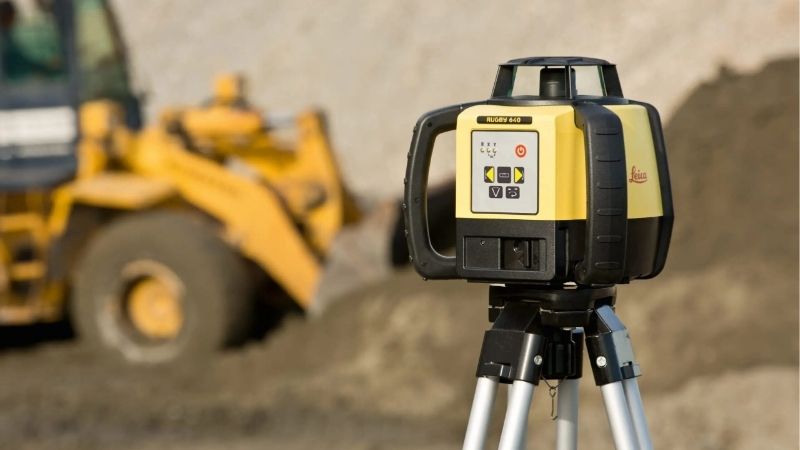
| Product | Best For | Key Spec | Listed Price (as of October 2026) | Watch Out For |
|---|---|---|---|---|
| Klein Tools 93LCLGR | Best Overall | Green cross-line and red plumb spots; 3/32 in at 33 ft; 165-ft stated range | $229.98 at Lowe’s | No receiver or pulse mode |
| Bosch GLL50-20G | Best Value | Green cross-line; 1/4 in at 30 ft; 65-ft stated range | $89.00 at Lowe’s | Less precise published tolerance |
| DEWALT DW088CG | Best for Detector Work | Green cross-line; 1/8 in at 30 ft; 165 ft with optional detector | $229.00 at Home Depot | DW0892G detector costs extra |
| SKIL LL9322G-01 | Best for Full-Room Wall Lines | 360-degree horizontal line; 3/16 in at 30 ft; 100-ft stated range | $159.99 at SKIL | Only one vertical plane |
| Milwaukee 3622-21 | Best for Steel-Stud Layout | Green cross-line plus plumb points; 1/8 in at 33 ft; 125-ft stated range | $499.00 at Home Depot | High initial kit cost |
| SKIL LL9324G-01 | Best for Clamp Mounting | Green cross-line; 3/16 in at 30 ft; 65-ft stated range | $109.99 at SKIL | Six-hour advertised battery life |
Klein 93LCLGR: Best Overall
Best For: Remodeling and electrical installers who need wall references and accurate floor-to-ceiling transfers without swapping instruments.
The Klein Tools 93LCLGR combines ordinary wall leveling with two extra reference points that simplify locating ceiling fixtures above marked floor positions. It is the most versatile single-position tool in this set for someone running conduit, aligning electrical boxes and transferring plumb between stories. The important limitation is that its red plumb dots and green line beams serve different purposes: a bright line does not replace a full 360-degree plane, and the dots do not create a perimeter reference.
Klein’s product page for the 93LCLGR specifies green horizontal and vertical cross-lines accurate to within 3/32 inch at 33 feet; the plumb-up and plumb-down spots have separate, less stringent tolerances. Klein lists an indoor range of 165 feet, an IP54 enclosure and a Class 2 laser rating. Lowe’s listed this rechargeable model at $229.98 in October 2026. That price falls in a mid-range to professional tier, but the maker does not list receiver compatibility, so its published indoor range should not be treated as detector-assisted daylight performance.
The 93LCLGR weighs 1.85 pounds and measures approximately 5.2 inches long, 5.3 inches high and 2.6 inches wide according to Klein’s specifications. Its magnetic rotating bracket and supplied ceiling clamp reduce the need to balance a tripod next to framing, while the hard case protects the optics between rooms. Klein describes a rechargeable battery and more than 12 hours of operation in its specifications; that does not guarantee the same runtime with every beam enabled or at every temperature. For expensive ceiling work, confirm the laser remains within calibration after a fall instead of trusting the housing alone.
Pros:
- Green lines plus separate red plumb spots cover four alignment directions.
- Specified 3/32-inch line tolerance at 33 feet suits precise interior layout.
- IP54 housing, rotating magnetic mount and ceiling clamp support varied mounting.
Cons:
- No stated pulse mode for pairing with an outdoor laser receiver.
- Red plumb dots require different viewing conditions than green lines.
Who Should Buy It: Choose the 93LCLGR when plumb transfer is frequent; choose the Bosch GLL50-20G when simple shelf leveling is enough and lower purchase cost matters more.
Bosch GLL50-20G: Best Value
Best For: Homeowners laying out shelves, wall art and short tile runs who prefer a replaceable-battery option.
There is little reason to pay for plumb points or an elaborate battery platform if the task is simply getting two straight reference lines onto a wall. The Bosch GLL50-20G puts its money into a green cross and a mount that works on magnetic surfaces or common tripods. At the low end of this lineup’s prices, it offers credible self-leveling for routine projects. Its looser published accuracy tolerance, however, makes it less appealing for a long bank of custom cabinetry with tight joints.
Bosch’s product page for the GLL50-20G states a 65-foot working range and accuracy within 1/4 inch at 30 feet, with a self-leveling pendulum that operates up to 3.5 degrees of tilt. It carries an IP55 ingress rating and runs on two included AA batteries; Bosch also offers a compatible 3.7-volt, 1.0-Ah lithium-ion battery separately. Lowe’s listed the GLL50-20G for $89.00 in October 2026. That is less than half the listed price of the Klein, although these models are not interchangeable for overhead point transfer.
Bosch’s technical specifications put the laser at 0.77 pound, with a 4.1-inch length and 3.9-inch height. A soft pouch, rather than a hard case, is included, and the switch locks the pendulum for transport. The optional rechargeable pack can change the longer-term battery expense, but it is an added purchase rather than part of the $89 package. Keep the soft pouch from banging against heavier tools: a compact body does not eliminate the need to confirm alignment at the start of a demanding install.
Pros:
- Included two-AA power avoids waiting for an integrated pack to charge.
- At 0.77 pound, the housing is convenient for repeated room changes.
- IP55 protection exceeds the IP54 rating of several competing picks.
Cons:
- The 1/4-inch tolerance at 30 feet is relatively generous.
- Only two crossing lines, without overhead plumb dots or 360-degree coverage.
Who Should Buy It: Buy this Bosch for occasional interior hanging jobs; move to the Klein Tools 93LCLGR if accurate plumb transfer is central to your work.
DEWALT DW088CG: Best for Detector Work
Best For: Contractors alternating between interior cross-line alignment and longer receiver-assisted layout on bright jobsites.
Unlike the Klein model’s longer stated indoor beam range, the DEWALT DW088CG gives you an explicit upgrade path for conditions where your eyes cannot reliably follow a projected line. Its continuous pulse mode supports a compatible detector, which matters for layout against distant targets. That advantage is not free: the receiver must be bought separately. Buyers installing cabinets only in finished rooms may find its higher purchase cost harder to justify than the Bosch.
DEWALT’s DW088CG product page specifies accuracy within 1/8 inch at 30 feet, a 100-foot visible range and a 165-foot range when paired with the separate DW0892G green laser detector. It also documents IP54 protection, a one-meter drop rating and a magnetic bracket. Home Depot listed the three-AA battery kit for $229.00 in October 2026. Treat the detector figure as a receiver-dependent capability, not as an expectation that a naked-eye green line will remain obvious in strong afternoon sun.
The integrated bracket has a 1/4-inch-20 threaded base for tripod mounting, a physical fit dimension identified on DEWALT’s US product page. The kit includes three AA batteries and a ceiling bracket, so short indoor setup does not require a charger. The manufacturer lists a three-year limited warranty with a one-year free-service period, subject to the warranty terms. For outdoor transfers, budget for the DW0892G before choosing this unit: buying the body alone does not create a complete receiver-assisted setup. Keep the glass window clean with the method in the manual rather than scraping off dried jobsite residue.
Pros:
- Optional DW0892G extends manufacturer-stated operating range to 165 feet.
- Accurate within 1/8 inch at 30 feet on the published specification.
- IP54 rating and one-meter drop specification suit active jobsite handling.
Cons:
- Outdoor receiver is an additional cost, not included in the kit.
- Standard two-line projection cannot wrap a horizontal reference around corners.
Who Should Buy It: Choose DEWALT for receiver-enabled line finding; choose the SKIL LL9322G-01 when a continuous indoor perimeter line matters more than outdoor detection.
SKIL LL9322G-01: Best for Full-Room Wall Lines
Best For: DIY renovators setting the same horizontal datum around several walls for cabinets, trim or accent tile.
Where ordinary cross-line lasers leave you repeatedly repositioning a tool, this SKIL projects a continuous horizontal plane through a full circle. That makes the LL9322G-01 particularly practical when layout marks must match around adjacent walls. It is not a three-plane construction laser: there is one vertical line, so floor squaring and orthogonal room grids still require additional setup. Its included tripod makes it easier to get started without sourcing a compatible support separately.
SKIL’s product page for the LL9322G-01 lists a 100-foot typical working range, accuracy within 3/16 inch at 30 feet and self-leveling over approximately four degrees. The 360-degree horizontal plane pairs with one vertical line, and the 3.7-volt, 2,000-mAh internal battery has a manufacturer-listed six-hour operating time. SKIL listed this particular green-beam kit for $159.99 in October 2026. The listed price includes a 43-inch tripod; do not confuse it with SKIL’s similarly named red-beam or simpler green cross-line packages.
At 0.97 pound and 4.21 inches high, the LL9322G-01 is a manageable tool to shift between a tabletop and the included stand. Its micro-USB rechargeable battery avoids buying alkaline cells, but a six-hour advertised charge may be inconvenient when a remodel stretches into an evening. A pendulum locking mode permits deliberate diagonal projections for decorative work; that locked-angle function is not self-leveling, so do not use it as evidence of a true level datum. Protect the relatively low tripod from accidental kicks when marking a crowded floor.
Pros:
- Continuous 360-degree horizontal projection carries one datum across adjoining walls.
- Included 43-inch tripod reduces the initial setup accessory list.
- The 100-foot maker-stated range provides useful indoor reach when light permits.
Cons:
- Single vertical plane cannot independently form a three-axis room grid.
- Integrated battery requires charging instead of a quick AA replacement.
Who Should Buy It: Pick this SKIL for wraparound height references; consider the Milwaukee 3622-21 for steel-stud alignment that demands dedicated plumb-point controls.
Milwaukee 3622-21: Best for Steel-Stud Layout
Best For: Trade crews aligning overhead penetrations and partition framing who already work with Milwaukee’s M12 battery system.
The strongest argument for the Milwaukee 3622-21 is control at the mounting point, not merely a high advertised range. Its magnetic bracket uses a fine pivot adjustment to move a projected line without nudging the entire housing. The up and down plumb dots let installers line up floor marks with overhead anchor locations while working among steel studs. It is expensive for a homeowner hanging several pictures, but repeated steel-framing setups can make those details more valuable than a broader beam pattern.
Milwaukee’s 3622-21 product page gives a 125-foot working range, accuracy within 1/8 inch at 33 feet, and a 165-foot range with a detector. It specifies a self-leveling window of four degrees, IP54 protection and 15 or more hours with the M12 REDLITHIUM CP3.0 battery under the manufacturer’s runtime conditions. Home Depot listed the kit with a 3.0-Ah battery at $499.00 in October 2026. Verify that the package is 3622-21, not the less complete 3622-20 tool-only configuration, before comparing prices.
Northern Tool’s product listing for the 3622-21 gives a 6.7-inch length and a 2.4-pound product weight, materially larger than the pocketable SKIL tool. Milwaukee’s cordless catalog confirms the kit includes an M12 CP3.0 battery, charger and carrying case, while Milwaukee lists a three-year tool warranty and a separate two-year battery warranty. Those parts are relevant if the crew already stocks M12 packs; otherwise, they raise the upfront entry cost. Use the bracket on secure ferrous framing and verify the laser has not shifted before drilling expensive penetrations.
Pros:
- Micro-adjust bracket provides fine positioning while mounted to steel framing.
- Maker quotes at least 15 hours with the CP3.0 battery.
- Cross-lines and two plumb spots support overhead-to-floor transfers.
Cons:
- The $499 kit costs substantially more than DIY-oriented cross-line models.
- Not a full three-plane 360-degree laser for roomwide grid work.
Who Should Buy It: Choose the 3622-21 for repetitive metal-framing layouts; select the DEWALT DW088CG if a simpler detector-compatible cross-line tool covers the job.
SKIL LL9324G-01: Best for Clamp Mounting
Best For: People doing trim, curtain rods or furniture layout in spaces where a tripod would obstruct access.
A laser is only helpful if you can place its reference at the correct height and keep it there. SKIL’s LL9324G-01 favors flexible mounting over big-job features: the included clamp attaches to different surfaces, and its small housing is easier to position near a cabinet edge or at the side of a ladder. Compared with the SKIL 360-degree model, its two crossing beams are simpler to aim at one work area but will not encircle the room.
The LL9324G-01 product page from SKIL lists accuracy within 3/16 inch at 30 feet and a typical green-beam range of 65 feet. Its integrated 3.7-volt, 1,200-mAh lithium-ion battery is rechargeable through micro-USB and carries an advertised six-hour operating time. The maker shows a $109.99 US price for this exact configuration in October 2026. It has a self-leveling mode and a manual locking mode, so a deliberately slanted projected line must not be mistaken for a level reference.
SKIL lists the laser itself at only 0.255 pound, measuring about 2.80 inches long and 3.03 inches tall. These dimensions make clamp positioning practical close to furniture, although the clamp still needs a stable attachment point. The maker supplies a charging cable and carrying bag; the built-in battery is less convenient on a job where charging access is intermittent. Unlike the Bosch’s included AA cells, this purchase commits you to keeping a charging cable available between uses. If a clamp attachment moves, reposition it and redo the reference rather than trusting the previous mark.
Pros:
- At 0.255 pound, the compact body suits narrow mounting spaces.
- Supplied clamp can hold the laser close to cabinets or trim.
- Green cross-lines reach a maker-stated 65 feet under suitable lighting.
Cons:
- Clamp stability depends on the surface it grips during work.
- Six-hour battery specification may interrupt longer installation days.
Who Should Buy It: Use the LL9324G-01 for compact one-wall tasks; switch to the SKIL LL9322G-01 if continuous horizontal marks must cross multiple walls.
How to Choose a Laser Level
The purchase decision starts with the shape of the reference you need, then the accuracy the manufacturer states at a known distance. A short cabinet run can be done with two lines, while several connected walls may need a 360-degree plane. For an outdoor project, detector support is more decisive than a large unaided-visibility claim. Finally, the included mount and power source determine whether your tool can hold its position for the entire task without extra purchases.
Compare Accuracy at the Same Distance
Manufacturer accuracy statements are meaningful only with their distances attached. Klein lists line accuracy within 3/32 inch at 33 feet, Milwaukee gives 1/8 inch at 33 feet and DEWALT states 1/8 inch at 30 feet. Bosch specifies 1/4 inch at 30 feet, while both SKIL models here state 3/16 inch at 30 feet. The numbers are tolerance claims under maker test conditions, not field measurements of these individual units. The difference becomes important on long continuous lines and precision cabinetry, not necessarily on a picture frame over a narrow desk.
A pendulum can self-level only inside its published tilt window: Bosch allows about 3.5 degrees and the two SKIL products specify roughly four degrees. If the tool flashes an out-of-level warning or rests beyond that window, adjust the mount before you mark anything. Establish a check line on a known reference whenever an instrument has been dropped. Even a premium device that powers on normally is not proof that its calibration survived an impact.
Match Beam Pattern to the Actual Job
Cross-line lasers project one horizontal and one vertical reference, well suited to tile courses, outlet rows and a cabinet face. The SKIL LL9322G-01 changes the workflow because its horizontal light extends continuously around the tool; that is useful when the same height must be found on opposite walls. Klein’s 93LCLGR and Milwaukee’s 3622-21 add discrete plumb points for floor-to-ceiling transfers, which a single cross does not provide as directly. None of the six is a dedicated three-plane 360-degree grid laser, so full floor and wall squaring may call for a different class of tool.
Range labels are especially easy to misread. A quoted 165 feet can refer to Klein’s indoor beam specification or, in DEWALT’s case, to operation with a compatible detector. Do not equate those claims. For bright exteriors, prioritize a listed pulse mode, the correct receiver model and the budget for both units. For close indoor work, a reliable bracket or clamp often saves more frustration than buying the highest advertised range.
Check Power, Mounting and Laser Safety
Included accessories change the real purchase cost. The Bosch GLL50-20G runs on two AA batteries or an optional rechargeable pack; DEWALT includes three AA cells with its DW088CG. SKIL builds rechargeable batteries into both models in this comparison, and the Milwaukee 3622-21 package includes an M12 battery and charger. Klein’s 93LCLGR is rechargeable and includes a hard case and mounting clamp. When shopping, compare the exact kit code on the seller’s page with the manufacturer’s parts list, not just a similar product photograph.
Mounting hardware is a safety and accuracy issue, not a convenience afterthought. Place a magnetic bracket only on a stable, suitable metal surface, and position a tripod outside walkways. The FDA’s consumer laser guidance explains that beam color is not a reliable indication of eye safety, while OSHA’s construction laser rules prohibit directing beams at employees. Do not stare into a Class 2 beam, aim toward roads or reflective eye-level surfaces, or allow children to treat the device as a toy. Keep the pendulum locked during transport as directed by the model’s instructions.
Frequently Asked Questions
Before placing an order, it helps to separate line-projection features from measuring, calibration and material-specific problems. These four questions address situations that are easy to overlook in product listings.
Does a Laser Level Measure Distance?
No. A cross-line laser projects a horizontal or vertical reference but does not report how many feet separate two points. For cabinet placement or an outlet run, use a tape measure or a dedicated laser distance measurer to set dimensions, then project a consistent alignment line. A wall can be perfectly level at the wrong height if the initial tape measurement was incorrect.
Can I Use a Laser on Glossy Wall Tile?
Yes, but a shiny tile or mirror can produce distracting reflections, making the line harder to interpret and potentially exposing eyes to reflected light. Use a matte temporary target where the maker’s instructions allow it, and keep the projection below face level when practical. Do not assume a dim reflected beam is harmless; the FDA warns that apparent brightness does not reliably indicate laser hazard.
Can a Line Laser Help Check Floor Slope?
Yes. Set the tool to project a genuinely level horizontal reference above the floor, then measure vertically from the line down to the floor at several marked spots. Different measurements reveal height changes relative to the same datum. The device does not itself calculate the floor’s slope, and a manual angled mode must be disabled before beginning such a comparison. For flooring work, also follow the material manufacturer’s flatness requirements.
When Should I Check the Tool’s Calibration?
Check it before precision installations and after any impact, rather than assuming a universal monthly schedule. The owner’s manual for your exact model should describe an approved accuracy check, often involving marks made from more than one position. If the difference exceeds the published tolerance, contact the maker’s service channel instead of adjusting hidden pendulum components without instructions. Transport locks reduce movement during storage but are not proof of calibration.
Final Thoughts
The Klein Tools 93LCLGR is the Best Overall purchase for mixed interior work because its line accuracy and separate plumb points cover both alignment and overhead transfer without changing tools. A room-perimeter project is the important exception: choose the SKIL LL9322G-01 when a continuous horizontal plane saves repeated repositioning. One detail to settle before checkout is the usable mounting height at the actual work surface; a clamp at cabinet level and a short tripod on the floor place beams differently, even if their laser ranges match. Check the current price, exact included mount and listed beam configuration before ordering.