Key takeaways
- Published 1,400 in-lbs torque supports demanding drilling assignments.
- AutoStop responds to sudden binding rather than merely lighting the work.
- Only 6.9 inches long for confined installation spaces.
A hammer drill combines ordinary rotary drilling with rapid forward impacts for making anchor holes in brick, block, and some concrete. For demanding everyday drilling and occasional masonry, the Milwaukee 2904-20 offers the strongest published torque figure in this selection along with a compact head and bind-up protection. A traditional hammer drill is not a substitute for an SDS rotary hammer when you must drill many large holes in dense concrete. Select your battery platform and hole size before paying for excess power.
Quick Verdict: The Milwaukee 2904-20 is our Best Overall because Milwaukee specifies 1,400 in-lbs of peak torque, 33,000 blows per minute, a 6.9-inch tool length, and AutoStop bind-up protection. Choose the SKIL HD529402 instead if you need a battery and charger included. These are editorial selections from published documentation as of October 2026, not hands-on tests. Check the live price and package contents before buying.
As an Amazon Associate we earn from qualifying purchases.
By DIY Ideas 4 Home Editorial Team
6 Best Hammer Drills Reviewed
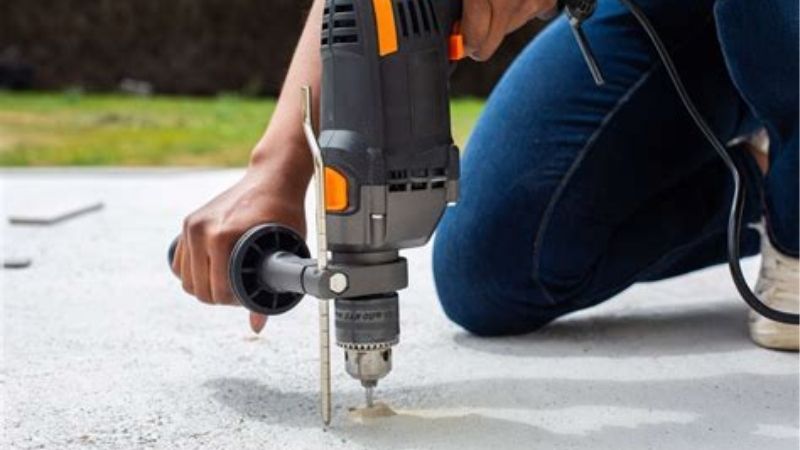
We compared manufacturer product pages, technical specifications, and US retailer listings for six distinct hammer drill/driver models. All six provide a conventional three-jaw chuck and selectable hammer action, so they can perform ordinary drilling and driving as well as light masonry work. We favored documented drilling speeds, impact rate, fit, and meaningful safety controls over unsupported claims of real-world speed. Published US prices ranged from a temporary DEWALT promotion near $70 to around $229 for a professional bare tool in the listings reviewed in October 2026; promotional stock can change without notice. Dust matters, too: OSHA’s construction guidance for drilling silica-containing concrete calls for appropriate shroud and vacuum collection rather than relying on ordinary eye protection alone.
| Product | Best For | Key Spec | Listed Price (October 2026) | Watch Out For |
|---|---|---|---|---|
| Milwaukee 2904-20 | Best Overall, demanding mixed work | 1,400 in-lbs, 2,100 rpm, 33,000 bpm | $229, Home Depot | Battery and charger not included |
| Bosch GSB18V-1330CN | Best for controlled high-torque drilling | 1,330 in-lbs, 2,200 rpm, 30,000 bpm | $179, Lowe’s | 4.6 lb bare tool; module separate |
| DEWALT DCD805B | Best for tighter working spaces | 2,000 rpm, 34,000 bpm; 7 in long | $69.65 sale; $199 reference, Home Depot | Discount is not a permanent price |
| Makita XPH14Z | Best for existing LXT users | 1,250 in-lbs, 2,100 rpm, 31,500 bpm | $199, Home Depot | About 6 lb with battery |
| RYOBI PBLHM101B | Best value for ONE+ owners | 750 in-lbs, 2,100 rpm, 31,000 bpm | $129, RYOBI and Home Depot | Battery sold separately |
| SKIL HD529402 | Best starter kit | 1,800 rpm, 27,000 bpm, 2.0 Ah kit | $139.99, SKIL | Less high-speed drilling headroom |
Milwaukee 2904-20: Best Overall
Best For: Remodelers who alternate between larger wood holes, fastening, and small masonry anchors on a busy jobsite.
The Milwaukee distinguishes itself through more than its high published torque: AutoStop Control Mode is designed to reduce violent tool rotation when a bit binds. That matters when a long auger meets a knot or a masonry bit catches unexpectedly. Its compact body is also more manageable in framing bays than the bulkier Bosch. Milwaukee’s claimed 1,400 in-lbs is a manufacturer figure, however, and cannot be treated as an apples-to-apples laboratory comparison with other brands’ torque numbers.
Milwaukee’s 2904-20 product page identifies a half-inch all-metal ratcheting chuck, up to 2,100 rpm, and AutoStop indicator lighting. The Milwaukee M18 FUEL drill and impact launch specifications add 33,000 bpm and a 3.3-pound tool-only weight. Home Depot listed the bare 2904-20 for $229 in October 2026, a premium purchase before a compatible M18 pack and charger. Unlike the SKIL kit, its box provides a side handle and belt clip but no battery.
At 6.9 inches long, this drill offers a shorter nose-to-back dimension than the 8-inch Bosch. The auxiliary handle is useful for controlling reaction force during high-load work; remove the battery when adjusting attachments, and keep both hands out of the chuck’s path. Milwaukee’s M18 battery ecosystem can reduce the total purchase cost for an established user, although additional packs increase cost for somebody starting from zero. Check replacement-chuck and service terms rather than assuming a motor warranty covers accidental chuck damage.
Pros:
- Published 1,400 in-lbs torque supports demanding drilling assignments.
- AutoStop responds to sudden binding rather than merely lighting the work.
- Only 6.9 inches long for confined installation spaces.
Cons:
- $229 bare-tool listing is costly without existing M18 batteries.
- High-output drill remains less efficient than SDS for repetitive concrete holes.
Who Should Buy It: Choose this for mixed professional work and the M18 platform; select the Bosch GSB18V-1330CN if angle guidance is more valuable than a shorter body.
Bosch GSB18V-1330CN: Best for Control
Best For: Installers who need electronic angle guidance and a documented response to unexpected bit binding.
The Bosch is the deliberate pick for people who want a drill to help keep long fasteners straight, rather than simply maximizing a headline speed. Electronic Angle Detection and a leveling interface address alignment problems that a bright work light cannot solve. Bosch also includes KickBack Control to mitigate a sudden torque reaction. The added control features require setup and practice, so the lighter DEWALT may suit quick one-off mounting tasks better.
Bosch’s GSB18V-1330CN product page specifies 1,330 in-lbs maximum torque, no-load speeds from 0 to 550 and 0 to 2,200 rpm, and an impact rate up to 30,000 bpm. Its 25 clutch settings provide a finer fastening adjustment than the SKIL configuration. Lowe’s showed $179 for the exact bare-tool SKU in October 2026. Bosch identifies its optional connectivity module separately; do not mistake connected-ready wording for a module included in this price.
The Bosch product specification lists an 8-inch length, 8.6-inch height, 2.9-inch width, and 4.6-pound weight without a battery. That noticeable mass can be less comfortable overhead than a smaller drill, but the metal gearbox and support handle are sensible for controlled heavy work. Bosch recommends selected CORE18V packs for maximum PROFACTOR performance; a small battery may operate the tool without delivering its intended power. Its five-year limited tool warranty is an ownership advantage, subject to the actual published terms.
Pros:
- Electronic Angle Detection helps maintain a chosen drilling direction.
- KickBack Control addresses sudden twisting if a bit sticks.
- Two-speed gearbox reaches 2,200 rpm at the upper setting.
Cons:
- The 4.6-pound bare weight is substantial for repetitive overhead work.
- Connectivity module and CORE18V battery add optional purchase costs.
Who Should Buy It: Choose the GSB18V-1330CN for alignment-sensitive installation; buy the Milwaukee 2904-20 if minimum body length and higher maker-stated torque rank first.
DEWALT DCD805B: Best for Tight Spaces
Best For: Contractors already invested in DEWALT 20V MAX who regularly drill close to cabinetry or framing.
The DEWALT balances masonry capability with a relatively compact chassis and an unusually flexible light. Its three-position LED and separate spotlight mode help when the task is inside a cabinet or shaded utility closet, where Bosch’s alignment functions may be unnecessary. DEWALT publishes output as Unit Watts Out rather than a directly comparable in-lbs torque figure, so a numbered cross-brand torque ranking would be misleading. The most relevant advantage here is reach, not a claim of maximum strength.
The DEWALT DCD805B product page gives two no-load ranges topping out at 650 and 2,000 rpm, a metal ratcheting half-inch chuck, and a three-mode LED rated to 70 lumens. Home Depot’s item details specify up to 34,000 hammer blows per minute. That US listing showed a $69.65 promotional figure against a $199 reference price in October 2026; availability and the sale price should be checked in the buyer’s ZIP code. The DCD805B is tool-only, and its compatible battery and charger are additional purchases.
Home Depot’s dimensions for this model are 7 inches deep, 8.14 inches high, and 2.5 inches wide, with a bare-tool weight of 2.95 pounds. A shorter drill can clear a partition where a long chuck and bit would otherwise obstruct access, but the bit itself still needs room. DEWALT’s warranty documentation distinguishes a three-year limited warranty, one year of service, and a 90-day satisfaction period. The adjustable LED has a stated 20-minute spotlight shutoff, not continuous hands-free task lighting.
Pros:
- Compact 7-inch length improves access behind fixtures and studs.
- Three-position LED reaches a stated 70-lumen output.
- 34,000 bpm hammer action suits intermittent masonry fastening.
Cons:
- Promotional $69.65 price may disappear or vary by store.
- Maker uses Unit Watts Out, complicating direct torque comparisons.
Who Should Buy It: Choose DCD805B for close-quarters work on existing DEWALT packs; prefer the Makita XPH14Z if defined masonry drilling capacity matters more than weight.
Makita XPH14Z: Best for LXT Owners
Best For: Existing 18V LXT users who want strong drilling output without purchasing a second battery platform.
Makita’s advantage is its clear published capacity guidance and its established LXT battery compatibility. It is a straightforward selection for a worker who already owns the right 18V packs, needs a metal chuck, and sometimes drills brick or block. Its 6-pound stated operating weight with a battery makes it less appealing for prolonged overhead work than the bare-tool figures can suggest. Makita’s seals also address dust and water intrusion, but they do not make the drill waterproof or replace silica-dust controls.
The Makita XPH14Z product page specifies 1,250 in-lbs maximum torque, 0 to 550 or 0 to 2,100 rpm, and a high hammer setting reaching 31,500 bpm. More usefully, its capacity chart identifies masonry holes up to 5/8 inch, steel up to 1/2 inch, and wood up to 3 inches under manufacturer conditions. The exact bare-tool model was listed at $199 by Home Depot in October 2026. A compatible LXT battery and charger are not included with this SKU.
Makita gives a 7-inch overall length and a six-pound weight with a battery, making the installed pack an important part of the carrying calculation. Its Star Protection system electronically monitors over-discharge, overload, and overheating when used with compatible batteries. The owner’s documentation and a three-year limited warranty help buyers evaluate long-term ownership, but battery wear and replacement remain ongoing costs. Keep vents clear, use the side grip during demanding drilling, and avoid interpreting improved weather resistance as permission to use it in rain.
Pros:
- Maker specifies a 5/8-inch masonry capacity for the model.
- Star Protection electronics coordinate tool and compatible LXT battery.
- Seven-inch body supports work in crowded repair locations.
Cons:
- Published six-pound working weight is tiring above shoulder height.
- $199 tool-only price excludes a genuine LXT charger and pack.
Who Should Buy It: Choose XPH14Z when you already own Makita LXT batteries and need published capacity limits; pick the DEWALT DCD805B for a lighter, compact tool body.
RYOBI PBLHM101B: Best Value for ONE+ Users
Best For: Homeowners with RYOBI ONE+ batteries who install shelves and anchors a few times per year.
The RYOBI is not the strongest tool in this group on paper, but that is precisely why it makes sense for intermittent home renovation. Its 750 in-lbs manufacturer-rated torque and 31,000 bpm cover common modest fastening tasks without the premium purchase price of Milwaukee. The ONE+ system also serves lawn and household tools, allowing someone who already owns a charger to spend on a useful masonry bit set instead. For a person without ONE+ batteries, the included SKIL starter kit may have a more favorable complete-system cost.
RYOBI’s PBLHM101B product page gives a $129 bare-tool price and states that the unit uses an 18V ONE+ battery, with no pack or charger included. Home Depot’s PBLHM101B listing specifies 750 in-lbs of torque, a dual-speed gearbox up to 2,100 rpm, and up to 31,000 bpm in hammer mode. A 24-position clutch provides usable fastening adjustment for ordinary drilling and driving. Those figures represent manufacturer claims at defined settings, not a measured drilling-time comparison with Bosch or Makita.
The PBLHM101B body is listed at approximately 7.54 inches deep and 7.81 inches high in US tool specifications, with a tool-only weight around 2.8 pounds. Its auxiliary handle is worth fitting before work in concrete or dense block; a side grip improves control but cannot eliminate a sudden kick. RYOBI lists a three-year manufacturer’s warranty, and all ONE+ battery generations share a stated compatibility system. Check the exact battery model and return policy, especially when an older pack has spent years in storage.
Pros:
- Listed $129 tool-only price undercuts high-output professional models.
- 31,000 bpm gives intermittent masonry drilling a dedicated mode.
- Standard ONE+ packs support broad 18V tool compatibility.
Cons:
- 750 in-lbs output is below the Milwaukee and Bosch claims.
- New buyers must budget separately for a charger and battery.
Who Should Buy It: Choose PBLHM101B to extend an existing ONE+ collection; choose the SKIL HD529402 when you have no battery platform and want a ready-to-use package.
SKIL HD529402: Best Starter Kit
Best For: First-time drill buyers who need a working cordless kit for light masonry and household repairs.
SKIL solves the purchasing problem that bare-tool price tables often hide: it includes a usable battery and charger. The HD529402 makes sense for a renter or new homeowner who may drill brick for shelving but spends most time assembling furniture. It has a lower top speed and hammer rate than the professional models, which is a reasonable trade for complete-kit convenience. Its 2.0 Ah included pack limits prolonged heavy drilling, so it would not be the economical choice for frequent large concrete anchors.
SKIL’s HD529402 product page listed $139.99 for the brushless 20V kit as of October 2026. The manufacturer’s specification gives 0 to 480 and 0 to 1,800 rpm, plus hammer rates of 7,200 and 27,000 bpm across its two ranges. A metal ratcheting half-inch chuck, more than 17 fastening settings, and dedicated drill and hammer modes make this a functional combination tool. The box contains one 2.0 Ah lithium-ion battery, a PWR JUMP charger, a belt clip, and a Phillips bit, unlike the bare-tool alternatives.
SKIL records a net weight of 2.45 pounds without the battery, so adding the included pack matters when planning repetitive overhead installation. Charging accessories and batteries must be SKIL-compatible, and the battery’s USB-output convenience does not increase drilling power. The manufacturer provides the HD529402 manual and parts listing for maintenance checks. For longer jobs, buyers can price an additional compatible pack against the cost of switching to a system with batteries they already own. Use a suitable masonry bit, and never leave the battery installed when changing accessories.
Pros:
- $139.99 includes a specified 2.0 Ah battery and charger.
- Light 2.45-pound bare tool helps occasional overhead work.
- Separate drilling, driving, and hammer modes cover common tasks.
Cons:
- 1,800 rpm ceiling trails five higher-speed models here.
- Included 2.0 Ah battery can require charging during lengthy jobs.
Who Should Buy It: Buy the HD529402 when starting without batteries; choose the RYOBI PBLHM101B if you already have a maintained ONE+ charger and packs.
How to Choose a Hammer Drill
Begin with the material and number of holes, not the largest torque number on the box. A common drill/driver with switchable hammer action works for household brick, mortar, and modest concrete anchors; a dedicated SDS rotary hammer is generally more appropriate for repeated, large concrete drilling. The right bit, dust collection, and working posture often matter as much as motor specifications. Use the next four factors to decide which of these documented models fits the actual work.
Match the Hammer Mode to the Material
All six choices use a three-jaw half-inch chuck, not an SDS chuck. A standard masonry bit has the appropriate cylindrical shank for that chuck; an SDS-plus bit should not be assumed compatible just because both tools have a hammer function. Makita publishes a 5/8-inch masonry capacity for XPH14Z, while Bosch’s GSB18V-1330CN product materials identify a 3/4-inch masonry capacity. These are manufacturer capacity limits, not assurances that every concrete mix can be drilled comfortably at that diameter. For dozens of anchors in hard reinforced concrete, compare an SDS tool rather than oversizing a conventional hammer drill.
Brick and mortar are not interchangeable targets for every fixture. Some masonry applications require anchoring in solid brick rather than the mortar joint, depending on the hardware manufacturer’s instructions and local substrate condition. When working on older or brittle masonry, start with the anchor specification and a compatible bit. Do not hammer into tile or fragile surfaces indiscriminately; material-specific bits and a non-hammer start may be required. Always inspect for buried wiring, plumbing, and post-tensioning before any hole.
Read Speed, Impact Rate, and Torque Together
High gear favors quicker rotation for small holes, while low gear offers controlled torque for larger bits and fasteners. Milwaukee rates 2904-20 at 2,100 rpm and 33,000 bpm; the DEWALT DCD805B is 2,000 rpm with 34,000 bpm. These figures describe no-load operating limits and do not establish which drill cuts a given concrete block faster. Pressing harder is not a reliable substitute for choosing a sharp masonry bit and a suitable mode.
Torque numbers require special caution. Bosch publishes 1,330 in-lbs and RYOBI publishes 750 in-lbs, but brands may use different torque tests. DEWALT instead provides output information in Unit Watts Out for DCD805B, so it would be incorrect to insert a guessed torque figure into a comparison table. For the occasional picture rail, the presence of a functioning hammer mode and compatible bit is more decision-relevant than claiming an exact performance gap from incomparable metrics.
Account for Batteries, Weight, and Real Cost
Five of these listings are bare tools, but SKIL HD529402 comes with one 2.0 Ah pack and a charger. That distinction can reverse a quick price comparison. RYOBI at $129 may save money for an existing ONE+ owner; the $139.99 SKIL package has fewer missing pieces for a beginner. Milwaukee’s $229 and Makita’s $199 list prices also buy into ecosystems where an existing high-capacity battery may offset the initial cost. Compare same-day US listings for the exact suffix, since tool-only and kit model numbers often look nearly identical.
Weight deserves the same scrutiny. Bosch lists 4.6 pounds without a battery, while Makita states six pounds with one; those numbers cannot be ranked as if measured in the same configuration. The DEWALT’s 2.95-pound bare-body listing and short seven-inch length make it attractive for cabinets and service spaces. A larger battery improves work duration but also shifts the tool’s balance. Buyers drilling above shoulder height should consider a stable work platform and practical working intervals, not merely the drill’s compact advertising description.
Control Kickback, Dust, and Maintenance
Milwaukee’s AutoStop and Bosch’s KickBack Control aim to reduce the consequences of bit binding, although neither can promise to prevent injury. Use the manufacturer-supplied side handle when recommended, secure the material, wear suitable eye and hearing protection, and disconnect the battery before changing bits. The National Institute for Occupational Safety and Health published updated hearing-protection guidance in September 2026 stressing exposure reduction as well as protective equipment. Never assume that a brushless motor makes rotating accessories harmless or eliminates the need for two-handed control.
Concrete dust is another purchasing cost, not an optional afterthought. OSHA’s fact sheet on handheld and stand-mounted drills describes shrouds with compatible vacuum dust collection for drilling silica-bearing materials in construction work. Determine which shroud fits the chuck, handle, and bit configuration, then follow the applicable workplace rules and tool manufacturer’s instructions. Inspect chucks for wobble and damaged jaws, maintain clean vents, and use original battery systems. A fully charged pack will not compensate for a dull bit or an incorrect anchor location.
Frequently Asked Questions
These four questions address the practical differences that can change the tool you should buy, especially when your work alternates between wood, masonry, and finished interior surfaces.
Can I use a hammer drill as a regular drill?
Yes. The six models here have a non-hammer drilling mode, and their clutch settings can also support screwdriver tasks. Turn hammer mode off for wood, metal, and most ordinary fastener work, selecting the bit and speed recommended for the material. Mechanical hammering is not a useful upgrade for driving a cabinet screw.
Do I need a rotary hammer for concrete?
Not for every small concrete hole. A conventional hammer drill is often adequate for occasional light anchors with an appropriate masonry bit. For repeated large holes or harder concrete, the piston-driven SDS rotary hammer is built for a different workload and is usually the better tool. Drill performance also depends on aggregate hardness, reinforcing steel, bit condition, and dust management.
Is a 20V MAX drill more powerful than an 18V drill?
No, not on voltage labeling alone. DEWALT explains that its 20V MAX designation reflects maximum initial battery voltage without a workload, while nominal voltage is 18V. Compare the actual battery system, capacity, drilling ranges, chuck, and documented controls before choosing. The label does not establish greater usable output than Bosch or Milwaukee 18V products.
Which accessories must I buy before drilling brick?
At minimum, use a masonry bit with a shank matching the regular chuck, an anchor specified for the wall and load, and appropriate eye and hearing protection. For silica-containing masonry, plan dust control consistent with OSHA guidance and the conditions of the job. A stud or utility detector can help identify hidden services, but a reading is not a guarantee that no wiring or pipe lies behind the wall.
Final Thoughts
The Milwaukee 2904-20 remains our Best Overall for users who will exploit its 1,400 in-lbs maker-stated torque, short 6.9-inch body, and AutoStop control; the less expensive SKIL HD529402 is a more complete starting package if you own no batteries. One easily overlooked deal-breaker is the anchor system: check the specified bit diameter and the substrate’s condition before committing to any drill, because a mismatched anchor can fail despite a capable tool. Confirm live pricing, tool-only versus kit contents, and bit compatibility before purchasing.