A 6 foot folding table measures 72 inches long x 30 inches wide x 29 inches high, seats 6 people comfortably (8 in a pinch), and typically supports 300 to 1,000 lbs of evenly distributed static weight depending on material — making it the most versatile size for parties, craft work, and temporary home office use without overwhelming a standard room.
Our top picks
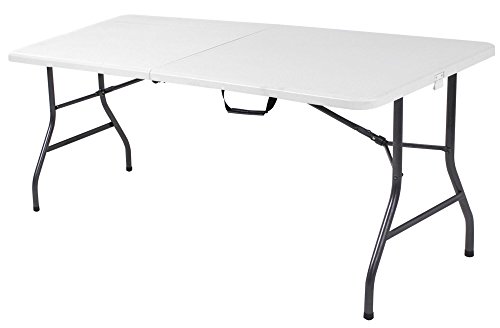 Cosco 6ft Fold-in-Half Blow Molded Folding Table
- Versatile 6 ft indoor table with dimensions of…
- All Season Table Top made of durable plastic…
- Comfort Handle for easy carrying when folded and…
 BestOffice
- Sturdy Support:The Picnic Table with Powder-coated steel legs,…
- Portable:Foldable design of the folding table includes a…
- Easy to fold up and be stored away:You…
 Amazon Basics Heavy Duty Portable Folding Table
- 6-foot folding table in White
- Auto lock / unlock for quick, secure setup…
- Lightweight, fold-in-half design with carry handle ensures easy…
| Product | Key specs | |
|---|---|---|
| Cosco 6ft Fold-in-Half Blow Molded Folding Table | Versatile 6 ft indoor table with dimensions of… All Season Table Top made of durable plastic… Comfort Handle for easy carrying when folded and… | Check price |
| BestOffice | Sturdy Support:The Picnic Table with Powder-coated steel legs,… Portable:Foldable design of the folding table includes a… Easy to fold up and be stored away:You… | Check price |
| Amazon Basics Heavy Duty Portable Folding Table | 6-foot folding table in White Auto lock / unlock for quick, secure setup… Lightweight, fold-in-half design with carry handle ensures easy… | Check price |
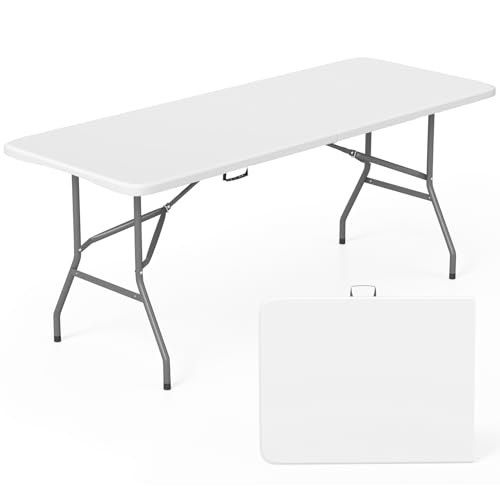 FDW FDW | High Quality: The 6 Foot Folding Table with… Space Saving: The plastic table includes a side… Easy to Clean: Stain resistant and Easy-to-clean surface… | Check price |
As an Amazon Associate we earn from qualifying purchases at no extra cost to you.
Exact Dimensions and How Much Space You Actually Need
While the tabletop itself is standardized, the footprint you need to use it is much larger. You must account for chair clearance and traffic flow.
| Measurement | Standard Spec | What It Means in Practice |
|---|---|---|
| Tabletop (L x W x H) | 72″ L x 30″ W x 29″ H | Standard dining height; works with most folding chairs (17-18″ seat height) |
| Folded Size | 36″ L x 30″ W x 3.5″ H | Folds in half at the center hinge; fits in most closets or against a garage wall |
| Leg Clearance (Under Table) | ~27.5″ high, 69″ between legs | Enough knee room for adults; center may have support bar on cheaper models |
| Weight of Table | 26 – 45 lbs | HDPE plastic is lightest; wood or steel-edge models are heaviest |
| Seating Width Per Person | 24″ per person | 3 per side = comfortable; 4 per side = 18″ per person, shoulder-to-shoulder |
For room fit, use this rule: you need 36 to 48 inches of clearance from the table edge to the wall or other furniture to pull out a chair and walk behind it.
- In a 10×12 ft room (120 sq ft): A 6 foot folding table leaves about 42 inches of clearance on the long sides and 24 inches on the short ends if centered. It fits with 6 chairs but feels tight with 8. An 8-foot table would leave less than 18 inches on the ends — not functional without blocking a doorway.
- In a 12×16 ft room or 2-car garage: A 6-foot table leaves comfortable walkways for a buffet setup or craft station with storage bins underneath.
- Doorway and storage check: Folded thickness of 3-4 inches clears any standard 28-inch interior doorway, but measure your closet depth — many linen closets are only 24 inches deep and will not fit the 30-inch width.
Weight Capacity by Material: What Will It Actually Hold?
Weight limits are listed as static, evenly distributed weight. A person sitting or leaning on one spot creates point load, which is much lower than the advertised number. Always check the manufacturer’s stated limit for both tabletop and center.
| Material / Construction | Typical Weight Capacity | Common Frame | Best For |
|---|---|---|---|
| HDPE Blow-Molded Plastic (white granite top) | 500 – 1,000 lbs | Powder-coated steel, wishbone legs | Outdoor parties, banquets, heavy buffet trays, kids’ crafts |
| HDPE with Steel Edge / Commercial Grade | 700 – 1,000 lbs | 18-gauge steel, reinforced crossbars | Frequent use, conference rooms, vendor booths |
| MDF with Laminate / Vinyl | 200 – 300 lbs | Light steel, simple hinges | Light indoor use, sewing, board games, temporary desk |
| Plywood with Wood Veneer | 300 – 500 lbs | Steel or wood legs | More attractive finish for indoor dining, but less water resistant |
| Aluminum Frame with HDPE Top | 300 – 600 lbs | Aluminum (lighter) | Easy carrying, camping, flea markets where weight matters |
What wears first: On plastic tables, the center hinge and leg locking rings loosen over 3-5 years of regular folding. On MDF/laminate tables, the particle board edge chips and swells if exposed to moisture, and the vinyl top can bubble in heat. Steel legs can rust at weld points if stored in a damp garage.
How Many People Can You Seat on a 6 Foot Folding Table?
Seating is about elbow room, not just fitting chairs.
- 6 people (Recommended): 3 per side, none on the ends. Each person gets 24 inches of width. This is comfortable for a dinner or for working on laptops with some shared space in the middle.
- 8 people (Maximum): 3 per side + 1 on each end. Side guests get 24 inches, end guests get the full 30-inch width. Works for a kids’ birthday or informal buffet, but adults will bump elbows if plates are large.
- For a craft or sewing setup: Treat it as a 2-person workbench — one per side — so you have 36 inches of project space each.
Chair pairing matters. Standard folding chairs are 18-19 inches wide. Six chairs need about 114 inches of perimeter storage when not in use. If you use wider padded banquet chairs (20-21 inches), you will only fit 6 total, not 8.
6 Foot vs 8 Foot Folding Table: Which Should You Choose?
The 8-foot table is not just longer — it changes how a room functions. Choose based on your space and how you entertain.
| Factor | 6 Foot Folding Table (72″) | 8 Foot Folding Table (96″) |
|---|---|---|
| Seats Comfortably | 6 | 8 |
| Seats Max | 8 | 10 |
| Room Needed (with chairs) | ~10 x 8 ft minimum | ~12 x 8 ft minimum |
| Transport | Fits in most SUVs with seats down; one person can carry | Often needs a truck or roof rack; awkward for one person (40-55 lbs) |
| Storage Footprint (folded) | 36″ x 30″ | 48″ x 30″ |
| Typical Price Range | Usually $55–$140 for HDPE | Usually $70–$170 for HDPE |
Pick the 6-Foot Table If You:
- Host in an apartment, small dining room, or galley-style space. It leaves walkable aisles where an 8-foot table would block traffic.
- Need a multi-purpose surface — home office desk, wrapping station, puzzle table — that you set up and take down weekly.
- Carry it solo to tailgates, craft fairs, or family gatherings. The 26-35 lb plastic models are manageable for one adult.
- Want to combine tables: Two 6-foot tables create a 6×5 ft square for 12 people or a long 12-foot banquet line, which is more flexible than one 8-foot table.
Pick the 8-Foot Table If You:
- Regularly seat 8-10 adults for holidays and have a 12-foot wall to place it against.
- Run a buffet where you need 96 inches of linear serving space for chafing dishes without using two tables.
- Have dedicated garage or basement storage and a vehicle that can handle the 48-inch folded length.
Decision Matrix: Match Your Situation to the Right Spec
| Your Situation | Best 6 Foot Folding Table Choice | Why |
|---|---|---|
| Small apartment / renter, limited storage | HDPE blow-molded, white granite top, no center crossbar | Lightest, most water-resistant, folds to 36″ and slides behind a sofa or bed; no damage to floors |
| Kids and pets, indoor/outdoor use | HDPE with steel edge and stain-resistant top | Wipes clean, won’t chip like laminate, rounded corners are safer; 500+ lb capacity handles climbing |
| Need a nice look for indoor dining | Plywood with wood-grain laminate or resin top, powder-coated legs | Looks like furniture, not a banquet table; add a tablecloth to hide seams |
| Back pain / need to work standing | Height-adjustable HDPE model (usually 22″ to 36″ height) | Can be set to 36″ counter height for standing prep or craft work; standard 29″ is too low for long standing tasks |
| Frequent moving / market vendor | Aluminum frame HDPE or lightweight commercial grade | Under 30 lbs, easier on doorways and loading; check that leg locks are gravity locks, not pinch locks |
Assembly, Moving and Durability Realities
Most 6 foot folding tables come fully assembled — you just unfold the legs until they lock. No tools needed. Higher-end banquet models may have adjustable feet that screw in by hand to level on uneven patios.
Box weight and delivery: Expect a 30-50 lb carton, 37 x 31 x 4 inches. Parcel carriers will leave it at the door; measure your stairwell turn if you live upstairs, as the box does not bend.
Moving tips: Carry folded with the hinge side against your hip and legs facing out. Dragging it open across a floor will scratch hardwood — lift, even though it has no wheels. For outdoor use on grass, place plywood scraps under feet to prevent sinking.
How long it lasts: A commercial-grade HDPE table used monthly and stored indoors often lasts 7-10 years; the top may fade to yellow in direct sun but remains structurally sound. An MDF/laminate table used the same way often shows edge swelling or hinge wobble after 2-4 years. To extend life, store dry, avoid sitting on the center seam, and do not exceed 150 lbs of point load on any single spot, even if total capacity is higher.
Best Uses for a 6 Foot Folding Table at Home
- Holiday dining extension: Butt it against your existing dining table to add 6 seats without buying a new set. Use matching tablecloths to unify the look.
- Home office or homework station: At 30 inches deep, it holds two 24-inch monitors plus a keyboard if placed against a wall. Height is standard desk height, so pair with an adjustable office chair.
- Craft, sewing, and puzzles: The 15 sq ft surface holds a cutting mat or 1,500-piece puzzle with room to spare. Add risers if you need standing height.
- Garage workbench or plant table: HDPE resists water, paint, and soil. Keep capacity under 500 lbs and avoid direct heat like a grill or soldering iron on plastic tops.
- Party buffet or bar: Set it along a wall for food, with guests moving in one direction to avoid bottlenecks. A 6-foot length holds three large serving trays plus plates.
FAQ
Will a 6 foot folding table fit in my car?
Folded it is 36 inches long. It fits across the back seat of most sedans or in an SUV with the rear seats folded flat. Measure your trunk opening width — many are only 28-30 inches tall, so you may need to slide it in diagonally.
Can you sit at the ends of a 6 foot folding table?
Yes, if it has wishbone or straight legs without a center support bar blocking your knees. Avoid sitting at the seam where the table folds; that hinge is the weakest point for point load.
How much height does a tablecloth add?
A standard 72×90 inch rectangular cloth covers a 6-foot table to the floor on the sides and midway on the ends. For a floor-length drop on all sides, you need a 90×132 inch cloth.