Key takeaways
- Measure your popliteal height first: Sit on a hard chair, feet flat, and measure floor to the back of your knee. That number — usually 15–17″ for shorter users — is your target minimum seat height. Anything higher and you’re compensating for the rest of your life.
- Check seat depth, not just width: You want two to three fingers of clearance between the seat edge and your calves. Standard pans run 19–20″; petite-friendly pans run 16–18″. A too-deep pan is the single most common cause of thigh pressure and slouching.
- Demand adjustable lumbar height: A fixed lumbar bump at 9″ from the seat is useless if your curve sits at 6″. Height-adjustable or 4D lumbar hardware matters far more than the amount of padding.
- Look for low or flip-up armrests: Arms should support your elbows at roughly 90° without shrugging your shoulders. Flip-up designs also let you tuck the chair fully under a low keyboard tray or L-shaped desk return.
- Plan your footrest strategy: If the chair can’t drop low enough, a footrest is mandatory — either integrated, purchased, or shop-built. A scrap of 3/4″ plywood on 2×4 cleats, sanded and felt-padded, costs under $10 and works as well as anything sold retail.
What's inside
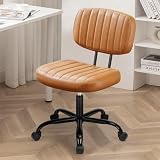
For most petite and shorter users, the CabLady S2 Petite Office Chair is the best overall pick, with the Vigosit Compact Ergonomic Office Chair as the runner-up. The CabLady wins on adjustability range — it’s one of the few chairs actually engineered around a shorter seat height and shallower seat pan — while the Vigosit delivers the same small-frame fit for a fraction of the cost.
Here’s the problem: almost every office chair sold today is dimensioned for a 5’9″ body. If you’re 5’2″, the seat pan is too deep (cutting off circulation behind your knees), the lumbar curve lands in your shoulder blades, and even at the lowest gas-cylinder setting your feet dangle. I’ve spent enough weekends shimming seat plates, sawing down cylinder covers, and building plywood footrests to know that hardware mods only get you so far — the fix starts with buying the right frame. This guide covers the measurements that matter, the six chairs that respect them, and the DIY tweaks worth doing after the box is open.
As an Amazon Associate we earn from qualifying purchases.




Quick Comparison
| Product | Best For | Standout Feature | Rating |
|---|---|---|---|
| CabLady S2 Petite Office Chair | All-day work under 5’4″ | Built-in flip-out footrest + 4D lumbar | See card above |
| Vigosit Compact Ergonomic Chair | Tight budgets and small rooms | Genuinely compact footprint | See card above |
| DUMOS Home Office Chair | Upgraded materials and support | Contoured mesh back with lumbar block | See card above |
| COMHOMA Mid-Back Office Chair | Corner and L-shaped desk setups | Flip-up arms slide under the return | See card above |
| NEO CHAIR Mesh Office Chair | Warm rooms and long sessions | Breathable mesh, low starting height | See card above |
How to Choose an Office Chair for Petite and Shorter Users
- Measure your popliteal height first: Sit on a hard chair, feet flat, and measure floor to the back of your knee. That number — usually 15–17″ for shorter users — is your target minimum seat height. Anything higher and you’re compensating for the rest of your life.
- Check seat depth, not just width: You want two to three fingers of clearance between the seat edge and your calves. Standard pans run 19–20″; petite-friendly pans run 16–18″. A too-deep pan is the single most common cause of thigh pressure and slouching.
- Demand adjustable lumbar height: A fixed lumbar bump at 9″ from the seat is useless if your curve sits at 6″. Height-adjustable or 4D lumbar hardware matters far more than the amount of padding.
- Look for low or flip-up armrests: Arms should support your elbows at roughly 90° without shrugging your shoulders. Flip-up designs also let you tuck the chair fully under a low keyboard tray or L-shaped desk return.
- Plan your footrest strategy: If the chair can’t drop low enough, a footrest is mandatory — either integrated, purchased, or shop-built. A scrap of 3/4″ plywood on 2×4 cleats, sanded and felt-padded, costs under $10 and works as well as anything sold retail.
The Best Office Chairs for Petite and Shorter Users Reviewed
Best Overall: CabLady S2 Petite Office Chair
This is the only chair here designed from the ground up for small frames, with a shallow seat pan, 4D adjustable lumbar and headrest, a 330 lb capacity, and an integrated flip-up footrest that removes the need for a DIY platform. Best for anyone 4’10″–5’4″ who works full days and wants to stop modifying furniture to fit.
Best Budget: Vigosit Compact Ergonomic Office Chair
A small swivel chair with real lumbar support and a low height range, sized for teens and petite adults in rooms where a full-size executive chair simply won’t fit. Best for students, secondary workstations, or anyone testing whether a compact frame solves their comfort problem before spending more.
Best Premium: DUMOS Home Office Chair
The DUMOS steps up in build quality — better mesh, a firmer contoured lumbar block, and a more stable base that doesn’t flex when you lean. Best for shorter users who want long-term durability and are willing to add a footrest if the seat sits an inch high.
Best for Corner and L-Shaped Desks: COMHOMA Mid-Back Office Chair
The flip-up arms and compact mid-back profile let this chair slide fully into a desk corner or under a low return, and the rocking function plus sturdy metal base handle daily use well. Best for makers and multi-monitor users navigating a tight L-shaped layout.
Best for Hot Rooms and Long Sessions: NEO CHAIR Mesh Office Chair
Full mesh backing keeps air moving, and the low starting seat height suits users around 5’0″–5’5″ without immediate modification. Best for anyone in a warm attic office, garage workshop, or sunny spare room where foam upholstery becomes unbearable by mid-afternoon.
Frequently Asked Questions
Can I shorten a gas cylinder to lower a chair?
Not safely. The cylinder is pressurized, and cutting it risks injury. What you can do is swap in a shorter aftermarket cylinder — they’re standardized at a 50mm taper on most chairs and cost around $25. Measure your existing cylinder’s collapsed length before ordering.
What if the seat pan is still too deep?
Add a firm 2–3″ lumbar cushion behind your back to effectively shorten the pan. It’s a five-minute fix that beats sitting on the front edge, which defeats the backrest entirely.
Should I raise my desk instead of lowering the chair?
Only if you also use a footrest. Raising the desk without supporting your feet just moves the problem downward. A standing desk with a low minimum height is the cleaner long-term solution.
Are armless chairs better for petite users?
Sometimes. The armless DUMOS Small Office Desk Chair is excellent for vanity desks, sewing tables, and workbenches where you need lateral freedom, but for keyboard work, adjustable arms reduce shoulder fatigue meaningfully.
Final Thoughts
If you want the fit right out of the box, the CabLady S2 is worth the premium — its shallow pan and integrated footrest solve two problems at once. On a budget, the Vigosit Compact delivers the essential small-frame geometry, and the COMHOMA Mid-Back is the smart pick if your desk is an L-shape and you need those arms out of the way.