Key takeaways
- A stack of receipts, contracts, and old photos sitting in a drawer is a problem most people recognize but rarely solve. A good canon document scanner makes the task fast enough that you actually finish the job, while a mediocre…
What's inside
A stack of receipts, contracts, and old photos sitting in a drawer is a problem most people recognize but rarely solve. A good canon document scanner makes the task fast enough that you actually finish the job, while a mediocre one turns a twenty-minute project into a frustrating afternoon of paper jams, crooked feeds, and driver headaches. The difference usually comes down to three things: how reliably the machine handles mixed paper without manual intervention, how simple the software setup is, and whether the physical size fits where you intend to work.
Canon covers an unusually wide range here, from slim flatbeds under a hundred dollars to desktop workhorses built for high-volume office queues. Owner feedback consistently separates models that earn a permanent spot on a desk from those that get relegated to a closet after the first month. We compared published specs, pricing, and recurring themes in owner reviews to sort the current lineup for 2026 by what each unit actually does well and where it falls short.
As an Amazon Associate we earn from qualifying purchases at no extra cost to you. Product prices and availability are accurate as of the date shown and are subject to change.




Quick Picks
| Product | Best for | Price |
|---|---|---|
| DR-C225 II | Small office throughput | $279.30 |
| R30 | Plug-and-play simplicity | $259 |
| R40II | Cloud-based workflows | $253 |
| R10 | Mobile and USB-powered use | $183.90 |
| LiDE 300 | Flatbed versatility on a budget | $69.99 |
| P-208II | Portability with an ADF | $149 |
| LiDE 400 | Photo and document scanning in one slim unit | $97.99 |
| DR-M160II | High-volume office environments | $858.87 |
How We Picked
We narrowed this category using four criteria drawn from spec sheets and owner complaints: scan speed relative to price, duplex and ADF capability (a flatbed without a feeder creates a bottleneck on multi-page jobs), setup friction (driver installation versus plug-and-play), and physical footprint. A unit that demands software before scanning a single page loses points against one that does not, and a scanner too bulky for a typical home desk faces the same practical problem as one too slow for a busy office.
The 8 Best Canon Document Scanner in 2026
Canon DR-C225 II
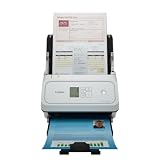
The DR-C225 II occupies the sweet spot for small offices that process a steady stream of mixed paperwork without needing enterprise-class speed. Owners praise its compact body relative to its throughput, noting it handles everything from receipts to lightly creased letters without repeated manual feeding. Duplex scanning means double-sided contracts are captured in a single pass, cutting batch times noticeably. The main complaint is that it still requires driver installation before first use, which adds a setup step that competitors like the R30 eliminate. Skip it if you want absolute plug-and-play simplicity or need the lowest possible entry price.
Canon R30
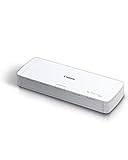
The R30 is built for people who want to scan without thinking about software. Its plug-and-scan capability means you connect via USB and the unit appears as a drive, eliminating the driver hunt that frustrates many owners. Auto document feeder with duplex scanning keeps multi-page batches moving without babysitting. At $259 it sits just above the R40II despite offering a simpler feature set, which raises the question of whether you are paying for the no-software experience specifically. The trade-off is a less flexible output pipeline: cloud integration and advanced PDF workflows are not native strengths here. Skip it if your workflow depends on scanning directly to cloud services or if you already have driver software installed without friction.
Canon R40II
The R40II is the pick for people whose workflow lives in cloud storage. It scans duplex, handles a wide variety of document types including passports and receipts, and offers native cloud destination support without intermediate local files. Owners highlight the straightforward setup as a standout compared to older Canon models that bundled heavy software suites. At $253 it is the cheapest of the three R-series desktop scanners, making it a sensible default for home offices that sync to OneDrive or Dropbox. The limitation is throughput: it is designed for individual or light-team use, not for scanning hundreds of pages in a sitting. Skip it if your volume exceeds a few dozen multi-page batches per day.
Canon R10
The R10 is a genuinely portable option that draws power from USB alone, meaning no wall outlet is required. It fits a laptop bag and still handles duplex scanning through a small document feeder. Owners who work from coffee shops or travel between sites consistently call it the most convenient scanner they have owned. At $183.90 it costs more than the P-208II but offers duplex capability, which that model lacks. The trade-off is a narrow feed path that struggles with anything thicker than standard paper, and the build feels lighter than office-oriented siblings. Skip it if you scan plastic cards, envelopes, or anything non-standard and need a flatbed fallback.
Canon LiDE 300
The LiDE 300 is a flatbed, meaning it sits in a different lane from the ADF-equipped models above but fills a need they cannot: scanning bound books, fragile photos, or oversized documents laid flat. At $69.99 it is the least expensive option here by a wide margin. Owners appreciate the simple PDF, copy, and send functions accessible via physical buttons on the unit itself. The limitation is obvious once you have a multi-page contract to digitize: there is no document feeder, so every page goes one at a time. Skip it if your primary task is batch-scanning loose documents; it serves photo work and occasional flatbed needs, not office throughput.
Canon P-208II
The P-208II measures 1.5 by 12.3 by 2.2 inches, making it one of the smallest ADF scanners Canon makes. It is designed for people who need to scan on the move and value a unit that disappears into a bag. Owners praise the balance of portability and automatic feeding, noting it handles two-sided documents despite its size. At $149 it sits below the R10, but you lose duplex scanning, which means multi-sided pages require manual reinsertion. The feeder is also narrower and more sensitive to curled or wrinkled paper. Skip it if you need two-sided capture in one pass or work with anything less than crisp, flat sheets.
Canon LiDE 400
The LiDE 400 steps up from the LiDE 300 with a slimmer profile at just 0.4 inches thick, making it easy to store flat or slide under a desk. It scans both documents and photos with the same simplicity of the one-button interface. Owners value the USB-only power draw and the noticeably better build quality compared to the budget LiDE. At $97.99 it remains accessible but still lacks an ADF, so the same single-page bottleneck applies. The upgrade over the LiDE 300 is modest in practice; the real reason to choose this one is the thinner form factor if desk or shelf space matters. Skip it if you need batch feeding or high-resolution photo output beyond casual prints.
Canon DR-M160II
The DR-M160II is the outlier in this group at $858.87, built for environments where scanning volume is measured in hundreds of pages daily. Owners in legal, medical, and administrative settings report it handles mixed-quality paper with minimal jams over long sessions. The trade-off is size and cost: it demands dedicated desk space and a budget that most home offices will not justify. If your daily volume is under a few dozen pages, this machine is overbuilt and overpriced relative to what you actually need. Skip it unless you are outfitting a department, not a single workstation.
Buying Guide
ADF versus Flatbed: Know Your Workflow First
An automatic document feeder handles stacks of loose pages in one pass, while a flatbed requires you to place and lift each sheet individually. If your documents are multi-page contracts, receipts, or reports, an ADF saves hours over the life of the scanner. If you scan bound books, photos, or oversized pages, no ADF will help you. Some buyers want both; in that case, pair a small flatbed like the LiDE 400 with an ADF unit for the two distinct tasks.
Duplex Scanning: A Quality-of-Life Feature Worth Paying For
Duplex capability means the scanner captures both sides of a page simultaneously or in a single pass. Without it, every double-sided document must be scanned, flipped, and rescanned, which doubles your time on mixed-content batches. The R10 and R30 include duplex; the P-208II does not. For most home office users, the price difference between duplex and non-duplex models pays for itself in time saved within the first month.
Setup Friction: Drivers, Plug-and-Play, and Cloud Destinations
Not all scanners are equally friendly to set up. The R30 advertises no software installation required, appearing as a drive over USB. The R40II adds cloud destination support natively. Others require downloading and installing a driver package before their first scan. If you work on shared or locked-down computers, the no-driver approach is a meaningful advantage that spec sheets sometimes bury.
Our Verdict
The R40II is the top pick for most home office buyers: it balances price, duplex capability, cloud integration, and easy setup without obvious weaknesses for typical daily use. The LiDE 400 is the best budget choice if you need a flatbed for photos and occasional documents without spending near a hundred dollars. However, if your environment forbids software installation or you frequently move between machines with no admin rights, the R30 wins on that single criterion and is worth the small premium.
FAQ
What is the difference between the Canon R30 and R40II?
The R30 emphasizes plug-and-play with no software installation, appearing as a removable drive over USB. The R40II adds native cloud scanning destinations and handles a slightly wider variety of document types, including passports and cards, but expects a software or driver layer during initial setup.
Do Canon flatbed scanners like the LiDE series work without software?
They still require driver installation to function as a scanner, but the physical buttons on the unit can trigger preset actions like PDF export or copy once the driver is loaded. They do not offer the true zero-install experience that the R30 provides.
Is an ADF necessary for scanning receipts?
For loose single-page receipts, a flatbed works fine but requires placing each one manually. If you have bundles or stacks, an ADF with duplex capability captures them continuously without intervention, making the task dramatically faster.
Which Canon scanner is best for a laptop bag?
The R10 and P-208II are both designed for portability. The R10 adds duplex scanning and costs more; the P-208II is smaller and cheaper but single-pass only. Neither is truly slim like the LiDE 400 flatbed, which folds flat but offers no automatic feeding at all.