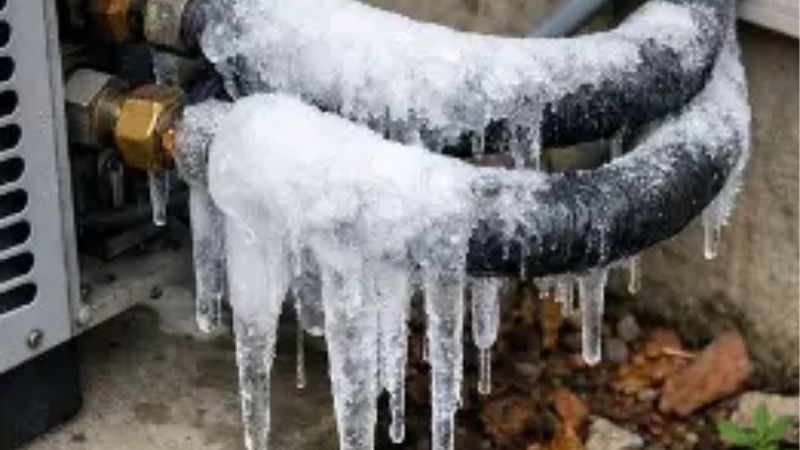
If you are asking why is my heat pump freezing up, first look at where the ice is and which season it is. A little frost on the outdoor coil while heating can be normal. A blocked outdoor unit, a failed defrost control, or a refrigerant or fan problem can cause thick, persistent ice. In summer, a frozen indoor cooling coil points to a different set of problems, often involving airflow.
Quick Answer: Check whether ordinary defrost removes a thin frost layer, then look for snow, leaves, drainage water, or a dirty accessible filter. Do not chip ice, open electrical compartments, or force a defrost sequence. Shut the system off and arrange qualified HVAC service if heavy ice remains, the fan is obstructed, or cooling-season ice appears indoors.
As an Amazon Associate we earn from qualifying purchases.
By DIY Ideas 4 Home Editorial Team
Why Your Heat Pump Freezes Up: Common Causes
A heat pump works in opposite directions across the year. In heating mode its outdoor coil absorbs heat from the air and can become cold enough for humidity to freeze. Trane’s residential heat pump troubleshooting guide explains that an outdoor coil may run about 10 to 20 degrees colder than the surrounding air, so some frost can appear even when the weather report is slightly above freezing. Identify the affected coil before deciding whether the icing is routine.
| Symptom or Sign | Likely Cause | First Check | DIY or Pro |
|---|---|---|---|
| Light outdoor frost during winter heating that later disappears | Normal moisture freezing between automatic defrost cycles | Observe from a safe distance whether frost clears without intervention | Monitor |
| Outdoor coil packed with snow or leaves | Airflow obstruction or runoff freezing around the unit | Look for nearby snowbanks, gutters, vegetation, and blocked drainage | Accessible ground debris only; pro for stubborn ice |
| Heavy outdoor ice that keeps growing or never clears | Defrost sensor, control, or reversing issue | Record when the ice appears and whether a normal thaw occurs | HVAC pro |
| Heavy ice with weak heat or fan not moving normally | Outdoor fan fault, coil problem, or refrigerant issue | Observe airflow and listen from outside the equipment | HVAC pro |
| Indoor coil or suction line iced while cooling in warm weather | Restricted return airflow or refrigerant-related cooling fault | Look at the filter and accessible return grilles | Shut down and call HVAC pro |
Normal Frost Between Winter Defrost Cycles
Frost does not by itself prove the heat pump is broken. In heating mode, humid air deposits moisture on a cold outdoor coil. The system should periodically reverse operation for a short automatic defrost cycle; some units may pause outdoor fan operation or briefly change the sound of the system. Lennox’s November 2025 explanation of the heat pump defrost cycle describes that process as a normal way to keep the coil exchanging heat.
The distinction is whether the frost clears and heating resumes. Carrier’s Heat Pump Troubleshooting Guide describes a light coating generally less than 1/4 inch as normal, while thicker ice or a solid coating that survives defrost needs attention. Treat that figure as Carrier’s troubleshooting reference, not a universal threshold for every heat pump. A thin white film during a damp morning is a different situation from a coil encased in solid ice.
Blocked Outdoor Airflow or Water Refreezing
Snow piled against the cabinet, leaves clinging to the coil, and tall vegetation can reduce the air passing through the outdoor heat exchanger. Cold-weather runoff creates another problem: water from an overflowing gutter or melting roof snow may drip onto the equipment and refreeze faster than the normal defrost process can clear it. Carrier identifies both blocked airflow and exterior water runoff as contributors to excessive outdoor icing.
Look around the base as well as the sides. A snowbank surrounding the stand or a frozen puddle under the unit can interfere with drainage, even when the top grille is clear. Do not put a cover over a running heat pump or pile snow against its casing. Clear loose ground-level snow and debris only where you can do so safely without touching the coil, fan, electrical conduit, or icy components.
Defrost Sensor or Control Trouble
If ice grows through several apparent heating cycles without a convincing thaw, the automatic defrost logic may not be working. Some models use coil-temperature and ambient-temperature information to decide when to defrost. A damaged sensor, a control board issue, or a malfunction in the refrigeration changeover mechanism can prevent the system from removing frost as designed. Trane names faulty defrost controls and sensors among the possible causes of a heat pump that stays frozen.
Carrier notes that a typical defrost event may last roughly 5 to 10 minutes, depending on design and outdoor conditions. That is not a timer homeowners should use to reset a unit or a guaranteed interval between cycles. Check your exact model’s manual before interpreting a display or status code. Repeatedly toggling the thermostat, defeating safety switches, or attempting a technician-only test mode can obscure the fault or worsen equipment damage.
Outdoor Fan, Refrigerant, or Coil Fault
A fan that has stopped moving air through the outdoor coil can allow ice to worsen, while inadequate refrigerant charge or a refrigerant leak may upset heat transfer. Dirty or damaged coil surfaces also impair performance. Carrier’s troubleshooting guide lists fan-motor faults and low refrigerant alongside defrost malfunctions. A technician must distinguish these conditions with proper measurements instead of assuming every frozen unit needs refrigerant added.
Watch from a safe distance rather than reaching toward the blades. Grinding, banging, repeated electrical breaker trips, unusually weak room heating, or visible ice near moving parts are stop signs. Refrigerant lines are part of a sealed system, and electrical capacitors can retain hazardous energy after the unit is switched off. Opening panels, replacing a fan motor, checking charge, and handling refrigerant are not suitable homeowner troubleshooting steps.
Frozen Indoor Coil During Summer Cooling
When a heat pump is cooling the house, the indoor coil acts as the evaporator. A dirty filter, blocked return grille, or dirty indoor coil can reduce airflow enough for that coil to become excessively cold and ice over. Trane’s guide to frozen evaporator coils also identifies refrigerant-related faults as possibilities. This is not the same as harmless winter frost on the outdoor unit.
Signs may include poor cooling, a refrigerator-like ice coating near the indoor coil housing, frost on an accessible refrigerant line, or unexpected water near the air handler as the ice melts. Do not open a sealed air-handler cabinet to search for ice. Trane advises turning the cooling system off when a frozen indoor coil is found and arranging service rather than continuing to run the compressor against the obstruction.
How to Check a Freezing Heat Pump Step by Step
Start with a visual check that does not involve opening the cabinet. Your immediate goal is to separate weather-related frost from ice that interferes with operation, not to repair the refrigerant circuit yourself. ENERGY STAR’s Clean Heating and Cooling guidance recommends keeping indoor and outdoor equipment free of debris and arranging routine professional maintenance. The steps below cover observations and accessible housekeeping only.
Step 1: Locate the Ice and Note the Season
From dry, stable ground, identify whether the visible ice is outside on the coil and cabinet, inside near the air handler, or on a refrigerant pipe. Take a photograph without putting your hands into the unit. Record the thermostat’s current Heat or Cool mode, the weather, and whether warm or cool air is reaching the rooms. A photograph taken before melting is often more helpful to a contractor than an account based on memory.
If you see only a thin outdoor frost coating while the heat pump is heating and the home remains comfortable, monitor it from indoors rather than interrupting a healthy defrost sequence. If you discover an indoor frozen coil while cooling, a fan blocked by ice, or a solid outdoor ice shell, switch the system Off at the thermostat and contact your service provider. Do not continue running it to see whether the ice will get worse.
Step 2: Observe Normal Defrost Without Forcing It
On a normally operating unit, winter frost should melt during its automatic defrost cycle. During the event you may notice water or vapor near the outdoor cabinet and temporary changes in airflow or noise. Lennox explains that this is a built-in heating-season function, not something the homeowner needs to activate manually. Avoid confusing vapor from warm defrost water with smoke, but treat any burning odor or electrical damage as an emergency.
Carrier’s 5-to-10-minute typical duration helps explain why a brief interruption can be ordinary, but your owner’s manual and weather conditions matter more than a stopwatch. If the frost repeatedly returns as heavy ice without clearing, document the pattern and book service. Do not select a hidden installer menu, change wiring, press a contactor, or pour water over the equipment in an attempt to hurry the cycle.
Step 3: Clear Nearby Debris and Check Drainage
Before approaching the cabinet, turn the system off following the owner’s instructions if you must work nearby. Sweep loose leaves and move snow away from the surrounding ground without touching the delicate metal fins, refrigerant tubing, or spinning-fan area. Carrier offers a general guideline of at least 24 inches of space around an outdoor heat pump while emphasizing that actual manufacturer clearance requirements take priority. Respect the specific model’s service, top, and discharge clearances.
Also look for a roof drip line, an overflowing gutter, or meltwater flowing directly onto the coil. The appropriate repair may be redirecting runoff outside the heat pump’s required clearance, rather than washing the coil or applying deicer. Keep salt, ice picks, hard scrapers, pressure washers, and hot water away from the cabinet. If ice is bonded to the equipment or freezes again after normal thawing, leave it for a technician.
Step 4: Check the Accessible Filter and Room Vents
For a ducted system, locate the user-serviceable filter according to the air-handler manual. Turn the system off using the manufacturer’s procedure, then inspect the filter for visible loading and verify that its dimensions and filtration resistance suit the equipment. Replace a disposable filter with the correct type or clean a reusable one only as the maker directs. Mini-split indoor heads may have washable screens instead of a central duct filter, so their instructions differ.
Walk the rooms and make sure return-air grilles are not hidden behind couches, rugs, or storage boxes. ENERGY STAR advises inspecting HVAC filters once a month, and the same program stresses keeping equipment clear for dependable airflow. A clean filter will not repair a failed outdoor defrost sensor, but it removes an avoidable problem and can help a cooling-season airflow issue. Restore all accessible covers before returning equipment to service when the original ice condition was minor and has cleared.
Step 5: Decide Whether the System Can Run
If the outdoor unit had only temporary light frost, heat output remains normal, and the frost clears on its own, there may be nothing to repair. Keep a dated note of conditions and continue normal maintenance. If you have heavy or growing ice, a nonworking outdoor fan, ice rubbing the fan, recurring cooling-season indoor icing, or unusually poor heating, leave the heat pump off and arrange an inspection. Repeated breaker trips require the same decision.
Some installations have a separate Emergency Heat or auxiliary-heating option that can protect room comfort while the heat pump is out of service. Whether it can be used, how it operates, and the likely additional cost depend on your system. Follow the specific thermostat and heating-equipment instructions; do not assume every heat pump has safe independent backup heat. For urgent cold exposure or loss of all heat, contact the HVAC service provider promptly rather than trying improvised heat sources.
Products That Help
The Filtrete MPR 1000 Allergen Defense Air Filter (1-inch) can be a practical replacement when a compatible ducted air handler has a dirty disposable filter. The 3M product page identifies it as an MERV 11, MPR 1000 filter and recommends changing the 1-inch version at least once every 90 days under its guidance. That recommendation does not override the monthly visual check advised by ENERGY STAR or your system’s required filter size and airflow limits. Check the current listing and the equipment manual before purchasing.
An AcuRite 00424 4.5-inch Digital Indoor/Outdoor Thermometer can help keep a simple record of weather during recurring outdoor frost. AcuRite’s 00424/00522 product information lists indoor and outdoor temperature readings and a manufacturer-stated accuracy of about 2 degrees Fahrenheit in either direction. Place the wireless sensor where its manual allows, away from exhaust discharge, fan blades, or electrical parts. A thermometer describes conditions; it cannot identify a refrigerant leak or certify that a defrost controller works. Confirm the current model and price before buying.
When to Call a Pro
Schedule a qualified HVAC technician when thick outdoor ice persists beyond normal defrost, the outdoor fan does not operate correctly, frost reforms quickly after clearing, a refrigerant line is icing unexpectedly, or the indoor coil freezes in cooling mode. Describe the season, photographs, thermostat settings, heat output, and any error message. The contractor can then check refrigerant charge and leaks, fan operation, temperature sensors, defrost controls, coil cleanliness, and the system’s drainage design.
Seek more urgent help for a fan hitting ice, abnormal grinding, a burning smell, visible wiring damage, or a breaker that repeatedly opens. Do not reset a tripping breaker again and again. Turn the system off using accessible normal controls if safe, stay away from damaged equipment, and contact an HVAC or electrical professional. Avoid opening panels: refrigerant handling and energized components require trained personnel, and mechanical damage from improvised deicing can make repairs more expensive.
Frequently Asked Questions
Even a healthy heat pump can look unusual in wet winter weather. These questions help interpret what happens around the unit without suggesting that visible condensation or one abnormal noise can diagnose a component failure.
Is Water Under the Heat Pump Normal in Winter?
Often, yes. Water can collect beneath the outdoor unit after its automatic defrost cycle melts frost off the coil. What matters is whether that water drains away instead of freezing around the base, restricting air circulation, or reaching the fan. Persistent standing water or a growing ice mound around the foundation calls for a drainage assessment and possibly service, not a chemical ice-melt treatment on the equipment.
Why Does White Vapor Appear Around My Outdoor Unit?
It can be water vapor rising as frost melts during defrost, especially when cold outdoor air makes the moisture visible. A short-lived cloud with otherwise normal operation is different from smoke accompanied by an acrid odor, electrical arcing, or loud mechanical sounds. If you suspect smoke or an electrical fault rather than harmless vapor, shut the unit off if it is safe and arrange professional attention.
Should I Put a Protective Cover Over My Heat Pump?
No, not over an operating outdoor heat pump unless the equipment manufacturer specifically provides and authorizes that accessory for the exact installation. Unlike some air conditioners stored for winter, a heat pump often needs outdoor airflow throughout the heating season. A loose cover can restrict that airflow, trap water, or interfere with the fan. The safer preventive approach is managing nearby snow, leaves, landscaping, and roof runoff while maintaining specified clearances.
Does a Frozen Heat Pump Always Mean Low Refrigerant?
No. Ordinary frost during winter heating, blocked airflow, drainage problems, faulty defrost controls, and fan trouble can all produce visible ice. Low refrigerant is one possible fault, not a diagnosis you can make by appearance alone. Carrier and Trane describe several overlapping causes, which is why a qualified technician should measure system conditions and look for leaks before deciding whether refrigerant work is necessary.
Final Thoughts
When tracking why is my heat pump freezing up, give the service technician one useful detail that people often miss: whether ice first appeared during heating, after a defrost event, or during cooling. Those observations point to different parts of the system and can save an unnecessary return visit. A compatible filter and a basic outdoor thermometer may help with ordinary monitoring, but neither substitutes for diagnosing persistent ice. Confirm replacement-filter compatibility before spending money, and keep the heat pump off if heavy freezing or mechanical danger remains.