Key takeaways
- You do not shop for a hammer drill because you want a faster way to hang a picture. You shop for one because a standard drill has just stalled.
You do not shop for a hammer drill because you want a faster way to hang a picture. You shop for one because a standard drill has just stalled against a brick wall, a concrete slab, or a block foundation, and you need to anchor a ledger board, a handrail, or a set of shelf brackets. A hammer drill adds a rapid forward-and-back pulse to the spinning bit, which chips away at masonry. Under 150 dollars, the choice is between a cordless hammer drill, a corded 1/2 inch model, and a corded SDS-Plus rotary hammer.
Those are three different tools, and it pays to know which one fits the holes you need. A 1/2 inch hammer drill handles small anchors in brick and block; an SDS-Plus rotary hammer is better for bigger holes and denser concrete. This guide leans on the listed specs and, where a title is cut off, asks you to confirm details on the listing. It was prepared for 2026 shopping and focuses on masonry anchoring rather than general woodworking.
Quick Picks
Our top picks



As an Amazon Associate we earn from qualifying purchases at no extra cost to you.
| Product | Best for | Key spec from the title |
|---|---|---|
| DEWALT DCD806B | Cordless masonry anchors | 20V MAX XR brushless, 1/2 inch, tool only |
| Hammerhead HAHD075 | Light corded masonry work | 7.5-amp, 1/2 inch, variable speed |
| CRAFTSMAN CMCD711C2 | Cordless kit with batteries | V20, 1/2 inch, 2 batteries, charger |
| DEKOPRO 6-Amp | Occasional hammer drilling | 1/2 inch, 12 bits, keyed chuck |
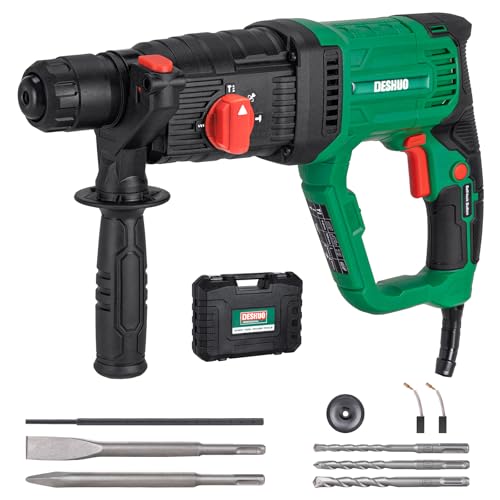
| Deshuo SDS-Plus | Concrete with SDS bits | 9-amp, 7.2 lbs, 4 functions |
| Seesii SDS-Plus | Bigger holes in masonry | 9-amp, 850W, 3J, 4 modes |
| 1-1/4 inch SDS-Plus | Heavy-duty demolition use | 12.5-amp, 4 functions |
How to Choose
Hammer drill or rotary hammer
A hammer drill uses a mechanical clutch to create vibration and accepts standard round-shank bits, which keeps costs down and covers small anchors in brick and block. A rotary hammer uses a piston mechanism, listed in joules, for stronger impacts, and it takes SDS-Plus bits. If you plan on holes larger than about 3/8 inch in concrete, the rotary design is usually the more comfortable choice.
Corded or cordless
Corded tools list amperage; a 6 to 9 amp motor is normal in this class. Cordless tools list voltage and battery details, and a bare tool still needs batteries. If masonry work is occasional, corded saves money. If you also want a regular drill, a cordless hammer drill with a two-speed gearbox does both jobs.
Impact rate and chuck type
Look for impacts per minute or joules, plus a mode selector that turns the hammer function off so the tool can also drill wood and metal. A keyed chuck grips round bits firmly under vibration, while a keyless one is faster but may slip. SDS-Plus tools use a quick-lock shank that does not slip at all.
What to ignore and where budgets cut corners
Ignore large accessory counts, since masonry bits wear out and good ones are bought separately. Budget models cut corners on depth stops, side handles, and cases. Check that the kit includes a side handle, because a tool that twists in your hands can injure a wrist, and always wear eye and hearing protection. Drilling concrete also produces fine dust, so use a dust mask rated for it, work with the wind at your back outdoors, and vacuum rather than sweep afterward.
The 7 Best Options
DEWALT DCD806B
This is a 20V MAX XR brushless 1/2 inch hammer drill sold as a bare tool, so the battery and charger are extras. It suits a buyer already invested in the 20V MAX battery family who wants masonry capability without carrying a cord. Brushless motors generally run cooler and last longer than brushed ones, which is useful on a tool that works hard. The XR label in the title also points to a step above the entry line, so it is the premium-leaning pick for cordless buyers in this tier, provided the missing battery fits your budget.
- Brushless design is a plus for tools that will see heavy use.
- Cordless convenience for anchor work around the yard.
- Trade-off: tool only, so the total cost grows if you need a battery and charger.
Skip it if you have no compatible batteries and only need the tool for one or two holes.
Hammerhead HAHD075
A corded 7.5-amp hammer drill with a 1/2 inch chuck, variable speed, and six bits. For a homeowner who needs to drill a few anchor holes for a handrail or a mailbox post, this keeps the price low and delivers steady power. The cord removes any worry about a battery giving out in the middle of a hole in brick. It is also a sensible loaner-style tool for a household that reaches for masonry once a year, since there is nothing to charge or maintain between jobs.
- Corded power avoids battery limits on long holes.
- Variable speed gives control when starting a bit in masonry.
- Trade-off: the included bits are basic, so plan to buy better masonry bits.
Skip it if you want to work far from an outlet or in places where a cord gets in the way.
CRAFTSMAN CMCD711C2
The kit includes a V20 cordless hammer drill with a 1/2 inch chuck, two batteries, and a charger, according to the title. It is a convenient all-in-one for someone who wants a regular drill that can also pulse into masonry occasionally. Two batteries mean one can charge while the other works. That matters because hammer action drains a pack faster than ordinary drilling, so a spare keeps a weekend of anchor holes from turning into a stop-and-wait chore.
- Two batteries and a charger are included.
- One tool serves both everyday drilling and light masonry anchors.
- Trade-off: a cordless hammer function suits small anchors, not large or repeated concrete holes.
Skip it if you expect to drill many holes in poured concrete, where a corded rotary hammer is better.
DEKOPRO 6-Amp
This corded 1/2 inch hammer drill lists variable speed, twelve bits, two functions in one, and a keyed metal chuck. It is the basic option for a small project, such as fastening a ledger board to a brick wall, and it adds a mode selector so the same tool drills wood. A keyed chuck holds bits securely under vibration. The listing mentions twelve bits, but masonry bits in particular are worth upgrading, since a dull bit makes any hammer drill feel underpowered and generates extra heat and dust.
- Keyed metal chuck holds bits firmly.
- Two functions let it drill wood and masonry.
- Trade-off: a 6-amp motor is on the light side for repeated concrete work.
Skip it if your masonry jobs involve dense concrete or holes larger than a few anchors.
Deshuo SDS-Plus
A 1 inch SDS-Plus rotary hammer rated at 9 amps and 7.2 pounds, with four functions and reverse variable speed. SDS-Plus bits lock in without slipping, which makes the tool more effective in concrete than a standard hammer drill. It suits a homeowner planning a patio rail, fence post anchors, or a basement project. The reverse and variable speed controls let you back a bit out of a stuck hole, and the weight is listed, so you can judge whether overhead drilling is realistic for you.
- SDS-Plus system improves efficiency in concrete.
- Four functions allow drilling, hammering, and chiseling modes.
- Trade-off: SDS bits are a different shank, so existing round-shank bits will not fit without an adapter.
Skip it if you only need to drill wood and a few small holes in brick.
Seesii SDS-Plus
This 9-amp SDS-Plus model lists 850W, 3 joules of impact energy, and four modes with a safety clutch. The joule figure is useful, since it helps you compare impact strength between rotary hammers. It targets buyers drilling larger holes in concrete and masonry without paying for a professional-grade model. A safety clutch and a four-mode selector make it flexible for a DIYer who might switch between drilling and light chiseling in the same afternoon, which is handy on remodeling days.
- Stated 3J impact energy provides a clear point of comparison.
- Safety clutch is a sensible feature when a bit binds.
- Trade-off: it is a lesser-known brand, so check support and parts availability.
Skip it if you prefer a familiar name or need a cordless tool.
1-1/4 inch SDS-Plus
The most powerful corded option here, listing 12.5 amps, four functions, and a demolition mode for concrete. The heavy-duty label suits a renovation project with a lot of masonry. Titles for this style of tool are often cut off, so confirm the brand and accessories on the listing. Buyers tearing out old tile, breaking up a small slab, or opening a wall for a doorway are the audience, though a tool this size is tiring to hold overhead, so plan breaks and keep a helper nearby for lifting.
- Highest listed amperage among the corded SDS tools.
- Chiseling mode supports light demolition.
- Trade-off: it is heavier and more tool than most one-time projects require.
Skip it if you only need a handful of small anchor holes.
Which One Fits Your Situation
You need a few anchor holes in brick
The Hammerhead HAHD075 or DEKOPRO 6-Amp are enough for light jobs, and they also drill wood, so one tool covers the small masonry job and the regular household drilling that follows it.
You want one tool for drilling and occasional masonry
The CRAFTSMAN CMCD711C2 kit pairs a cordless drill with a hammer function and two batteries.
You are anchoring into poured concrete
Take the Seesii or Deshuo SDS-Plus rotary hammer for the stronger impacts and secure bit lock. Buy a few SDS-Plus bits in the sizes your anchors need, since those usually are not included in meaningful numbers.
You already own 20V MAX batteries
The DEWALT DCD806B joins your existing battery lineup without a new charger. Budget for a battery first, because the listing makes clear it is the bare tool and nothing else.
Common Mistakes
- Using a standard drill driver on masonry and expecting it to cut through.
- Buying a hammer drill when the job calls for an SDS-Plus rotary hammer.
- Leaving the hammer mode on while drilling wood or metal.
- Using worn or non-masonry bits, then blaming the tool for slow progress.
- Skipping eye and ear protection, or removing the side handle.
Related guides
- Battery Powered Floodlight Camera With Local Storage
- Cordless Drill Brush Attachment For Bathroom Grout
- Rechargeable Emergency Lantern For Power Outages
Frequently Asked Questions
Can a hammer drill go through concrete?
It can make small anchor holes with proper masonry bits, though dense concrete is slow work. For bigger or repeated holes, a rotary hammer is better suited.
What is the difference between a hammer drill and an impact driver?
A hammer drill pulses forward to break up masonry while drilling. An impact driver spins with rotational bursts to drive screws and has no forward hammer action.
Do I need special bits?
Yes. Use carbide-tipped masonry bits for a hammer drill and SDS-Plus bits for a rotary hammer. Standard wood or metal bits wear out quickly in masonry.
Is a cordless hammer drill enough?
For a handful of small anchors, yes. For regular concrete work, corded SDS-Plus tools offer more consistent power and are less likely to run out of battery midjob. If you only own a standard drill driver today, a hammer drill is the logical upgrade; an SDS-Plus tool is a second purchase for specific concrete projects, not a replacement for a general drill.
More from Amazon
Programs that pair well with the guide above. Offers and eligibility are set by Amazon and may change.
A free business account with business pricing and bulk-buying tools for work, shop or home office.
Create a business accountFree shipping on eligible items, Prime Video and more. Eligible new members can start with a free trial.
Start a Prime free trialAudiobooks and podcasts to listen to on the go. Eligible new members can start with a free trial.
Try Audible freeAd-free music streaming. Eligible new subscribers can start with a free trial.
Try Music Unlimited freeAs an Amazon Associate we earn from qualifying purchases.