Key takeaways
- "Motion sensor" covers at least three different products, and mixing them up is the fastest way to buy the wrong one.
“Motion sensor” covers at least three different products, and mixing them up is the fastest way to buy the wrong one. Some are wireless driveway alarms that chime in the house when a vehicle or visitor crosses a beam. Some are indoor detectors that ring a receiver in another room. Others are wall switches that turn a light on when someone walks in. The first job is deciding whether you want an alert, a light, or both, and how far the signal has to travel across your property.
This guide is for owners of long driveways, rural lots, workshops, and small businesses, as well as renters who want a battery-powered chime at the door. It compares six options by range, sensor count, weather resistance, and power style, using only the details in the product titles. Motion sensors are one layer of awareness and not a guarantee of protection, so confirm specs on each listing and follow local rules and any manufacturer instructions. In 2026, wireless receivers with a long stated range remain the simplest way to cover a driveway.
Quick Picks
Our top picks


As an Amazon Associate we earn from qualifying purchases at no extra cost to you.
| Product | Best for | Key spec from the title |
|---|---|---|
| Half-Mile Driveway Alarm | Long rural driveways | 1/2 mile range, 1 receiver, weather resistant |
| Indoor 4-Sensor Alarm Set | Homes wanting room-to-room chimes | 4 detectors, 2 alarms, 300 foot range, 38 chime tunes |
| 1byone Driveway Alarm | Mid-length driveways | 1 receiver, 2 infrared sensors, 1000 ft range, weatherproof |
| ELEGRP Occupancy Sensor Switch | Hands-free lighting indoors | PIR infrared, no neutral wire, single pole |
| Wireless Motion Light Alert | Shops and small stores | 500 ft range, chimes, door sensor, LED light |
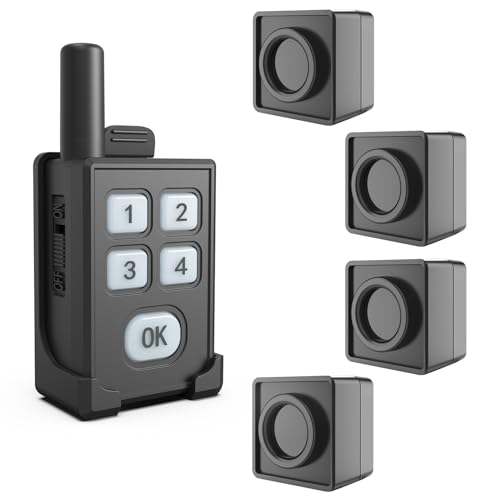
| Perimeter Trip Alarm | Camping and temporary sites | 1 receiver, 4 sensors, portable, outdoor wireless |
How to Choose
Pick the job: alert, light, or both
A driveway alarm and an occupancy switch share a name but solve different problems. Alarms send a signal to a plug-in or battery receiver, and light switches simply replace the wall switch. If your goal is hands-free lighting in a laundry room, a PIR switch is correct. If you want to know when a car turns into the lane, you need a wireless sensor with a receiver and a clear line of sight.
Treat range numbers as best-case
Ranges such as 300 feet, 500 feet, 1000 feet, and a half mile are measured in open air. Walls, trees, metal buildings, and hills reduce the effective distance, often by half or more. If the receiver must sit in a house far from the sensor, choose a model with a stated range well above the real distance. Test placement before permanent mounting, and check whether the receiver is powered by outlet or battery.
Check sensor count and weather rating
One sensor covers one point, so a lane with two entrances calls for two. Kits that list two or four sensors per receiver give more coverage for the cost. Outdoor use requires a weatherproof or weather-resistant rating on the listing, and sensors still need protection from direct sun and heavy snow load. Indoor-only units should stay inside.
Wiring, chimes, and where budget models cut corners
Wall switches vary by wiring: a no-neutral design suits older homes, and the load type, such as LED, CFL, or incandescent, should match your bulbs. For alarms, look for a mute mode and adjustable volume if the receiver sits in a bedroom. Inexpensive units may trigger on passing animals or blowing branches, so expect occasional false alerts. Follow local codes for any wired installation, and hire an electrician if you are unsure.
The 6 Best Options
Half-Mile Driveway Alarm
This DIY wireless alert system lists a half-mile range, a receiver paired with one or two sensors depending on the version, and an outdoor weather-resistant design. It is aimed at long rural driveways where a visitor crossing the lane should produce a chime in the house. The DIY label in the title suggests a no-wiring setup: place the sensor along the lane, put the receiver where you will hear it, and adjust from there. For properties where the house sits far back from the road, that kind of reach is the main reason to look at this style.
- The half-mile range claim is the longest on this list.
- Weather resistance suits a sensor mounted outdoors.
- Trade-off: range drops with obstacles, so test it before choosing a mounting spot.
Skip it if you want indoor use with room-to-room chimes. Buyers should also compare the one-sensor and two-sensor versions before ordering, since a lane with a gate and a side entrance needs more than one detection point. Anyone relying on it for peace of mind should remember it is a chime, not a guard.
Indoor 4-Sensor Alarm Set
This indoor kit includes four motion detectors and two alarms with a 300 foot wireless range, 38 chime tunes, and a mute mode. It doubles as a doorbell-style chime, which suits homes that want to know when someone enters a room or shop. Having two alarms means one can sit in a kitchen and another in a bedroom or office, so the chime follows the household. The mute mode helps during naps, meetings, or quiet hours.
- Four detectors cover multiple doorways or rooms.
- Thirty-eight chime tunes and a mute mode allow customization.
- Trade-off: it is described for indoor use, so it is not a driveway solution.
Skip it if you need outdoor coverage or if you dislike the idea of alarms inside the home. Households with frequent visitors or small children moving around may also find a constant chime tiresome, so think through how it will be used before buying.
1byone Driveway Alarm
The 1byone package pairs one receiver with two infrared sensors, lists a 1000 foot (300 meter) range, extra loud chimes, and weatherproof construction. It is positioned for security-minded owners with a mid-length lane who want a bigger kit than a single sensor. The title’s emphasis on extra loud chimes suggests the receiver is meant to be heard across a large house, a workshop, or a barn. Kits like this also pair naturally with a gate, since one sensor can cover the gate and the other the lane.
- Two infrared sensors cover two points, such as a gate and a side path.
- Weatherproofing is named in the title.
- Trade-off: loud chimes may be too much for a small home without a volume option, so check the listing.
Skip it if you need a half-mile range or a quiet, discreet alert. Check the listing for battery type and whether the receiver offers a volume adjustment, since a very loud chime in a small home can wear thin fast.
ELEGRP Occupancy Sensor Switch
This PIR infrared wall switch turns a light on when it detects someone, and the title notes no neutral wire, single-pole use, and compatibility with CFL, LED, and incandescent bulbs. It is a lighting product, not an alarm. Typical uses include closets, garages, pantries, and hallways where hands are full and a light that comes on by itself is a real convenience. Check the listing for how it is powered and mounted.
- The no-neutral design helps in older homes.
- Bulb compatibility is stated in the title.
- Trade-off: it only controls a light, so it will not alert you in another room.
Skip it if you want a chime or a wireless sensor. Anyone unsure about wiring should consult a licensed electrician. Also confirm that your bulbs and fixtures match the load types in the title before ordering, because an incompatible load can cause flicker or poor performance.
Wireless Motion Light Alert
This small alert system lists a 500 foot range and combines a motion detector, door sensor, chime, and LED light into one package for homes, businesses, and stores. It is tuned toward shop owners who want a chime when customers enter. The door sensor element means it can work as an entry notice for a back room, a stockroom, or a home office, and the light adds a visual cue in noisy spaces where a chime alone is easy to miss.
- The combined light and chime offer visual and audible cues.
- A 500 foot range covers a typical building footprint.
- Trade-off: the title does not list weather resistance, so use it indoors unless the listing says otherwise.
Skip it if you need outdoor driveway coverage. It also isn’t the right pick if you need several separate sensors, since the title does not list a multi-sensor count.
Perimeter Trip Alarm
This portable outdoor alarm comes with one receiver and four sensors and is described for camping, wildlife awareness, and personal use. It suits temporary sites where permanent installation is not practical. Hunters, campers, and people who work on remote lots may like a setup they can carry in a bag, place at the edges of a site, and pack away afterward. The receiver stays with the user, and the sensors mark the approach routes.
- Four sensors give broad perimeter coverage.
- Portability suits a campsite or hunting blind.
- Trade-off: it is an alert tool and not a deterrent.
Skip it if you want a permanent fixture or a wall-mounted switch. Anyone using it for wildlife awareness should respect local rules and keep a safe distance from animals. Weather exposure over many months is a question for the listing details.
Which One Fits Your Situation
You live at the end of a long gravel lane
The Half-Mile Driveway Alarm is built for that, and the 1byone Driveway Alarm adds a second sensor.
You run a small shop and want an entry chime
The Wireless Motion Light Alert or the Indoor 4-Sensor Alarm Set fit best, depending on whether you want a light or more detectors.
You want lights that switch on automatically
The ELEGRP Occupancy Sensor Switch is the only lighting option here.
You camp or work on temporary sites
The Perimeter Trip Alarm gives four portable sensors with one receiver.
Common Mistakes
- Buying an alarm when the goal was automatic lighting, or the reverse.
- Trusting range numbers without allowing for walls, trees, and hills.
- Mounting the sensor where branches or pets will trigger it constantly.
- Skipping a battery check, which leaves the receiver silent at the wrong time.
- Assuming a motion sensor protects a property instead of treating it as one layer of awareness.
Related guides
- Battery Powered Floodlight Camera With Local Storage
- Cordless Drill Brush Attachment For Bathroom Grout
- Rechargeable Emergency Lantern For Power Outages
Frequently Asked Questions
How far does a wireless driveway alarm reach?
Listings cite 300 feet to a half mile in open air. Real distance is shorter with obstacles, so test before mounting.
Can motion sensors tell cars from animals?
Basic infrared units detect heat and movement, so animals can trigger them. Aim and position the sensor to reduce false alerts.
Do these sensors need wiring?
The alarm kits are wireless, while the occupancy switch must be wired. Follow local electrical codes for any wiring.
Will a sensor stop a break-in?
No. It only provides an alert, so treat it as one layer of awareness and follow local rules. Good lighting, locks, and neighbors who notice unusual activity all matter just as much as any sensor.
More from Amazon
Programs that pair well with the guide above. Offers and eligibility are set by Amazon and may change.
A free business account with business pricing and bulk-buying tools for work, shop or home office.
Create a business accountFree shipping on eligible items, Prime Video and more. Eligible new members can start with a free trial.
Start a Prime free trialAudiobooks and podcasts to listen to on the go. Eligible new members can start with a free trial.
Try Audible freeAd-free music streaming. Eligible new subscribers can start with a free trial.
Try Music Unlimited freeAs an Amazon Associate we earn from qualifying purchases.