Our Short List of 3
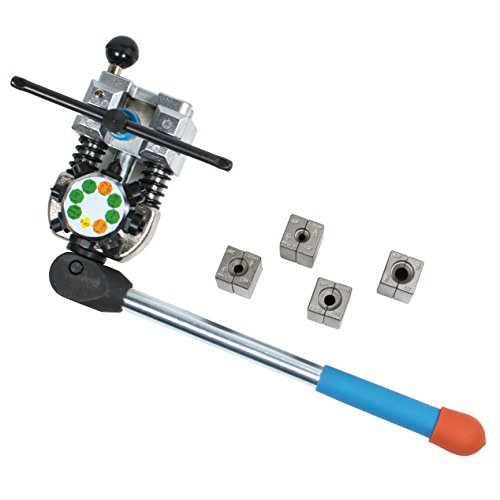
- Best for: Bench-built brake and fuel lines where one tool must cover single, bubble and double flares.
- Flare types: single, bubble and double flares
- Flare angle: 45 degrees
- Tube sizes: 3/16, 1/4, 5/16 and 3/8 inch
- Tubing materials: steel, stainless steel and soft metal, per listing

- Best for: Occasional brake and fuel line repairs with one boxed kit that also cuts and reams the tube.
- Flare types: 45-degree double or single flares
- Adapters: 7 flare adapters, for 3/16 to 5/8 inch tubing per title
- Set contents: flare bar, flaring cone, 7 adapters, tubing cutter and carrying case
- Tubing materials: soft steel, aluminum, brass and copper

- Best for: European and Japanese cars whose 3/16 inch lines mix bubble seats with SAE double flare ports.
- Tube size: 3/16 inch (4.75 mm)
- Flare types: ISO/DIN bubble flare and 45-degree SAE double flare from a single die
- Tubing materials: non-stainless steel, aluminum, nickel and copper, per listing
- Format: compact on-vehicle tool, detachable die also fits a bench vise
All 4 Picks at a Glance
| Product | Specs | Action |
|---|---|---|
| TGR Professional Brake Line Flaring Tool |
| Check price on Amazon |
| SEGELPRO Automotive Double Flaring Tool Kit |
| Check price on Amazon |
| Capri Tools 3/16 in. Dual Head Flaring Tool |
| Check price on Amazon |
 Titan 51515 1/4-Inch Double Flaring Tool |
| Check price on Amazon |
Key takeaways
- Five flaring kits compared by flare type, tube size range and format, covering double, bubble and 45-degree single flares for brake, fuel and HVAC lines.
The real decision with a flaring tool is not force or finish, because the wrong flare shape will leak no matter how neatly it is formed. A double flare belongs on the inverted seats used by most American brake systems, a bubble flare matches the rounded seats on many European and Japanese cars, and a plain 45-degree single flare is the pattern HVAC and fuel fittings expect. Pick the tool that makes your fitting shape first, then worry about size range.
This guide is for home mechanics replacing brake or fuel lines, owners of older European and Japanese cars with bubble seats, and HVAC helpers flaring copper line sets. Every kit below was chosen from the flare types, tube sizes and parts named in its Amazon title and product details. A flaring tool forms the flared end on the tube itself, which separates it from flare nut wrenches, covered in a separate guide, and from tubing benders, also covered separately in this pack.
Quick Picks
As an Amazon Associate we earn from qualifying purchases
| Product | Best for | Key spec from title |
|---|---|---|
| TGR Professional Brake Line Flaring Tool | Bench work covering single, bubble and double flares in one turret head | 45-degree set, single, bubble and double flares |
| SEGELPRO Automotive Double Flaring Tool Kit | A classic yoke and bar kit with cutter for occasional line repairs | 7 dies from 3/16 to 5/8 inch, 45-degree flares |
| Capri Tools 3/16 in. Dual Head Flaring Tool | Cars that mix bubble and double seats on 3/16 inch line | Makes 4.75 mm ISO/DIN bubble and 3/16 inch SAE double flare |
| Titan 51515 1/4-Inch Double Flaring Tool | On-vehicle double flares on 1/4 inch line in tight bays | 1/4-inch double flaring tool with removable handle |
| Wostore Tubing Flaring Tool Kit | HVAC copper work needing smooth, even 45-degree flare walls | Eccentric cone, 7 dies for 3/16 to 3/4 inch copper pipes |
How to Choose
Match the flare type to the seat in the fitting
A flare seals against the seat inside the fitting, and the two shapes are not interchangeable. Double flares fold the tube wall back on itself for the inverted 45-degree seats common on American brake lines, while bubble flares leave a rounded dome for metric ports on many European and Japanese cars. Single 45-degree flares suit softer copper and aluminum in fuel and HVAC work. Check the port you are joining before ordering, because a double flare forced into a bubble seat will weep under pressure even when it looks tidy.
Check the tube sizes and adapters inside the box
Most brake work uses 3/16 inch line, fuel lines often step up to 5/16 or 3/8 inch, and HVAC copper runs from 1/4 to 3/4 inch. A kit only helps if its dies or adapters cover the exact outside diameter in your hand, so read the size list on the listing rather than the headline range. Turret heads carry several dies on one rotating block, bar kits use loose adapters that are easy to misplace, and single-size inline tools cover one diameter only, which is fine when a whole car uses that one size throughout.
Decide between on-vehicle inline tools and bench clamp kits
Where the flare happens shapes the tool you want. Inline tools from Capri Tools and Titan clamp around a line that is still routed along a frame rail, so a rusted section can be cut out and re-flared without pulling the whole run. Turret and yoke kits need the tube held in a bench vise, which gives a steadier, squarer result for building full lines on the bench. Hydraulic assist exists for very hard line, but for steel and nickel-copper in these sizes, a well-made screw or lever tool covers most home garage work.
Look for an eccentric cone on HVAC copper work
On copper line sets, flare quality shows up as wall evenness, because a lopsided wall leaves a thin spot that cracks when the nut is tightened. An eccentric cone sits slightly off center and rolls around the tube end as it advances, ironing the metal outward in a smooth spiral instead of pushing it straight ahead. The Wostore kit below uses that layout, as do the better HVAC-only tools. For brake line double flares the folding punch matters more than cone geometry, so weigh this feature mainly when refrigerant or water lines are the main job.
The 5 Best Options
TGR Professional Brake Line Flaring Tool
- Best for: Bench-built brake and fuel lines where one tool must cover single, bubble and double flares.
- Flare types: single, bubble and double flares
- Flare angle: 45 degrees
- Tube sizes: 3/16, 1/4, 5/16 and 3/8 inch
- Tubing materials: steel, stainless steel and soft metal, per listing
Bench-built brake and fuel lines where one tool must cover single, bubble and double flares.
It mounts in a bench vise, so it cannot form a flare on a line still fitted to the car.
This vise-mounted turret tool from Tool Guy Republic suits a home mechanic who builds complete brake lines on the bench and wants one head that handles the whole job. Its rotating die block forms single, bubble and double flares at 45 degrees, so the same setup covers an American double flare in the morning and a bubble flare on a metric fitting later. The maker lists it for steel, stainless steel and soft metal tubing across four common line sizes, and the T-handle screw clamp holds the die setting while the lever forms each end.
SEGELPRO Automotive Double Flaring Tool Kit
- Best for: Occasional brake and fuel line repairs with one boxed kit that also cuts and reams the tube.
- Flare types: 45-degree double or single flares
- Adapters: 7 flare adapters, for 3/16 to 5/8 inch tubing per title
- Set contents: flare bar, flaring cone, 7 adapters, tubing cutter and carrying case
- Tubing materials: soft steel, aluminum, brass and copper
Occasional brake and fuel line repairs with one boxed kit that also cuts and reams the tube.
Loose adapters are easy to drop in gravel or grass, and the bar must be clamped firmly or the tube slips mid-flare.
SEGELPRO keeps the traditional yoke, bar and loose adapter layout that many mechanics learned on, and bundles the extras a first line repair usually needs. Seven adapters span the sizes found on brake and fuel tubing, the cone forms 45-degree double or single flares, and the included cutter with a fold-away reamer handles the cutting and deburring steps in the same case. It is aimed at soft steel, aluminum, brass and copper tube, which fits the copper-nickel and mild steel lines most home garages run, rather than hard stainless work.
Capri Tools 3/16 in. Dual Head Flaring Tool
- Best for: European and Japanese cars whose 3/16 inch lines mix bubble seats with SAE double flare ports.
- Tube size: 3/16 inch (4.75 mm)
- Flare types: ISO/DIN bubble flare and 45-degree SAE double flare from a single die
- Tubing materials: non-stainless steel, aluminum, nickel and copper, per listing
- Format: compact on-vehicle tool, detachable die also fits a bench vise
European and Japanese cars whose 3/16 inch lines mix bubble seats with SAE double flare ports.
It covers 3/16 inch tubing only, and the maker excludes stainless steel line, so check your tube material first.
Capri Tools built this compact tool around one very common problem: a 3/16 inch line that needs a bubble flare at one end and a double flare at the other. One die produces the 4.75 mm ISO/DIN bubble flare and the 45-degree SAE double flare, so there is no adapter swap between the two operations. The body works on the car in tight spots, the die detaches for bench vise use, and the listing says only a 10 mm and a 17 mm wrench are needed to run it, which keeps the toolbox list short on a driveway repair.
Titan 51515 1/4-Inch Double Flaring Tool
- Best for: On-vehicle repairs to 1/4 inch brake lines where access is tight and the line stays on the car.
- Tube size: 1/4 inch
- Flare type: inverted 45-degree SAE double flare
- Tubing materials: steel and nickel-copper brake line, per listing
- Handle: removable, for tight on-vehicle work
On-vehicle repairs to 1/4 inch brake lines where access is tight and the line stays on the car.
One size and one flare shape only, and Titan says it is not recommended for stainless steel tubing.
Titan takes the opposite approach to a multi-size kit and machines this tool for exactly one job: an inverted 45-degree SAE double flare on 1/4 inch brake line. That focus pays off under a car, where the short body and removable handle let you form a flare on a line still clipped to the chassis instead of removing the whole run for bench work. The listing covers steel and nickel-copper tubing, the two materials most 1/4 inch replacement lines come in, and the tool is small enough to live in a road kit for older trucks and vans.
Wostore Tubing Flaring Tool Kit
Wostore aims this kit at HVAC and refrigeration copper rather than brake lines, and the eccentric cone is the reason to pick it. The hardened cone mounts off center in needle bearings, so it rolls around the tube end and spreads the wall evenly, which is what a flare nut needs to seal on a line set. Seven dies cover the full spread of residential copper sizes from small liquid lines to 3/4 inch suction lines, and the maker rates it for soft copper, brass, aluminum and mild steel with wall thickness up to 0.035 inch.
Specs
- Die sizes: 3/16, 1/4, 5/16, 3/8, 1/2, 5/8 and 3/4 inch outside diameter
- Flare angle: 45 degrees
- Cone: eccentric, hardened steel, mounted in needle bearings
- Tubing materials: soft copper, brass, aluminum and mild steel up to 0.035 inch wall
- Set contents: flaring cone, flaring bar, blow molded storage case and manual
- Model: 1004
Best for: Mini-split and line set installs where even copper flare walls matter more than brake line shapes.
Watch out for: It forms single 45-degree flares only, so it cannot fold the double flare a brake system needs.
ASIN: B07T4FX9JX
Which One Fits Your Situation
You are replacing a rusted brake line section under the car
Leaving the line in place saves hours of unclipping and re-routing, so reach for a tool that clamps around the tube where it sits. The Capri Tools dual head handles 3/16 inch bubble and double seats, while the Titan covers 1/4 inch double flares. Cut out only the bad section, flare both ends, and join them with a union and the nuts for each seat shape.
You are building a full set of lines on the bench
Bench work rewards a turret head and a solid vise, because every end can be formed square and checked before the line goes on the car. The TGR tool covers single, bubble and double flares across four sizes, so one setup handles a mixed fleet. The SEGELPRO kit is the simpler bench option for plain double flares, with a cutter and reamer in the box.
Your car uses bubble flares on metric ports
Many European and Japanese brake systems seat on a rounded bubble rather than a folded double flare, and forcing the wrong shape into the port invites a slow leak. The Capri Tools dual head makes the 4.75 mm ISO/DIN bubble on 3/16 inch line, and the TGR turret also lists bubble flares for bench work. Match the nut thread to the port as well, since bubble seats usually pair with metric threads.
You are flaring copper for a mini-split install
Refrigerant copper needs a smooth, even single flare at 45 degrees, formed gently so the wall does not crack. The Wostore kit is the pick here, because its eccentric cone rolls the wall outward evenly across seven sizes up to 3/4 inch. Keep the other four kits for vehicle lines, since their dies and punches are shaped around brake and fuel flare patterns rather than line set work.
Common Mistakes
- Forming a double flare for a bubble seat port, or the other way round, because the two shapes look similar on the bench but seal on different surfaces.
- Forgetting to slide the flare nut onto the tube before flaring, which means cutting off a good flare and losing line length to redo it.
- Leaving the cut end burred or slightly angled, so the flare forms off center and the thin side cracks when the nut is tightened.
- Clamping the tube with the wrong amount of stick-out above the bar, which gives a flare that is too small to seat or too tall to fold cleanly.
- Using a single flare on a brake line to save time, when brake systems call for the folded strength of a double flare or the correct bubble shape.
Frequently Asked Questions
Can I use a double flare where a bubble flare belongs?
No. The seats differ in shape, so a folded double flare cannot seal against the rounded bubble seat, and the joint may hold before weeping under pedal pressure. Match the flare to the port, and when a car mixes both shapes, use a tool that forms each type, such as the Capri dual head or the TGR turret.
Why does my flare crack on one side as I form it?
A crack traces back to tube prep or material. A burred or angled cut leaves one wall thinner, hard or work-hardened tube resists folding, and stainless line defeats tools rated for softer metal. Cut square, deburr, confirm the tool is rated for your tubing material, and practice on scrap before forming the end that matters.
Do I need a different tool for HVAC copper lines?
Usually, yes. HVAC work uses a single 45-degree flare on soft copper, and an eccentric cone tool such as the Wostore forms a smoother, more even wall. Brake kits can flare copper in a pinch, but their dies center on double and bubble shapes for vehicle lines, so a dedicated HVAC kit gives a cleaner result on line sets.
How much tube should stick out of the bar before flaring?
Follow the gauge or step in your kit, since stick-out sets the finished flare size. Too little tube leaves a small flare that pulls through the seat, while too much makes a tall flare that folds unevenly or splits. Most bar kits use the adapter face as the height guide, so set the tube flush with that reference.
More from Amazon
Programs that pair well with the guide above. Offers and eligibility are set by Amazon and may change.
A free business account with business pricing and bulk-buying tools for work, shop or home office.
Create a business accountFree shipping on eligible items, Prime Video and more. Eligible new members can start with a free trial.
Start a Prime free trialAudiobooks and podcasts to listen to on the go. Eligible new members can start with a free trial.
Try Audible freeAd-free music streaming. Eligible new subscribers can start with a free trial.
Try Music Unlimited freeAs an Amazon Associate we earn from qualifying purchases.