Key takeaways
- Measure your wall clearance first: Standard recliners need 12 to 18 inches behind them to fully extend. Wall-hugger designs, like the Watson & Whitely, pivot the seat forward instead of pushing back, so 4 to 6 inches is often enough. Tape out the footprint on your floor before you buy anything.
- Understand the upholstery labels: “Genuine leather” usually means top-grain on contact surfaces with split leather or vinyl on the sides and back — that’s normal and fine. “Faux leather” and “PU” are polyurethane over fabric backing, which is easy to wipe but will eventually crease and peel at high-flex points. Woven fabric breathes better and hides wear, but absorbs spills.
- Power versus manual is a maintenance decision: Manual mechanisms use a lever and spring assembly — fewer parts to fail, nothing to plug in, but you need core strength and free hands to operate them. Power units add motors, wiring harnesses, and a transformer brick, and give you infinite stopping positions plus adjustable headrests. Both are repairable; power just has more to go wrong.
- Check the frame and the reclining hardware: Look for kiln-dried hardwood or engineered lumber in the frame and steel in the reclining mechanism. Ask whether replacement mechanisms are available, because that’s the component that fails first on a sofa that gets daily use.
- Plan the delivery route: Most three-seat recliners arrive in two or three boxes and assemble with bolt-together back panels, which is a real advantage for tight stairwells. Single-piece delivery means measuring every doorway, turn, and ceiling height along the path.
What's inside
Shopping for a reclining sofa means wading through spec sheets that all sound identical. Every listing promises plush comfort and durable construction, but the differences that actually matter — frame material, mechanism type, how much wall clearance the thing needs, whether the upholstery will crack in two years — are buried or omitted entirely. I’ve disassembled enough furniture to know that the part you can’t see determines how long you’ll keep it, and most product pages tell you nothing about it.
This guide takes a builder’s view of six reclining sofas worth considering in 2026. I’m looking at what holds the recline mechanism together, how the upholstery is likely to age, what the power features actually deliver, and where each one fits in a real room with real walls and real outlets. No filler — just the details that change your decision.
As an Amazon Associate we earn from qualifying purchases.


How to Choose a Rated Reclining Sofa (2026)
- Measure your wall clearance first: Standard recliners need 12 to 18 inches behind them to fully extend. Wall-hugger designs, like the Watson & Whitely, pivot the seat forward instead of pushing back, so 4 to 6 inches is often enough. Tape out the footprint on your floor before you buy anything.
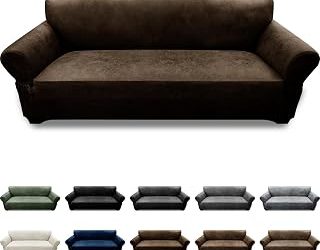
- Understand the upholstery labels: “Genuine leather” usually means top-grain on contact surfaces with split leather or vinyl on the sides and back — that’s normal and fine. “Faux leather” and “PU” are polyurethane over fabric backing, which is easy to wipe but will eventually crease and peel at high-flex points. Woven fabric breathes better and hides wear, but absorbs spills.
- Power versus manual is a maintenance decision: Manual mechanisms use a lever and spring assembly — fewer parts to fail, nothing to plug in, but you need core strength and free hands to operate them. Power units add motors, wiring harnesses, and a transformer brick, and give you infinite stopping positions plus adjustable headrests. Both are repairable; power just has more to go wrong.
- Check the frame and the reclining hardware: Look for kiln-dried hardwood or engineered lumber in the frame and steel in the reclining mechanism. Ask whether replacement mechanisms are available, because that’s the component that fails first on a sofa that gets daily use.
- Plan the delivery route: Most three-seat recliners arrive in two or three boxes and assemble with bolt-together back panels, which is a real advantage for tight stairwells. Single-piece delivery means measuring every doorway, turn, and ceiling height along the path.
The Best Rated Reclining Sofa (2026)s Reviewed
Signature Design by Ashley Boyington Power Reclining Sofa
This is the loaded option — air massage, heated seats, a drop-down table with cupholders, and a zero-gravity position that lifts your legs above your heart. The leather-and-faux-leather combination puts real hide where your body contacts the sofa, and everything runs off a single power supply, so you only need one outlet within reach.
Extra Wide Overstuffed Manual Reclining Sofa
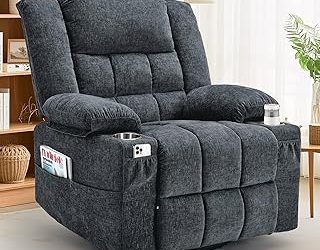
Deep seats, generous padding, and a breathable woven fabric make this the pick if you actually nap on your couch rather than just sitting on it. Manual levers mean no cord management and no motor to replace, though the overstuffed dimensions demand a genuinely large room.
Watson & Whitely Wall Hugger Power Reclining Sofa
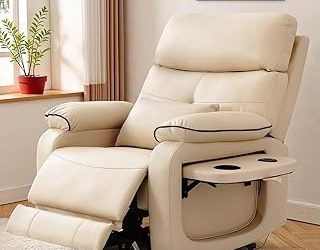
The wall-hugger mechanism is the standout here — it recuts the space requirement from a foot and a half down to a few inches, which makes it viable in apartments, bonus rooms, and RVs. Adjustable power headrests plus USB-A and USB-C ports round out a sofa that’s clearly designed by someone who thought about how people actually use these things.
Genuine Leather Power Recliner Sofa with Hidden Cup Holders
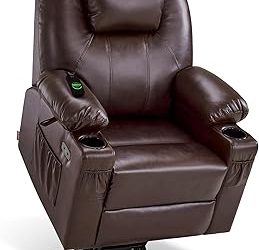
A cleaner-lined take on the power recliner, with cup holders that disappear into the arms when you’re not using them and a USB port for charging. The genuine leather contact surfaces will soften and develop character over time in a way PU never does.
Faux Leather Manual Reclining Sofa
The straightforward, budget-conscious choice: manual levers, dark brown PU that wipes down in seconds, and no electronics at all. It’s a sensible fit for a media room, waiting area, or any space where easy cleanup beats long-term patina.
Frequently Asked Questions
How much space do I need behind a reclining sofa?
Budget 12 to 18 inches for a conventional recliner. Wall-hugger models need roughly 4 to 6 inches because the seat slides forward on a track as the back tilts. Always confirm the manufacturer’s stated clearance rather than guessing.
Can I assemble a reclining sofa myself?
Usually yes. Most ship in multiple cartons with backs that hook or bolt onto the seat base — one person can manage it, two makes it faster. Have a socket wrench handy and don’t fully tighten anything until every panel is seated.
Do power recliners work during a power outage?
Not by default. If the sofa is fully extended when power drops, you’re stuck unless it has a battery backup pack, which many models accept as an add-on. It’s a cheap insurance policy worth buying up front.
How long should a reclining sofa last?
With a hardwood frame and steel mechanism, eight to fifteen years is realistic for daily use. The mechanism and the foam typically wear out well before the frame does, and both are replaceable if you’re willing to open the sofa up.
Final Thoughts
If you want every feature engineered into one piece, the Signature Design by Ashley Boyington delivers massage, heat, and zero-gravity positioning in a single well-supported package. For tight rooms, the Watson & Whitely wall hugger solves the clearance problem better than anything else here while still offering power headrests and modern charging. And if you’d rather skip motors altogether, the extra-wide overstuffed manual sofa gives you the deepest, most nap-friendly seat with the fewest parts that can fail.