Key takeaways
- Frame material: Look for kiln-dried hardwood or a hardwood-plywood hybrid at the stress points, especially the mechanism mounting rails. Flip the piece after delivery and check whether those rails are bolted or merely stapled — bolted joints can be re-torqued in five minutes, staples cannot.
- Wall clearance: Standard recline mechanisms need 12 to 18 inches behind the backrest. Wall-hugger designs slide the seat forward instead, dropping that to roughly three or four inches. Measure with a tape from baseboard to intended sofa back before you commit, not after.
- Power vs. manual: Powered units glide, hold intermediate positions, and add headrest articulation, but they need an outlet and a working transformer. Manual levers have almost nothing to fail and no cord to route. If you’d rather never troubleshoot a control board, go manual.
- Cushion construction: Higher-density foam over sinuous springs holds its shape far longer than shredded fill over webbing. Press hard into a seat corner — if your hand finds the frame edge quickly, that spot will collapse first.
- Assembly and access: Modular backs that clip onto brackets get through tight doorways and stairwells; one-piece frames often don’t. Confirm your narrowest passage, and check that the mechanism stays reachable for future lubrication once the piece is in place.
What's inside
Anyone who has spent a Saturday under a couch with a headlamp and a 13mm socket knows the truth about reclining furniture: the upholstery is the easy part. What actually determines whether a recliner couch still feels solid in year five is the stuff you can only see from underneath — the frame joinery, the gauge of the steel mechanism, the way the wiring is routed, and whether the seat deck is a webbed platform or a sheet of stapled cardboard. Showroom sitting tells you almost nothing about any of that, and product photos are shot specifically to hide it.
This guide takes the maker’s approach. I looked at the six most popular reclining sofas and recliner chairs currently worth buying, focusing on build quality you can inspect and repair, power hardware you can actually service, and layouts that fit real rooms instead of idealized floor plans. Below you’ll find a short pre-purchase checklist drawn from teardown-level details, then honest write-ups of the top picks — including which ones reward a bit of DIY reinforcement and which arrive genuinely done.
As an Amazon Associate we earn from qualifying purchases.


How to Choose a/an Recliner Couch (2026)
- Frame material: Look for kiln-dried hardwood or a hardwood-plywood hybrid at the stress points, especially the mechanism mounting rails. Flip the piece after delivery and check whether those rails are bolted or merely stapled — bolted joints can be re-torqued in five minutes, staples cannot.
- Wall clearance: Standard recline mechanisms need 12 to 18 inches behind the backrest. Wall-hugger designs slide the seat forward instead, dropping that to roughly three or four inches. Measure with a tape from baseboard to intended sofa back before you commit, not after.
- Power vs. manual: Powered units glide, hold intermediate positions, and add headrest articulation, but they need an outlet and a working transformer. Manual levers have almost nothing to fail and no cord to route. If you’d rather never troubleshoot a control board, go manual.
- Cushion construction: Higher-density foam over sinuous springs holds its shape far longer than shredded fill over webbing. Press hard into a seat corner — if your hand finds the frame edge quickly, that spot will collapse first.
- Assembly and access: Modular backs that clip onto brackets get through tight doorways and stairwells; one-piece frames often don’t. Confirm your narrowest passage, and check that the mechanism stays reachable for future lubrication once the piece is in place.
The Best Recliner Couch (2026)s Reviewed
Genuine Leather Power Recliner Sofa (3-Seat, Brown)
Top-grain leather on the contact surfaces, a powered mechanism on each end seat, and hidden cup holders in the center console make this the most complete living-room package here. Budget for outlet access behind the sofa or plan a floor-cord channel — the transformer boxes want a nearby plug, not a 20-foot extension.
Watson & Whitely Wall Hugger Power Reclining Sofa (Navy)
The wall-hugger geometry is the real feature: full recline with only inches of back clearance, which makes it the pick for apartments, bonus rooms, and RV installs. Adjustable power headrests plus USB-C charging mean fewer accessories cluttering the side table.
50″ Oversized Corduroy Chaise Lounge / Boneless Sofa Bed (Dark Grey)
No frame, no fasteners, no assembly — it unfolds from a chaise into a flat sleeper, which is a genuinely useful trick in a small den or home office. The corduroy cover reads warmer than leather and stays comfortable barefoot in winter.
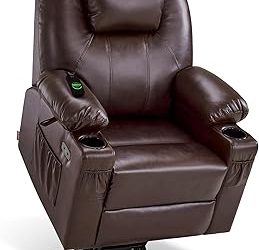
Leather Recliner Chair with Concealed Cup Holders (Nut Brown)
A traditional lever recliner with overstuffed arms and a classic silhouette, and nothing electronic to fail. Because the pull mechanism is mechanical, an annual shot of white lithium grease on the pivots keeps the action smooth for years.
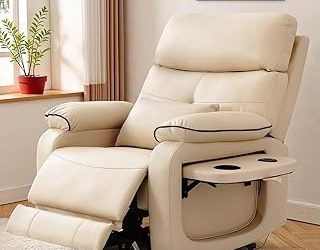
Electric Power Recliner with USB Ports and Hidden Arm Storage (Black)
Purpose-built home-theater seating: breathable leather-look upholstery, dual cup holders, and an arm compartment that swallows remotes and cables. Pair two side by side with a small gap for a tidy DIY row without paying for a full sectional.
Frequently Asked Questions
Do reclining sofas need to sit away from the wall?
Conventional models do — plan on 12 to 18 inches. Wall-hugger designs like the Watson & Whitely need only a few inches because the seat travels forward as the back tilts.
Is leather or fabric better for a recliner couch?
Leather wipes clean, resists pet hair, and ages well at wear points. Fabric like corduroy feels warmer year-round and hides scuffs better. Both work; match it to your household, not the trend.
Can I fix a power recliner myself?
Often yes. Most failures trace to a disconnected harness, a dead transformer, or a bad hand control — all plug-in parts. Unplug the sofa, inspect connections underneath, and swap the transformer before assuming the motor is gone.
How much weight can these mechanisms handle?
Most residential reclining seats are rated near 250 to 300 pounds per position. Check the listed rating and avoid sitting on footrests or arms, which are the two most common failure points.
Final Thoughts
For most living rooms, the Genuine Leather Power Recliner Sofa delivers the best mix of real leather, powered comfort, and built-in storage, while the Watson & Whitely Wall Hugger solves the clearance problem that rules out most reclining sofas in tighter spaces. If you want theater-style seating you can arrange yourself, the Electric Power Recliner with hidden arm storage is the smart single-seat buy.