Key takeaways
- Armrest height and width: This is the make-or-break spec. You want your forearm level or slightly raised when cradling a baby — arms that sit too low force you to shrug for the whole feed. Adjustable or padded-thick arms are worth paying for; measure from seat cushion to arm top and look for roughly 7 to 9 inches.
- Glide versus rock: A true glider travels on a parallel linkage, so it moves forward and back on a level plane and stays quiet. Rockers pivot on curved runners and can creep across a rug or thump on hardwood. Gliders are the safer bet in a nursery where noise wakes the baby.
- Motor count: Single-motor power recliners move the back and footrest together. Triple-motor setups separate the back, legs, and headrest or lumbar, which means you can drop the backrest without launching your feet — genuinely useful when you’re standing up with a sleeping infant.
- Frame and base construction: Solid hardwood or steel-reinforced bases hold up to years of motion; particleboard and staples do not. Check whether the swivel plate is metal and whether the manufacturer lists a weight capacity. A chair that develops a creak at month six is a chair you’ll stop using.
- Fabric and certifications: Nursery air quality matters, so look for GREENGUARD Gold or similar low-emission certification. For cleanability, performance weaves and faux leather wipe down easily; bouclé looks excellent but traps spit-up in the loops. Removable covers are rare but valuable.
What's inside
Anyone who has spent a 3 a.m. feeding session wedged into a dining chair knows the problem: most furniture is built for sitting upright and alert, not for holding a person and a baby still for forty minutes while one of them falls asleep. A nursing glider has a narrow job description — smooth motion, arm support at the right height, and a recline that lets you doze without dropping anyone. Plenty of chairs marketed to new parents miss on at least one of those, usually the armrests, which sit too low and leave your shoulders doing the work your furniture should be doing.
I approached this the way I’d approach any piece I was building myself: measure the working height, check the joinery, look at what’s actually under the upholstery. This guide covers six current glider recliners aimed at nursing, from triple-motor powered models with adjustable headrests to a straightforward manual rocker with heat and massage. Below you’ll find the picks, then a buying checklist based on the details that actually change how a chair feels at hour two.
As an Amazon Associate we earn from qualifying purchases.


How to Choose a Glider Recliner For Nursing (2026)
- Armrest height and width: This is the make-or-break spec. You want your forearm level or slightly raised when cradling a baby — arms that sit too low force you to shrug for the whole feed. Adjustable or padded-thick arms are worth paying for; measure from seat cushion to arm top and look for roughly 7 to 9 inches.
- Glide versus rock: A true glider travels on a parallel linkage, so it moves forward and back on a level plane and stays quiet. Rockers pivot on curved runners and can creep across a rug or thump on hardwood. Gliders are the safer bet in a nursery where noise wakes the baby.
- Motor count: Single-motor power recliners move the back and footrest together. Triple-motor setups separate the back, legs, and headrest or lumbar, which means you can drop the backrest without launching your feet — genuinely useful when you’re standing up with a sleeping infant.
- Frame and base construction: Solid hardwood or steel-reinforced bases hold up to years of motion; particleboard and staples do not. Check whether the swivel plate is metal and whether the manufacturer lists a weight capacity. A chair that develops a creak at month six is a chair you’ll stop using.
- Fabric and certifications: Nursery air quality matters, so look for GREENGUARD Gold or similar low-emission certification. For cleanability, performance weaves and faux leather wipe down easily; bouclé looks excellent but traps spit-up in the loops. Removable covers are rare but valuable.
The Best Glider Recliner For Nursing (2026)s Reviewed
MAMAZING Lullapod Power Nursery Rocking Chair
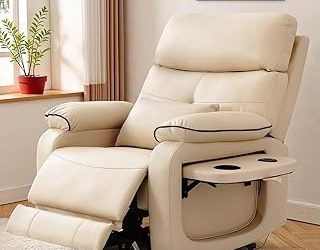
The HugAssist armrest is the standout here — it lifts to meet your arm rather than making you reach down, which solves the single most common complaint about nursing chairs. Triple motors, a 270° swivel, dual charging ports, and built-in storage make it the most thoroughly thought-through option on this list.
CHITA Power Swivel Glider Recliner, Linen
CHITA pairs a solid wood base with GREENGUARD Gold certification, which is the combination I’d want in a room where a newborn sleeps. Independent power headrest and lumbar adjustment let you dial in support for your specific back, and the linen upholstery keeps it looking like a living room chair rather than baby gear.
FiveWillowise Power Rocking Nursery Chair
This one loads up on the small conveniences that matter at night: a built-in nightlight, USB port, cup holder, and adjustable armrests and headrest. The green upholstery reads more grown-up than most nursery-specific chairs, so it earns a second life in a den or reading corner.
Nurture& The Glider Plus
The bouclé version is the best-looking chair in this group by a comfortable margin, and the adjustable head and lumbar support mean the good looks aren’t cosmetic. Budget a little extra care for the fabric — loops and lanolin don’t mix — but the build quality justifies the premium.
Manual Swivel Rocker Recliner with Massage & Heat
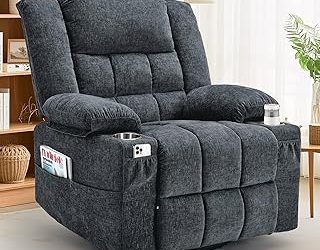
If you’d rather not tether a nursery chair to an outlet, this overstuffed manual model delivers a three-stage backrest plus vibration massage and heat. The faux leather wipes clean in seconds, which is a real advantage during the messiest months.
Frequently Asked Questions
Do I need a power recliner, or is manual fine?
Manual works if you can reclineing with two free hands. Power matters when you’re holding a sleeping baby and need to change position without a lever pull — that one-handed operation is the actual benefit, not luxury.
How much space should I leave behind the chair?
Plan on 6 to 12 inches of clearance behind a glider and up to 18 inches for a full recline, unless the model is specifically wall-hugging. Measure before you order; nursery footprints are unforgiving.
Will a nursing glider still be useful after weaning?
Yes, if you choose neutral upholstery. These chairs become reading chairs, bedtime-story chairs, and eventually just good living room seating. That longevity is the argument for spending more on the frame.How do I keep the upholstery clean?
Blot rather than rub, and address milk stains promptly with cold water. Faux leather and performance weaves are the low-maintenance choices; bouclé needs a soft brush and patience.Final Thoughts
For most nursing parents, the MAMAZING Lullapod is the pick — the HugAssist armrest addresses the ergonomic flaw that plagues this category, and the triple-motor setup earns its keep during one-handed transitions. Choose the CHITA if certified low-emission materials and a solid wood base top your list, or the Nurture& Glider Plus if you want a chair that looks intentional in a room you’ll show off.