Key takeaways
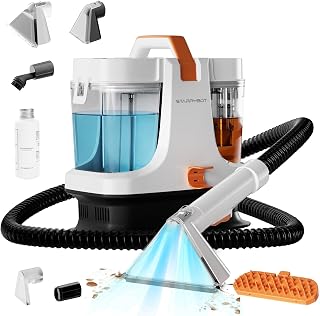
- Suction rating. The 18Kpa class, which includes the Uwant 18Kpa and Starrybot extractors, recovers noticeably more water per pass than weaker units, and that means shorter drying time.
- Tank design. Separate clean and dirty tanks are easier to empty; the 2-in-1 tank on the Uwant 2.4-liter model is more compact if storage space is tight.
- Tool selection. The Shark StainStriker ships with four heads, including 3.5″ and 7″ stain tools and a crevice tool, which is genuinely useful on tufted or button-back sofas.
- Heated or high-wattage cleaning. The 450W upholstery shampooer moves more solution through the fabric, helpful on large sectionals where you’re covering serious ground.
What's inside
A sofa absorbs more than most people realize. Skin oils from bare arms, crumbs pressed into the seams by three years of movie nights, dust that settles every day whether the windows are open or not, and if there’s a dog in the house, a slow buildup of dander that no amount of febreze-style masking will touch. The fabric acts like a filter, and filters eventually need washing. The good news is that a full deep clean is a Saturday-morning job with the right approach, and the equipment to do it properly now costs less than one visit from a professional crew.
This guide walks through the process the way you’d actually do it at home: reading the tag before you touch anything with water, dry-soil removal first, then wet extraction, then drying fast enough to avoid mildew. You’ll also learn how to judge portable extractors on the specs that matter, what to do about the stains that don’t respond to a normal pass, and how to keep the whole thing from getting this bad again. Below are the machines we’d reach for.
As an Amazon Associate we earn from qualifying purchases.



Read the Cleaning Code Before Anything Else
Flip up a cushion and look for a small tag with a letter code. W means water-based cleaners are safe. S means solvent only, no water, because the fibers will shrink or watermark. WS or SW takes either. X means vacuum only, full stop, and any liquid will leave a permanent ring. Most modern polyester and microfiber sofas are W or WS, which is why extractors work so well on them. If the tag is gone, test in a hidden spot: the back panel, the underside of a cushion, or the fabric behind a skirt. Dampen a white cloth with your solution, press it into the fabric for thirty seconds, and check for dye transfer or a darkened halo once it dries. That five-minute test has saved a lot of couches.
Get the Dry Soil Out First
Wetting a dusty sofa turns loose grit into mud that grinds deeper into the weave. Start dry. Pull the cushions off and vacuum every surface with a crevice tool, working the seams, the deck under the cushions, and the back edges where crumbs collect. For pet hair that resists suction, drag a rubber squeegee or a slightly dampened rubber glove across the fabric first, which pulls the embedded strands up where the vacuum can grab them. A stiff upholstery brush loosens matted nap on the arms and headrest, the two spots that wear first because of body contact. Only when the vacuum comes up clean should you introduce moisture.
Extraction: How Portable Machines Actually Work
A portable extractor sprays solution into the fabric while a vacuum motor pulls it back out along with the dissolved soil. That recovery step is the whole point, and it’s what separates a real clean from spraying carpet foam and hoping. When comparing units, focus on:
- Suction rating. The 18Kpa class, which includes the Uwant 18Kpa and Starrybot extractors, recovers noticeably more water per pass than weaker units, and that means shorter drying time.
- Tank design. Separate clean and dirty tanks are easier to empty; the 2-in-1 tank on the Uwant 2.4-liter model is more compact if storage space is tight.
- Tool selection. The Shark StainStriker ships with four heads, including 3.5″ and 7″ stain tools and a crevice tool, which is genuinely useful on tufted or button-back sofas.
- Heated or high-wattage cleaning. The 450W upholstery shampooer moves more solution through the fabric, helpful on large sectionals where you’re covering serious ground.
Whichever unit you use, do a slow wet pass, then two or three dry passes with the trigger released. The dry passes are where the water comes back out. Rushing them is the single most common mistake.
Treating Stains and Odors Separately
Extraction handles general grime; specific stains often need pretreatment. Blot fresh spills, never scrub, since scrubbing spreads the stain and fuzzes the fibers. Give an enzyme cleaner ten to fifteen minutes of dwell time on urine, vomit, or anything protein-based, because enzymes need contact time to break the compounds down rather than just dilute them. Solutions like the WECLEAN C1’s deep cleaning formula or the pet-specific concentrate bundled with the Uwant Pet Pro set are formulated for this. Grease responds better to a drop of dish soap in warm water. Old ink or dye stains may be permanent, and repeated aggressive attempts do more damage than the mark itself.
Dry It Fast
Damp foam is a mildew incubator. After extraction, stand cushions on edge so air reaches both faces, open a window, and put a box fan on the sofa for two to four hours. A dehumidifier helps enormously in a humid basement or on a rainy day. Don’t put cushions back in their covers or replace throws until everything feels completely dry to the back of your hand, not just the surface.
Tips
- Use distilled water in the clean tank if you have hard water; mineral deposits leave a faint stiffness in the fibers.
- Work in overlapping sections rather than random spots, so the whole panel dries at an even color and you avoid visible clean patches.
- Rinse the dirty tank and hose immediately after use. Dried extraction slurry smells terrible and clogs nozzles.
- Vacuum upholstery every two weeks and you’ll only need a full extraction once or twice a year.
Frequently Asked Questions
How often should I deep clean my sofa?
Once a year for a low-traffic living room, every six months with kids or pets. Spot-treat spills immediately regardless, since a stain that sets for a week is dramatically harder to remove than one addressed in the first ten minutes.
Can I use a carpet cleaner solution on upholstery?
Sometimes, but it’s usually too concentrated and leaves a sticky residue that attracts dirt. Upholstery formulas are lower-foaming and rinse out more cleanly. If you only have carpet solution, dilute it well past the label ratio.
Will an extractor damage leather or velvet?
Yes, keep it away from both. Leather needs a dedicated cleaner and conditioner. Crushed velvet and other pile fabrics can flatten or watermark permanently, so vacuum and dry-brush those instead, or hire a specialist.
Why does my sofa smell worse after cleaning?
Almost always trapped moisture. Water reached the foam core and didn’t come back out, so bacteria bloomed. Re-extract with dry passes only, then dry aggressively with fans for a full day.
Conclusion
Cleaning a sofa well isn’t complicated, it’s just sequential: check the tag, remove dry soil thoroughly, extract with a machine that has real suction, treat stains with the right chemistry and enough dwell time, and dry faster than mildew can establish. A capable portable extractor pays for itself on the second use, and once you’ve done it once, the routine takes maybe ninety minutes. Your sofa will look better than you expect, and the air in the room will too.