Key takeaways
- Measure the reclined footprint, not the upright one: Add the wall clearance plus the extended footrest to get your true space requirement. A 32-inch chair can easily need 60 inches of front-to-back room. Chalk it on the floor before you buy.
- Zero-wall vs. traditional mechanism: Zero-wall designs push the seat forward instead of tilting the back, so they sit within a few inches of the wall. Traditional recliners need 8 to 14 inches behind them. If your chair has to live against a wall, this is the whole decision.
- Manual, power, or swivel-rocker: Manual lever mechanisms are cheapest and never fail electronically. Power units cost more but let you stop at any angle. Swivel-rockers add motion but sit on a round base that needs open floor around it.
- Seat height and depth for your body: Petite users get swallowed by deep seats; taller users find shallow ones punishing on the thighs. Look for seat depth around 19 to 21 inches and a seat height near 18 inches for easy standing.
- Assembly reality check: Most compact recliners ship in one or two boxes with the back detaching for doorway clearance. Confirm the box fits through your entry and up your stairs, and check whether the back clips on or requires bolting from underneath.
What's inside
I’ve measured enough apartment living rooms with a tape and a flashlight to know the real problem: recliners lie about their footprint. The listing says 30 inches wide, then you get it home and discover the seat back needs 14 inches of clearance behind it to tilt, the footrest swings out three feet, and suddenly your walkway to the kitchen is gone. Small-space shopping isn’t about finding the smallest chair. It’s about finding the chair whose reclined dimensions still work in your room.
This guide covers the compact recliners actually worth your floor space in 2026, judged on the stuff you only notice after assembly: how much wall gap the mechanism demands, whether the frame feels solid when you shift your weight, how the upholstery holds up to daily use, and whether one person can put it together without a second set of hands. I’ll flag the tradeoffs each one makes, because every compact recliner sacrifices something.
As an Amazon Associate we earn from qualifying purchases.


How to Choose a Recliner For Small Space (2026)
- Measure the reclined footprint, not the upright one: Add the wall clearance plus the extended footrest to get your true space requirement. A 32-inch chair can easily need 60 inches of front-to-back room. Chalk it on the floor before you buy.
- Zero-wall vs. traditional mechanism: Zero-wall designs push the seat forward instead of tilting the back, so they sit within a few inches of the wall. Traditional recliners need 8 to 14 inches behind them. If your chair has to live against a wall, this is the whole decision.
- Manual, power, or swivel-rocker: Manual lever mechanisms are cheapest and never fail electronically. Power units cost more but let you stop at any angle. Swivel-rockers add motion but sit on a round base that needs open floor around it.
- Seat height and depth for your body: Petite users get swallowed by deep seats; taller users find shallow ones punishing on the thighs. Look for seat depth around 19 to 21 inches and a seat height near 18 inches for easy standing.
- Assembly reality check: Most compact recliners ship in one or two boxes with the back detaching for doorway clearance. Confirm the box fits through your entry and up your stairs, and check whether the back clips on or requires bolting from underneath.
The Best Recliner For Small Space (2026)s Reviewed
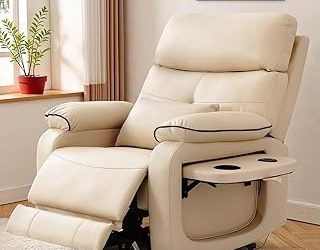
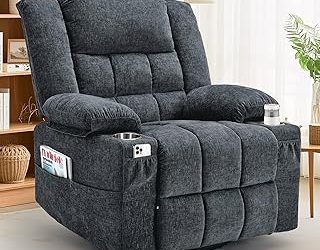
HRVEOCEI Modern Small Recliner with Cup Holder
The 90° to 160° range is genuinely useful here, and the extended footrest actually supports your calves instead of dead-ending at your ankles like most compact chairs do. Push-back operation means no protruding lever, which keeps the side profile tight against furniture.
Furnimart Small Manual Recliner in Chenille
This is the one I’d pick for pure sit-in comfort — the overstuffed chenille and chunky cushioning give it a lounge-chair feel that most narrow recliners can’t match. The tradeoff is visual bulk, so it reads bigger in a room than its measurements suggest.
Sweetcrispy Massage Recliner with Lumbar Support
Massage functions on budget recliners are usually a gimmick, but the targeted lumbar support here earns its keep if you sit for long stretches. Good pick for a home theater corner where you want the chair to do a bit more work than just reclining.
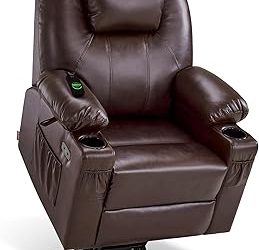
Zero Wall Power Recliner for Petite Frames
The zero-wall mechanism is the standout feature — it needs only a few inches of clearance, which solves the single biggest constraint in small rooms. The scaled-down seat dimensions suit shorter users well, though anyone over about 5’10” will want to look elsewhere.
Korser Swivel Rocker Recliner with Side Pockets
The 360-degree swivel makes this the most flexible option for open-plan spaces where you need to face different directions. Side pockets are a small touch that keeps remotes and books off the floor, and the chenille upholstery is forgiving on marks.
Frequently Asked Questions
How much clearance does a small recliner really need?
Traditional mechanisms want 8 to 14 inches behind the chair. Zero-wall designs need 2 to 4 inches. Always add 24 to 30 inches in front for the extended footrest, and tape the full outline on your floor before ordering.
Are power recliners worth the extra money in a small room?
Sometimes. Power units let you stop at any angle and require no body momentum to recline, which matters if mobility is limited. But they need an outlet nearby and add a cord to manage — in a tight room, that cable routing is a real consideration.
Can one person assemble a compact recliner?
Usually yes. Most designs have a detachable back that slides onto brackets, and the mechanism arrives pre-installed. Budget 20 to 40 minutes and expect to tip the chair on its side, so clear a work area first.
Will a swivel recliner work on carpet?
On low-pile carpet, yes. Thick or shag carpet can bind the swivel base and make rotation stiff. A low-profile chair mat or a thin hardboard round under the base solves it cleanly.
Final Thoughts
If wall clearance is your hard constraint, the Zero Wall Power Recliner is the straightforward answer — it’s the only design here that genuinely sits inches from the wall. For comfort-first buyers with a bit more room to work with, the Furnimart Chenille Manual is the most inviting chair of the group, and the Korser Swivel Rocker earns its place in open-plan spaces where being able to turn and face the room is worth the round base it stands on.