Key takeaways
- Single vs. dual motor: A single motor moves the back and footrest together on a fixed path. Dual motors control them independently, which is what makes zero-gravity and lay-flat positions possible. If you want your legs above your heart, you need two motors, full stop.
- Measure your wall clearance first: Standard power recliners need six to twelve inches behind them. Wall hugger designs slide the seat forward as the back tilts, cutting that gap to three or four inches. Tape it out on your floor before you buy.
- Lift function is a separate feature: Lift chairs tilt the whole frame forward to help you stand. This is a different mechanism from reclining, and not all power recliners have it. If mobility support matters, confirm the chair specifically lifts.
- Check the footrest extension: Anyone over six feet will notice a short footrest immediately. Look for models advertising extra footrest length, and verify the recline angle spec, since 140 degrees and lay-flat are meaningfully different experiences.
- Upholstery, ports, and certifications: Faux leather wipes clean and suits households with pets. Fabric breathes better in warm rooms. FSC certification signals responsibly sourced frame timber, and OEKO-TEX covers textile chemical safety. USB-C ports are now standard, but their placement varies wildly.
What's inside
Shopping for a power recliner feels straightforward until you start reading spec sheets. Single motor or dual motor? Wall hugger or standard clearance? Does “infinite position” actually mean anything, or is it marketing? Meanwhile the chair that looked perfect online turns out to need eight inches of wall gap, or the lift mechanism groans under real weight, or the USB port sits somewhere you can’t reach without contorting. Anyone who has assembled furniture in a cramped living room knows the frustration of discovering these details after the box is already open and the packaging is in the recycling.
This guide approaches power recliners the way a maker would: by looking at the hardware underneath the upholstery. We’re covering motor configuration, frame construction, footrest geometry, the practical reality of assembly and placement, and which models earn their keep for lift assistance versus pure relaxation. Every pick below has been evaluated on mechanism quality and real-world fit, not just how it photographs.
As an Amazon Associate we earn from qualifying purchases.




How to Choose a Power Recliner (2026)
- Single vs. dual motor: A single motor moves the back and footrest together on a fixed path. Dual motors control them independently, which is what makes zero-gravity and lay-flat positions possible. If you want your legs above your heart, you need two motors, full stop.
- Measure your wall clearance first: Standard power recliners need six to twelve inches behind them. Wall hugger designs slide the seat forward as the back tilts, cutting that gap to three or four inches. Tape it out on your floor before you buy.
- Lift function is a separate feature: Lift chairs tilt the whole frame forward to help you stand. This is a different mechanism from reclining, and not all power recliners have it. If mobility support matters, confirm the chair specifically lifts.
- Check the footrest extension: Anyone over six feet will notice a short footrest immediately. Look for models advertising extra footrest length, and verify the recline angle spec, since 140 degrees and lay-flat are meaningfully different experiences.
- Upholstery, ports, and certifications: Faux leather wipes clean and suits households with pets. Fabric breathes better in warm rooms. FSC certification signals responsibly sourced frame timber, and OEKO-TEX covers textile chemical safety. USB-C ports are now standard, but their placement varies wildly.
The Best Power Recliner (2026)s Reviewed
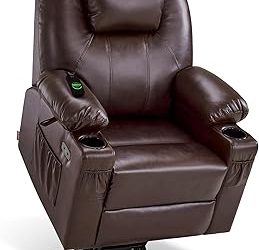
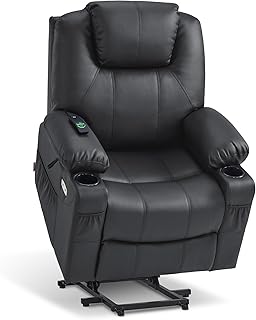
MCombo 7040 Power Lift Recliner (Dark Brown Faux Leather)
This is the reference point for affordable lift recliners, and the FSC and OEKO-TEX certifications on the frame and fabric give it credibility that most budget chairs lack. Heat and massage, dual cup holders, side pockets, and both USB and Type-C charging make it genuinely well equipped, and the faux leather cleans up with a damp cloth.
Watson & Whitely Genuine Leather Wall Hugger Power Recliner
If floor space is your constraint, this wall hugger is the answer, sitting close to the wall while still delivering full recline travel plus an independently adjustable power headrest. Genuine leather and the compact footprint also make it one of the few chairs on this list that works in an RV or a tight apartment corner.
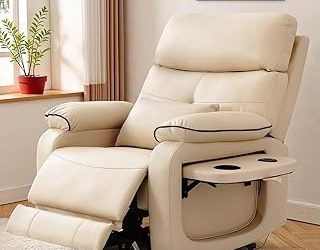
MCombo 7287 Fabric Lift Recliner (Oatmeal)
The 4.7-inch extra footrest is the standout here, solving the dangling-heels problem that plagues taller users in standard recliners. Woven fabric upholstery breathes better than leather in warm rooms, assembly is refreshingly straightforward, and the 140-degree recline hits a comfortable middle ground between sitting and sleeping.
MCombo R7897 Dual Motor Lift Recliner (Medium-Wide)
Built for larger frames, the medium-wide seat and dual motor system deliver true infinite positioning, including a zero-gravity setting that elevates the legs above heart level. Heat and massage round it out, and the independent motor control means you can dial in a position rather than settling for whatever the linkage allows.
MCombo 7890 Dual Motor Zero Gravity Lift Recliner
This one goes fully flat, which puts it in guest-bed territory rather than just recliner territory, and the breathable faux leather handles long sessions better than standard vinyl coverings. Infinite position adjustment, heat, massage, cup holders, and USB ports make it the most complete package here for anyone prioritizing the widest possible range of positions.
Frequently Asked Questions
Do power recliners need to stay plugged in?
Yes, the motors run on wall power. Many models include a battery backup pack that holds enough charge to return the chair upright during an outage, which is an important safety feature on lift chairs. Plan your placement around outlet access.
How difficult is assembly?
Most modern power recliners ship in two or three pieces that click together with hook brackets, then need one cable connected between the back and base. Expect fifteen to thirty minutes and a second person for lifting, not for the actual assembly.
What is zero gravity positioning?
The chair reclines to a posture where your knees sit above your heart, distributing weight across the frame and reducing pressure on the lower back. It requires dual motors, since the back and footrest must move independently.
Can a lift recliner replace a bed?
A lay-flat model can work for occasional overnight sleeping or for people who find sleeping upright more comfortable due to reflux or breathing issues. It’s not equivalent to a proper mattress for nightly long-term use.
Final Thoughts
For most buyers, the MCombo 7040 lift recliner delivers the best balance of features, certifications, and value, and its heat and massage functions are more than token additions. If you’re working with tight clearance, the Watson & Whitely wall hugger solves a problem no other chair here addresses, and taller or larger users should look hard at the MCombo R7897 dual motor model for its wider seat and genuine infinite positioning.