Key takeaways
- Frame and joinery: Press down hard on one arm. Solid or laminated wood with screwed-and-glued joints stays quiet; stapled particleboard creaks, then splits. Elevated designs should use through-bolts into wood, not screws biting into fiberboard.
- Fabric weave: Tight, low-pile weaves and faux fur with a woven backing shed claws instead of catching them. Loose loops and open knits snag on the first stretch and unravel across the seat.
- Cushion rebound: Compress the seat and count how fast it recovers. High-loft polyfill flattens into a pancake within weeks; a foam core or dense fiber batting holds its shape and supports older cats with stiff joints.
- Leg hardware and floor contact: Removable legs with metal inserts can be tightened, swapped, or replaced. Bare wood feet scratch hardwood, so plan on adding stick-on felt pads before the sofa ever touches your floor.
- Cover removal: A zipper that runs the full length of the base beats a partial opening every time. Check that the inner cushion is a separate piece — sealed covers mean spot-cleaning forever.
What's inside
Cats are opportunists. Give them a warm cushion at hip height and they will claim it, shed on it, and defend it — usually the exact spot you sit. The obvious fix is a sofa of their own, but the category is flooded with pet furniture that looks great in a listing photo and falls apart in a month: staples backing out of thin plywood, legs that wobble after the first leap, covers that pill into felt after one wash. If you have ever built or reupholstered anything, you already know where these pieces fail.
This guide looks at cat sofas the way you would size up a piece at a flea market: frame construction, fabric weave, cushion rebound, and whether the hardware can be tightened or replaced. Below are six models worth your money in 2026, with notes on what each one gets right, where it cuts corners, and which weak points you can shore up yourself in ten minutes with a hex key, wood glue, and a handful of felt pads.
As an Amazon Associate we earn from qualifying purchases.




How to Choose a Sofa For Cats (2026)
- Frame and joinery: Press down hard on one arm. Solid or laminated wood with screwed-and-glued joints stays quiet; stapled particleboard creaks, then splits. Elevated designs should use through-bolts into wood, not screws biting into fiberboard.
- Fabric weave: Tight, low-pile weaves and faux fur with a woven backing shed claws instead of catching them. Loose loops and open knits snag on the first stretch and unravel across the seat.
- Cushion rebound: Compress the seat and count how fast it recovers. High-loft polyfill flattens into a pancake within weeks; a foam core or dense fiber batting holds its shape and supports older cats with stiff joints.
- Leg hardware and floor contact: Removable legs with metal inserts can be tightened, swapped, or replaced. Bare wood feet scratch hardwood, so plan on adding stick-on felt pads before the sofa ever touches your floor.
- Cover removal: A zipper that runs the full length of the base beats a partial opening every time. Check that the inner cushion is a separate piece — sealed covers mean spot-cleaning forever.
The Best Sofa For Cats (2026)s Reviewed
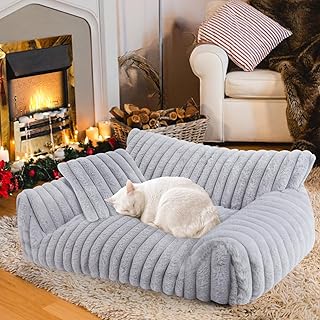
Cute Cat Couch Bed (Grey, Small)
A soft-sided, frameless design that leans on bolstered arms rather than wood, which makes it forgiving for cats who knead and burrow. The removable cover washes cleanly, though the fill benefits from a fresh handful of polyfill after a few months to restore the arm height.
Bedsure ComfyFleece Cat Couch (24 in, Cream)
The best cushion feel in this group: the fleece has a genuinely dense backing, and the seat recovers instead of compressing flat under a 10-pound cat. At 24 inches it suits one adult cat comfortably, and the cover comes off in one piece for a cold wash.
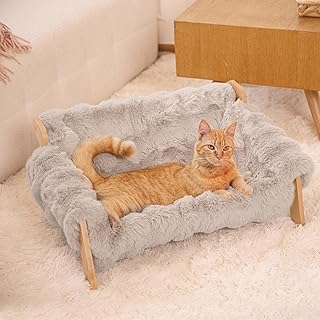
Veehoo Elevated Cat Bed
Real furniture-style construction on visible wood legs, and assembly is straightforward — a few bolts and a hex key. Snug the hardware after the first week of use, since wood settles, and add felt pads underneath before you slide it into place.
Elevated Cat Couch Bed Wooden Raised Kitty Sofa (Gray)
Raised off the floor to keep the cushion out of draft and dust, with a fluffy washable cover over a solid wooden base. The height suits confident jumpers more than seniors, so check the leap distance against your cat before committing.
Gray Cat Sofa Bed with Pine Wood Legs
Cotton velvet over pine legs is the most livable option if the sofa will sit in your living room rather than a spare corner. Velvet shows claw pulls faster than faux fur, so keep a scratching post nearby and rotate the cushion to even out the wear.
Frequently Asked Questions
Will my cat actually use a cat sofa?
Most will, but not on day one. Place it where your cat already naps, rub a familiar blanket over the cushion to transfer scent, and skip the treats-on-the-seat trick — that trains them to eat there, not sleep there.
Can I reinforce a cat sofa myself?
Easily. Wood glue in loose joints, a longer bolt in a stripped insert, and a plywood shim under a sagging seat solve most structural complaints. Keep the original hardware in a labeled bag in case you need to match a thread size later.
What size do I need for a large cat?
Measure your cat stretched out, then add four inches. A 24-inch model fits most adults up to about 12 pounds; anything heavier or a two-cat household wants a wider frameless design rather than a narrow elevated one.
How do I wash the cover without wrecking the loft?
Cold water, gentle cycle, zippers closed, and air dry flat. Heat is what fuses faux fur into mats — if you must use a dryer, run it on no-heat with a couple of clean tennis balls to break up clumping.
Final Thoughts
For most homes, the Bedsure ComfyFleece Cat Couch offers the best cushion quality for the money, while the Veehoo Elevated Cat Bed is the pick if you want real wood construction you can maintain and tighten over years. If the sofa has to blend into a styled living room, the Gray Cat Sofa Bed with pine legs looks the part, and the faux rabbit fur 3D diamond couch is a strong alternative for cats who prefer to sink in rather than perch.